

Ask any leadership team whether the portfolio is funded correctly. You'll get a confident yes.
Then ask them to show the working. That's usually where the room goes quiet.
Competence has very little to do with the gap. It's structural. A common failure pattern is that funding decisions get made one initiative at a time, in separate forums, on unrelated calendars, against criteria nobody ever wrote into the same document. The competitive response is argued in one committee. Regulatory remediation goes somewhere else entirely, usually with a deadline attached and very little debate. The customer experience programme gets defended in a business review that half the technology leadership team doesn't attend.
Each decision holds up fine on its own. Put together, they aren't a portfolio. They're a collection.
How do you know if you are funding the right initiatives?
An organization is more likely to be funding the right initiatives when investment decisions are made against strategic alignment, expected value, delivery risk and realistic capacity — in one place, against criteria agreed before the proposals arrive. The portfolio also has to be reviewed regularly, so funding can move when assumptions, priorities or constraints change.
The rest of this piece is about what that looks like in practice, and what goes wrong without it.
Three kinds of pressure, one pot of money
Investment demand doesn't arrive in comparable units, and that's most of the problem.
Competitive initiatives show up with urgency and a story. A rival shipped something. A market moved. The business case is directional at best, and the real argument is speed: wait two quarters and the window closes.
Risk and compliance work shows up with a date and an implied consequence. Nobody wants to be the executive who said no to the remediation. So this work gets classified as must-do and leaves the prioritization conversation before it starts.
Customer value initiatives have the strongest long-term case and the weakest short-term one. The benefit is real and measurable. It also lands eighteen months out, which is a long time in a room full of people managing this year's numbers.
Every one of those categories has a sponsor doing exactly what they should be doing, which is advocating hard. What's often missing is the layer above them. Somewhere all three sit side by side, scored against criteria the organization agreed on in advance, tested against the same finite pool of money and people.
Without that layer, the loudest credible advocate wins. Sometimes they happen to be right. That's luck, not governance.
What it actually looks like when this goes wrong
Rarely like a bad decision. Mostly like a handful of reasonable habits that compound quietly.
Proposals get approved in the order they arrive. Nobody compares them against each other, because there's no forum where they're all in the same place at the same time. The portfolio ends up being a record of who submitted when.
“Must-do” inflates. Every category eventually works out that mandatory is the fast lane. Give it a few cycles and the share of the portfolio labelled non-negotiable creeps up until discretionary capacity is nearly gone. The uncomfortable part is that this can go unnoticed for a long time, because nobody holds the aggregate number.
Funding gets approved without staffing. Money moves on an annual cycle. Capacity is consumed continuously. One early signal of portfolio misalignment is the presence of initiatives that are funded but not realistically staffed — and the shortfall rarely surfaces as a decision. It surfaces nine months later as slippage.
Business cases go in a drawer. The case wins the funding and is never opened again. Benefits aren't measured after go-live, so next year's scoring has nothing to learn from.
None of this is a failure of intent. It's what happens when the decision-making machinery is spread across a dozen forums and nobody owns the view above it.
“Get a single view of the portfolio” is useless advice
It's been given for twenty years. It's stated too abstractly to build anything from.
Here's the concrete version. Leadership teams that can genuinely answer the funding question tend to have five things in place, and none of them start as software features.
A portfolio structure that mirrors how leadership governs. Objectives, investment categories, funding buckets — not a flat list of two hundred projects. If capital gets allocated across “grow the core,” “enter adjacent markets” and “keep the lights on,” the portfolio has to be structured that way. Otherwise the conversation cannot happen at that altitude.
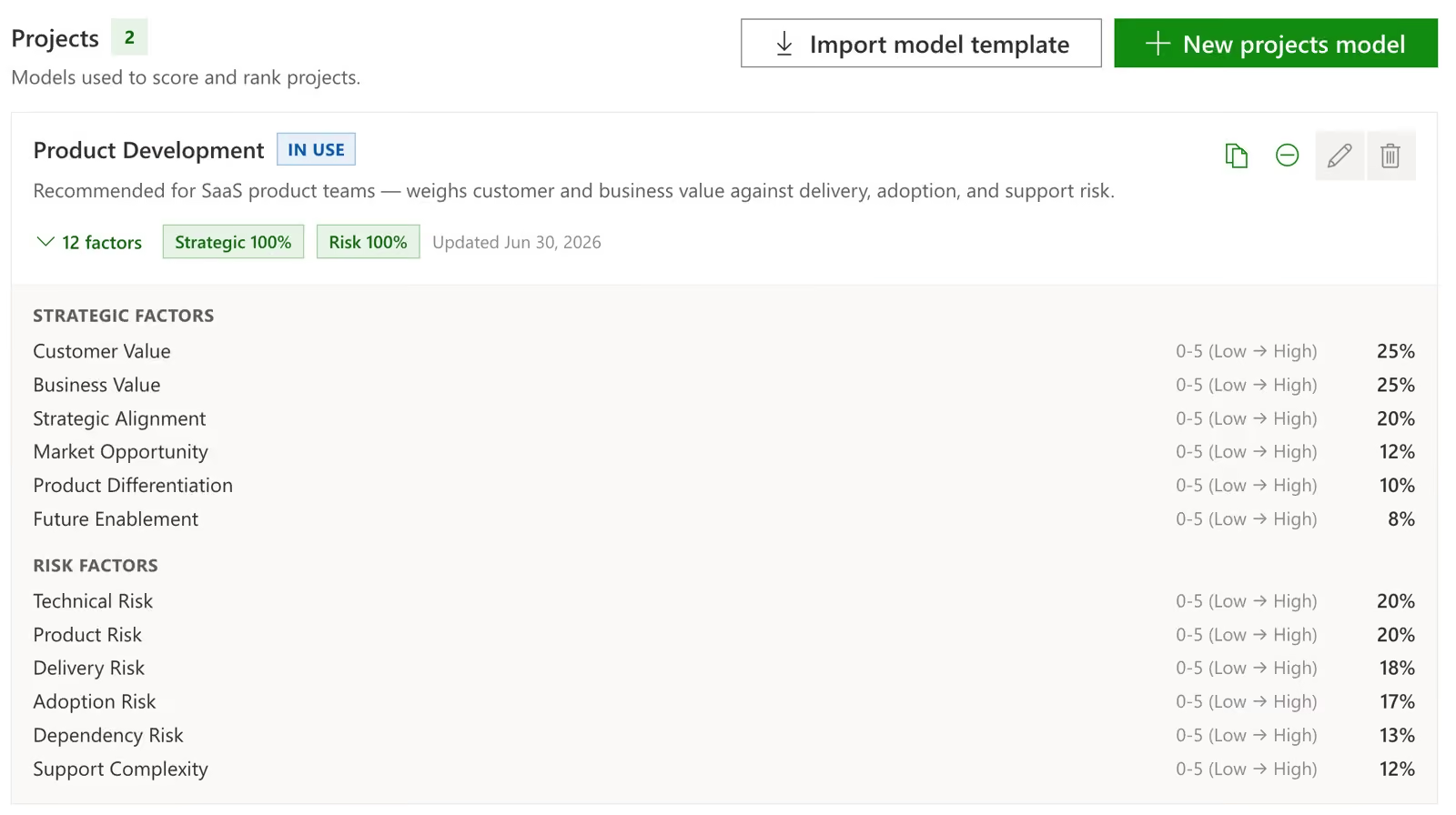
Scoring criteria set before the proposals land. Weighted scoring, MoSCoW, ICE (Impact, Confidence, Ease). Honestly, the framework matters far less than the timing. Criteria agreed in advance are governance. Criteria agreed while staring at a specific proposal are rationalization with extra steps.
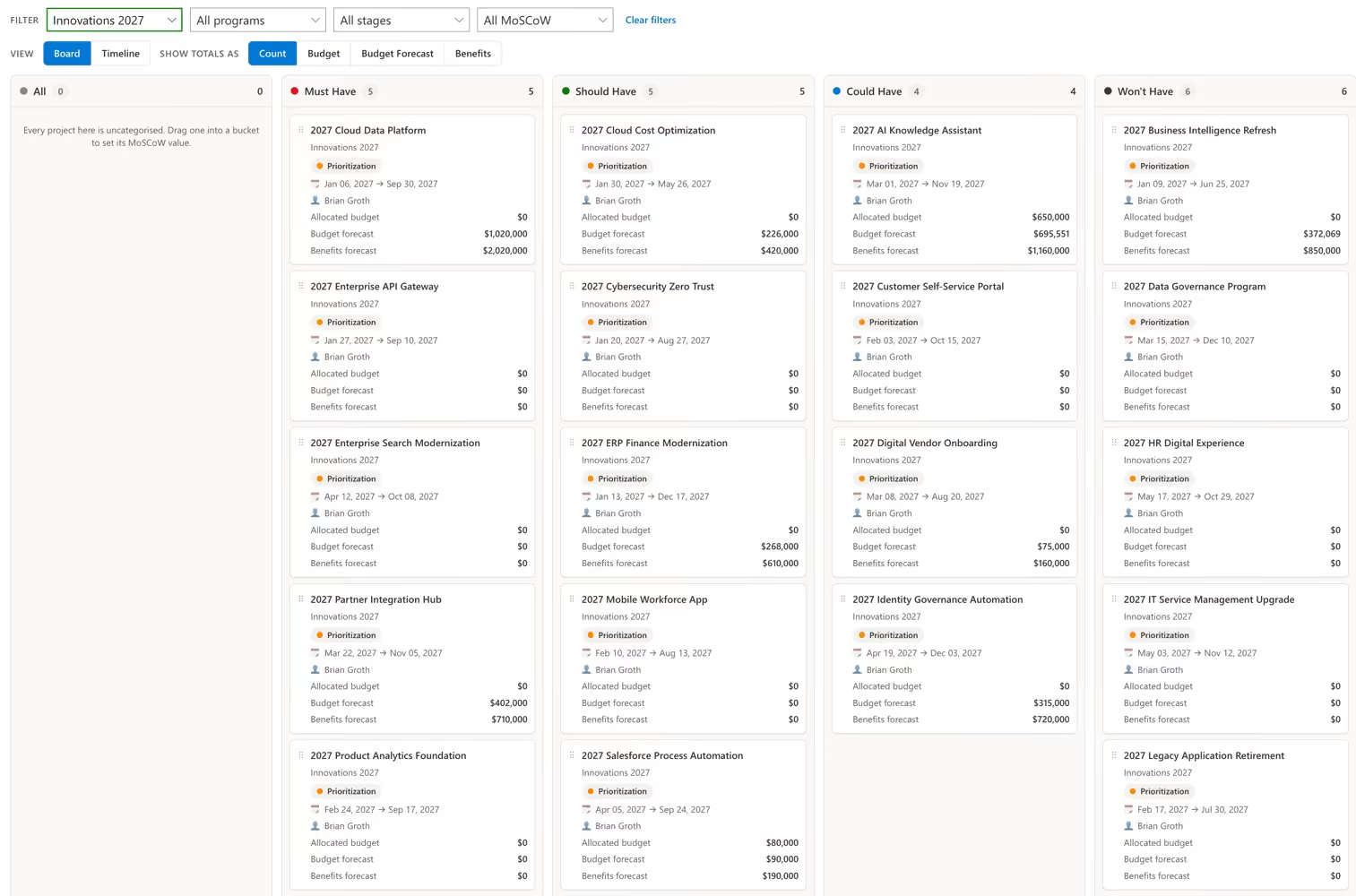
Scoring models applied across the portfolio in PPM Express. Weighted scoring, MoSCoW and ICE-style ranking are all supported, and the criteria are yours to define — see project prioritization, the prioritization framework behind it, and, for demand that has not yet become a project, idea prioritization and ranking.
Must-do classified explicitly, with a running total. Mandatory work is legitimate. What it needs is a boundary and a number. Once leadership can see that regulatory and compliance consume, say, a third of investment capacity, the rest of the conversation gets honest: this is what we have left to place bets with.
Capacity treated as a real constraint rather than a footnote. Funding tested against the roles and skills actually available, before commitment. Capacity is where a great many portfolio strategies come apart — our resource capacity planning guide covers how that number is actually calculated.
Benefits tracked past go-live. Whether the case held up. Skip this and prioritization never improves, because there's no record of which kinds of bets paid. That is the subject of benefits realization management, and it is the practice most often left out.
The point is the tradeoff, not the ranking
Ranked lists are easy to produce and mostly get ignored.
What changes behaviour is making the tradeoff visible at the moment the decision is on the table. Funding the competitive initiative at full scope means the customer platform work slides two quarters, and the integration roles it needs are the same four people the competitive initiative will absorb. Put that on a screen in the room and the character of the conversation shifts. It stops being an argument about whose initiative matters more, and becomes a choice about which outcome the organization wants first.
Executives are generally good at that conversation. They're just asked to have it far too often without being able to see it.
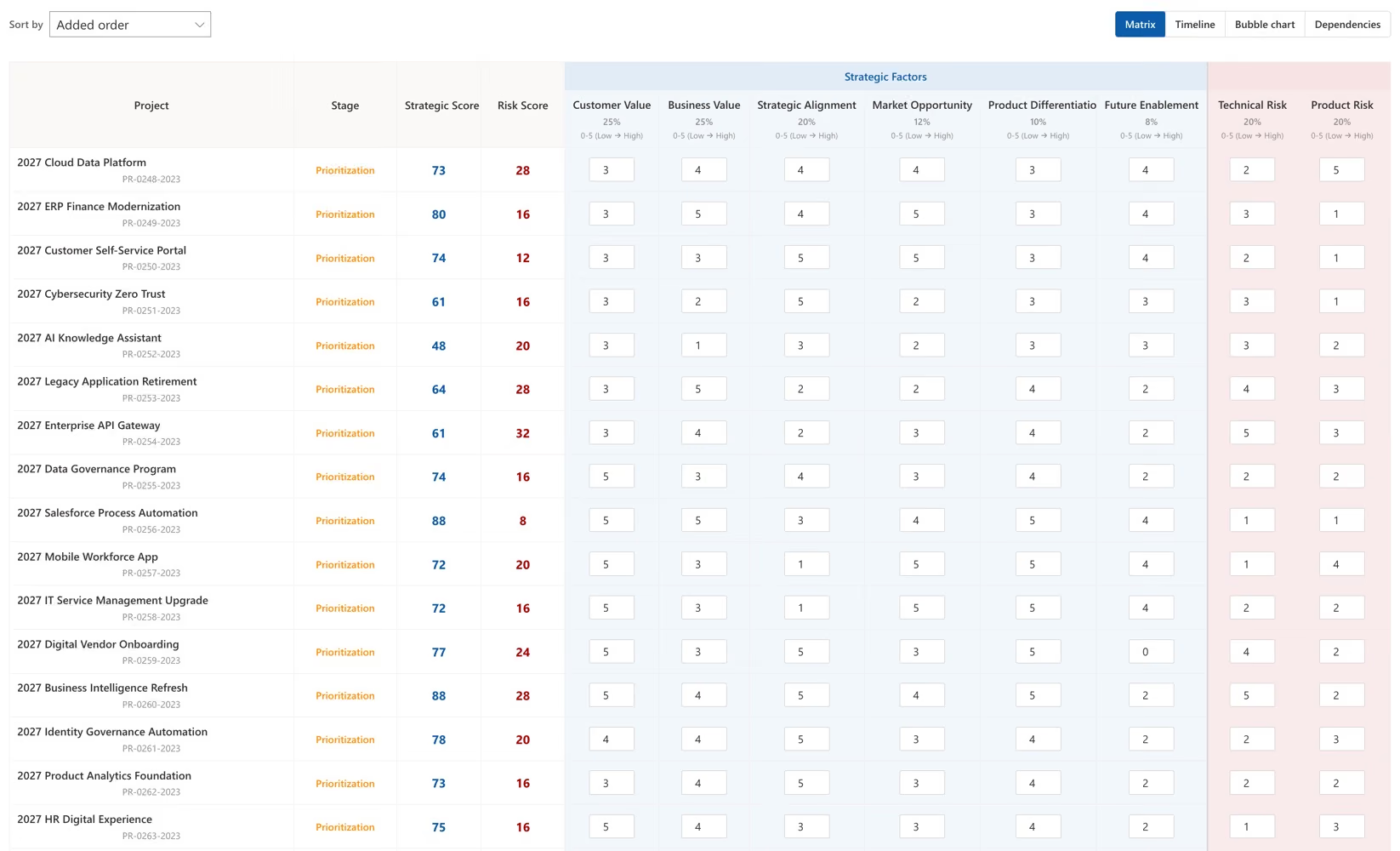
Ranking tested against the money and the people actually available, rather than published as a list and hoped for. More on what-if scenario planning and resource capacity planning.
What changes in the first quarter
Organizations that connect funding, capacity and value often begin to surface several recurring issues early.
The must-do share becomes a number, and it is frequently bigger than anyone guessed. Two or three initiatives that were funded but never realistically staffed get stopped or resequenced deliberately, rather than failing slowly. Sponsors start writing business cases against a common set of criteria, because for the first time they can see how the scoring works. And the portfolio review stops being a status recital and starts being a decision forum, mostly because the material in front of the room finally supports a decision.
The initiatives themselves may not change much in that first cycle. The reasoning behind them changes immediately.
PPM Express exists for this layer. It sits over the delivery tools your teams already run — Azure DevOps, Jira, Microsoft Project, Microsoft Planner, Smartsheet and monday.com — and adds the portfolio structure above them. Strategic portfolio management gives you objectives, investment categories and funding buckets; work intake and ideation captures demand before it becomes an approved project; business cases are scored against criteria you define; must-do work becomes visible against everything competing with it; and one live portfolio view means the ranking can be tested against the capacity you actually have. It provides the portfolio data, scoring, scenario, capacity and benefits context to support better funding decisions — the decisions themselves stay with leadership. No migration, and nobody has to change how they deliver.
Your organization is almost certainly funding good initiatives. Whether it can demonstrate that this particular set is the right one, and change it when the evidence says otherwise, is a different question — and a much better one to be able to answer.
.svg)


