
For IT
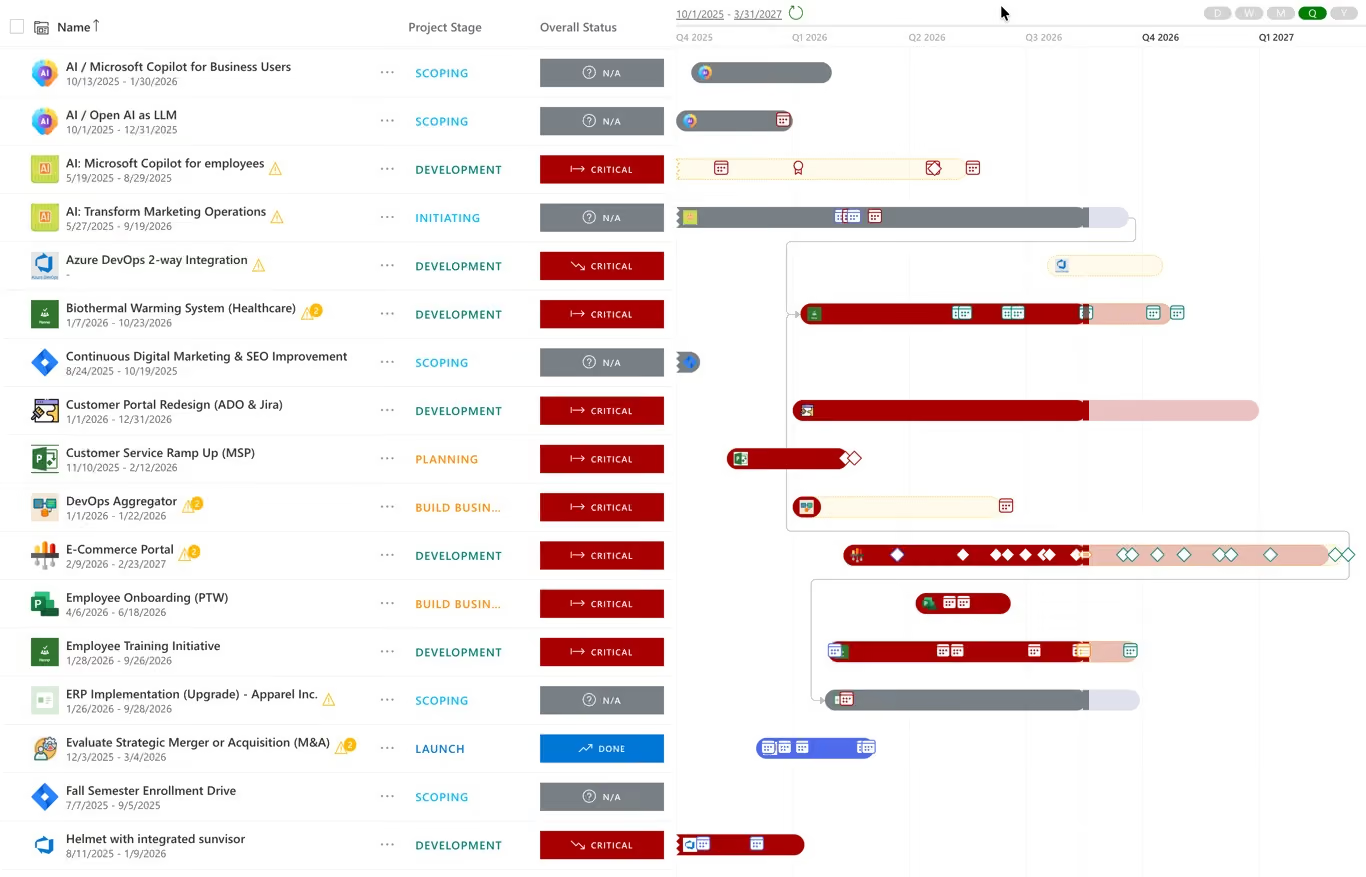
Two-way sync with Azure DevOps and Jira on Ultra; Microsoft Project, Planner, Project for the Web, Smartsheet and monday.com read into the portfolio. Plus Microsoft 365 and Okta SSO, Teams and Power BI. Delivery teams keep their tools; the portfolio assembles itself.
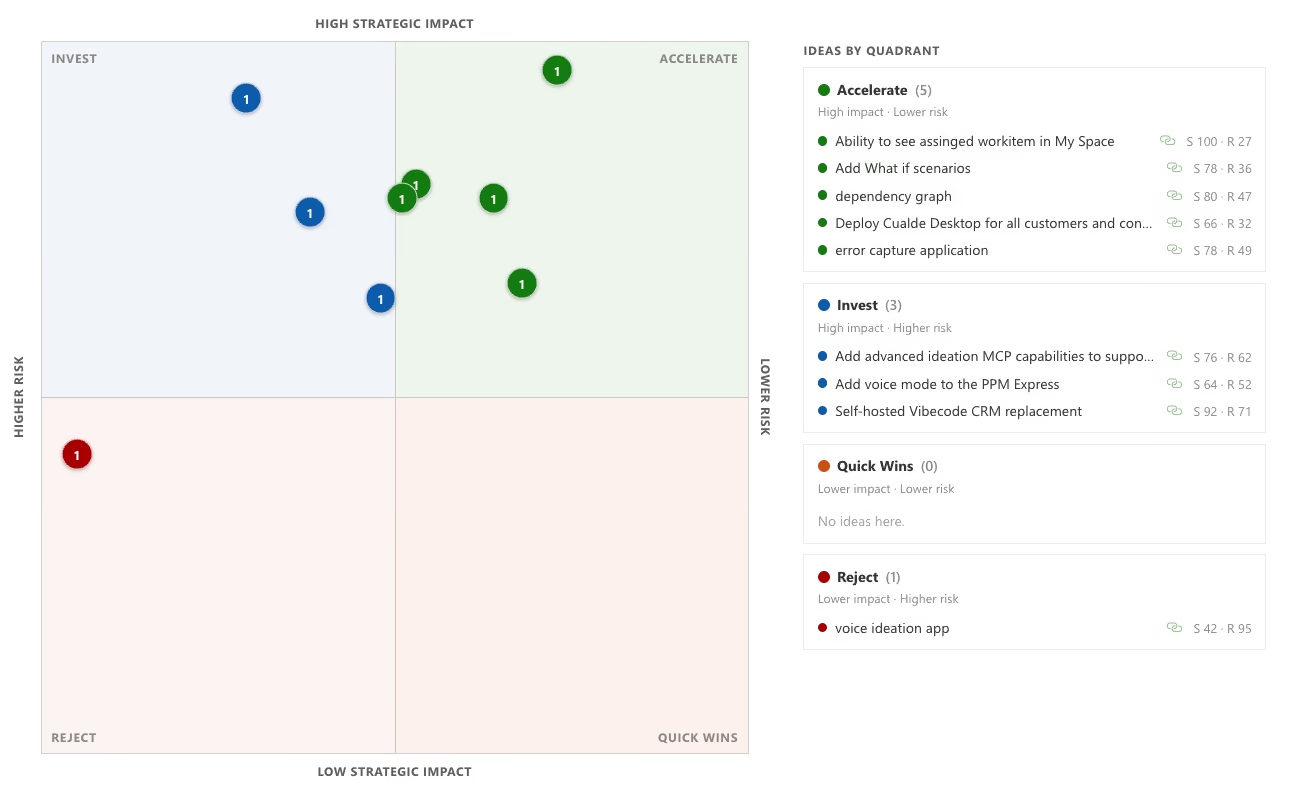
Capture requests against business challenges and score them against criteria the business helped set, with a published value range on every factor. “Why not mine?” gets answered with a model rather than a rank, and ideas that survive become projects in the same system. Migration from Project Online and Planner is automated and included, so the backlog you already have comes with you.
One resource pool with per-person work weeks and calendar exceptions, allocation in hours or % FTE, and over-allocation flagged in red, with amber for the person who is fine overall but breaches on a handful of dates. That amber case is what turns into a missed date.
Enterprise PPM platforms cover broadly the same ground. Where they differ most is what it costs to give your whole organization access to it.
| PPM Express | Planview | Planisware | Meisterplan | ServiceNow SPM | |
|---|---|---|---|---|---|
| Portfolio and programme hierarchy | Yes | Yes | Yes | Yes | Yes |
| Weighted scoring and prioritization | Yes | Yes | Yes | Yes | Yes |
| What-if funding scenarios | Yes | Yes | Yes | Yes | Yes |
| Resource capacity planning | Yes | Yes | Yes | Yes | Yes |
| Stage-gate intake and approvals | Yes | Yes | Yes | Limited | Yes |
| Budgets, forecasts and benefit realization | Yes | Yes | Yes | Yes | Yes |
| Agile and waterfall work in one portfolio | Yes | Yes | Limited | Limited | Yes |
| Two-way sync with Azure DevOps and Jira | Yes | Yes | Limited | Limited | Yes |
| Dashboards and portfolio reporting | Yes | Yes | Yes | Yes | Yes |
| Microsoft Project, Planner and Project for the Web | Native two-way | Yes | Limited | Limited | Limited |
| Free Project Online migration | Included | No | No | No | No |
| Power BI reporting pack | 200+ reports | Limited | Limited | Limited | Limited |
| Unlimited users included | Yes | No, per seat | No, per seat | No, per seat | No, per seat |
| Typical annual cost | $8,000 to $25,000 flat | $100,000+ | $100,000+ | Mid five figures | $100,000+ with platform |
Planview is the broadest suite in the category and the strongest analyst position. If you need enterprise architecture, value stream management and PPM from one vendor, it covers more ground than we do, with the longest implementation and the highest cost to match.
Planisware is genuinely excellent at R&D and new product development pipeline modelling. For an IT portfolio of application, infrastructure, security and data work, that depth is largely unused and still paid for.
Meisterplan is fast to deploy and very good at lean capacity and scenario planning. If contention over engineers is your single problem, it will solve it quickly. It is deliberately lighter on financials, benefit realization, gated intake and delivery-tool integration depth.
ServiceNow SPM is the closest comparison for an IT audience and a strong choice if you already run ServiceNow for ITSM, because the platform and data are already there. If not, you are buying the platform to get the portfolio module, and its integration with Microsoft delivery tooling is thinner than a feature list suggests.
PPM Express covers the same core portfolio capabilities on one flat annual subscription with unlimited users. We are not the deepest R&D pipeline tool or the broadest enterprise suite. We are the portfolio layer for IT organizations that deliver in Azure DevOps and Jira and want governance without moving a single work item.
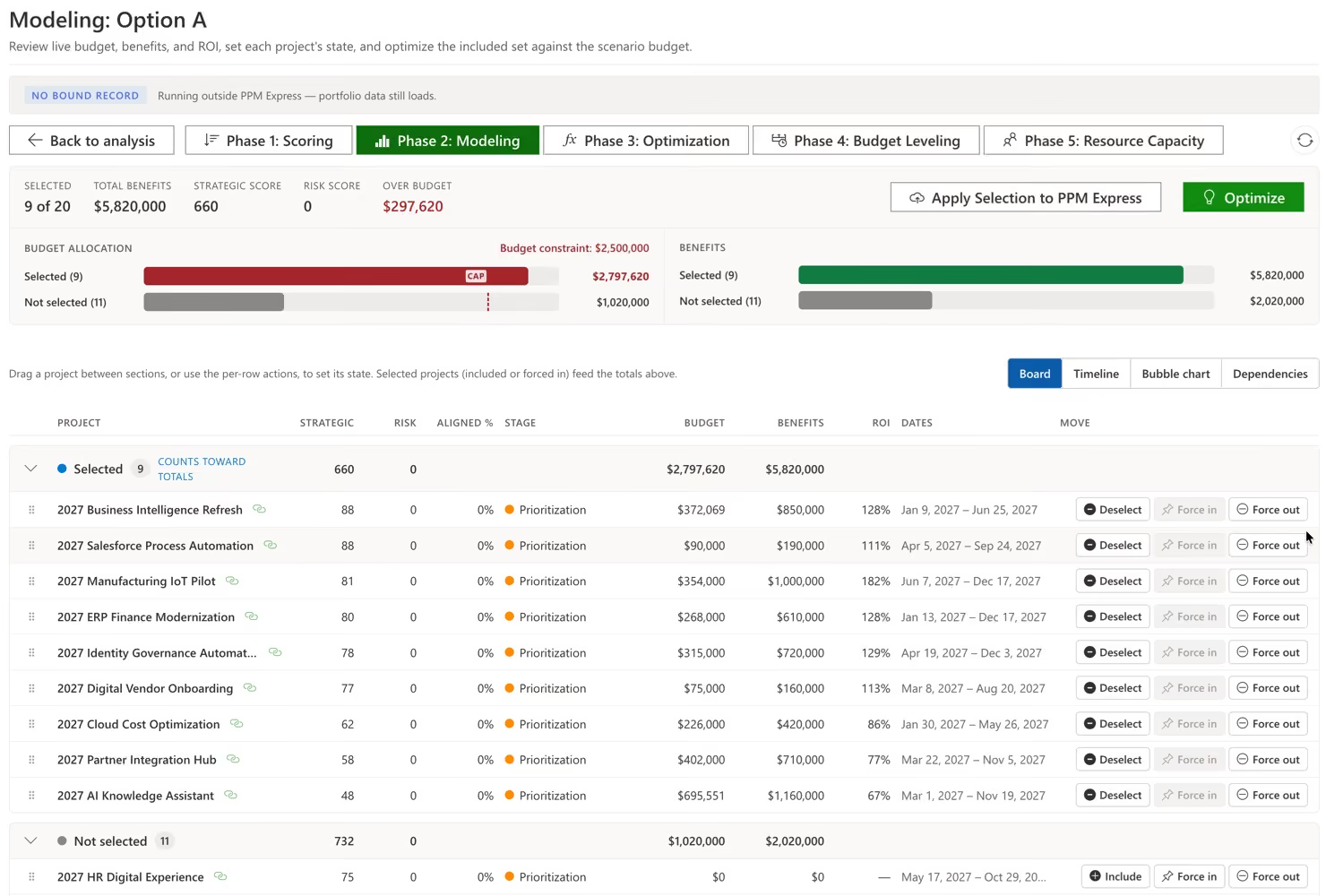
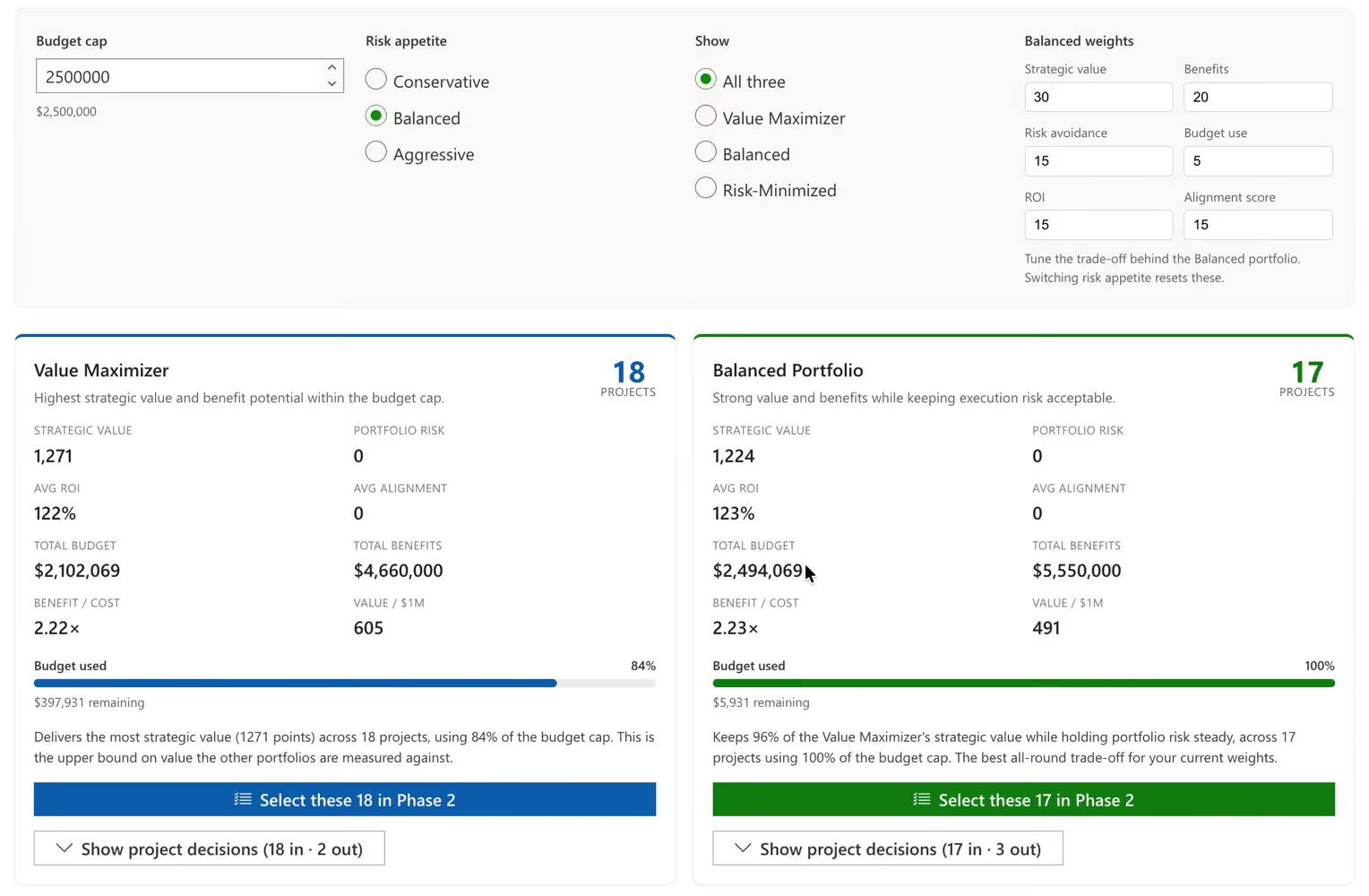
Every quarter turns on questions nobody can answer defensibly. What comes out if the budget lands 15% lower? Which twenty of these forty requests should we take? Today those answers come from a spreadsheet one analyst owns: invisible to everyone else, stale the day after it is built, and impossible to defend when a business sponsor asks why their request was declined.
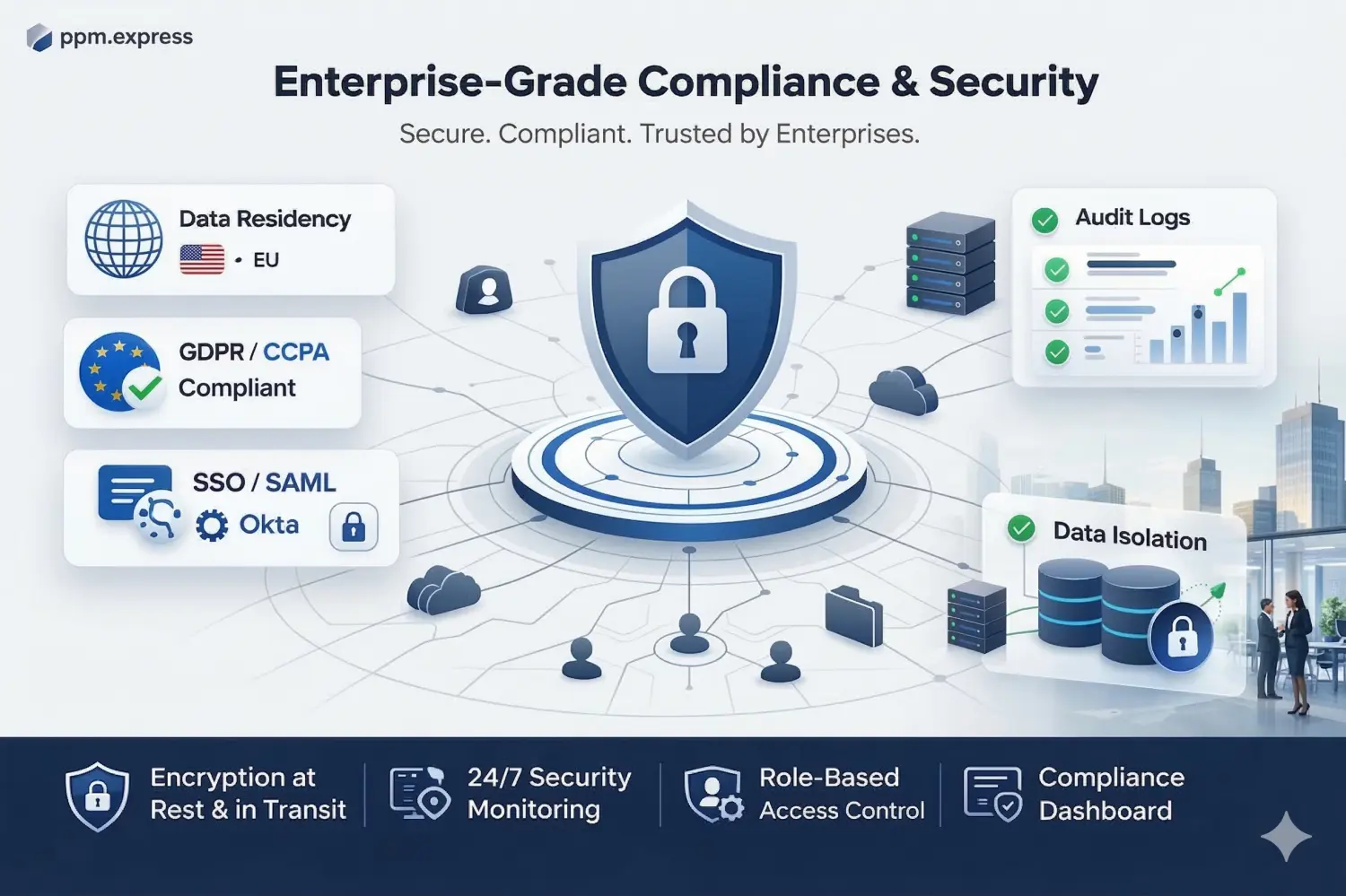

Security & Trust
Enterprise-grade security is built into our platform. We offer US and EU data residency, full GDPR compliance, and custom DPAs to meet strict regulatory requirements.
Need app availability in your region/country to meet data residency requirements? We can provide.
Microsoft 365 and Okta SSO ensure secure identity management, while centralized user management, advanced permissions, detailed audit logs, and strict data isolation protect sensitive enterprise data.
Bring your security reviewers to the same call.
Book Enterprise Demo

What our clients say
250+
Customers
use our software daily
100 hours
Saved every year
on monitoring state and statuses of projects, per PM
100K+
Projects
tracked on the PPM Express platform
Unlimited
Users
on every paid plan, so visibility is never rationed
Data residency
US & EU Data Residency
Encrypted in transit and at rest, with SSO, audit logs and tenant isolation. No customer data used to train AI models.
Reporting
200+ ready-to-use reports
Power BI reports built on live portfolio data, so stakeholders get self-service dashboards instead of a request queue.
Pricing
One flat annual subscription
$25,000/year for large enterprises, $8,000/year for SMB. No per-seat penalty.

Streamline Project Portfolio Management and Visibility at Scale
Integrations

Capture new project request, streamline evaluation and prioritization
Product

Structured Approach for prioritizing and aligning portfolios with strategic priorities and resource constraints
Product
Last updated 20 August 2026
IT portfolio management, answered.
IT portfolio management covers everything IT owns and spends on: projects, applications, infrastructure, run cost. It asks how that whole estate should be funded. Project portfolio management is the narrower question of which change initiatives get approved, sequenced and staffed. PPM Express works on the change side, giving IT one ranked, capacity-checked view of the work it has agreed to take on.
Capturing every request the business makes of IT, assessing it consistently, and deciding what enters the delivery pipeline. It breaks in three predictable places: intake people route around, assessment that varies by assessor, and decisions that never reach the delivery teams. PPM Express addresses the last two, with one scoring model applied to all demand and approved decisions published back into the tools that deliver.
Few, weighted, and written down. Most IT portfolios need strategic contribution, financial return, risk or compliance exposure, and delivery effort, each with a published scale so different assessors produce comparable numbers. PPM Express lets you build that as weighted strategic and risk factors. For lighter calls you can use MoSCoW, ICE, RICE, WSJF or value versus effort instead, or run two and see where they disagree.
Each project follows a process made of phases and stages, with a gate between stages. You decide which gates require sign-off. The project manager names one or more approvers, who review the request in the Approval Center and either approve or reject with a comment. Everyone has to approve for the project to advance. Reviewers typically look at business value, risk, schedule, budget, resources and what was actually delivered.
Less than you'd think, as long as everything lands on the same scorecard eventually. Demand gets assessed against the strategic and risk factors your governance agreed, each with a published value range. A request from a business unit that knows how to write a business case is then measured the same way as one scribbled in an email. Informal arrival, formal assessment.
Change what has to be argued. When rank comes from a published model, escalation stops paying off, because a stakeholder who wants to move up has to argue that the strategic weighting itself is wrong, in front of the peers who agreed it. Few people take that on. PPM Express also keeps the decision history, so "we agreed this in March" is checkable rather than contestable.
Service management platforms are built around tickets and service delivery. Portfolio decisions need money, capacity and strategic value in one view. PPM Express connects to Azure DevOps, Jira, Microsoft Project, Microsoft Planner, Smartsheet and Monday.com to assemble the delivery picture, and holds budget, forecast, benefits and resource plans alongside it. If your current platform already does portfolio scoring and capacity modeling well, you may not need both.
Test the plan against what people actually have left, not against headcount. PPM Express calculates capacity from each resource's work week and calendar exceptions, then shows allocation against it. Overallocation is flagged before IT commits. "We think we can absorb this" turns into a number the CIO can put in front of the business, which makes saying no defensible rather than political.
The Resources page and Resource Dashboard show planned, capacity, actual and availability figures for every person, viewable in hours, percent, FTE or chart form. Allocation within capacity shows green, a single overloaded day shows yellow, and genuine overallocation shows red. You can filter by role, department or skill, which is usually how you find the four people every plan quietly depends on.
That works, and it's a common reason enterprises buy PPM Express. Both are supported connections, alongside Microsoft Project, Microsoft Planner, Smartsheet and Monday.com, and work from all of them rolls into one portfolio. In organizations where a merger or plain team preference left two systems of record standing, you get the combined view without a migration and without maintaining a sync layer between the trackers.
Three variants are supported. Project Online and Project for the Web (Planner Premium) connect directly. For the Microsoft Project Desktop client, PPM Express Project Publisher is an add-in installed into Project itself, and your planners publish schedules up from the ribbon. Desktop 2016, 2019 and 2021 are supported. Azure DevOps Server, as distinct from Azure DevOps cloud, is not.
No. Connections are configured rather than built, and they read from tools you already run. There's no data model to design up front and no re-entry of existing projects. Financial data is cached and refreshed when a project actually changes, so a large estate stays quick without anyone owning a nightly batch job.
Microsoft 365 and Okta SSO for identity, so access follows the directory you already manage. Data residency in the US or the EU, full GDPR compliance, and custom DPAs where required. Strict tenant isolation between customers. Detailed audit logs covering changes to the portfolio of record, which is normally the first thing your security review and internal audit ask about.
.svg)


