
For Operations
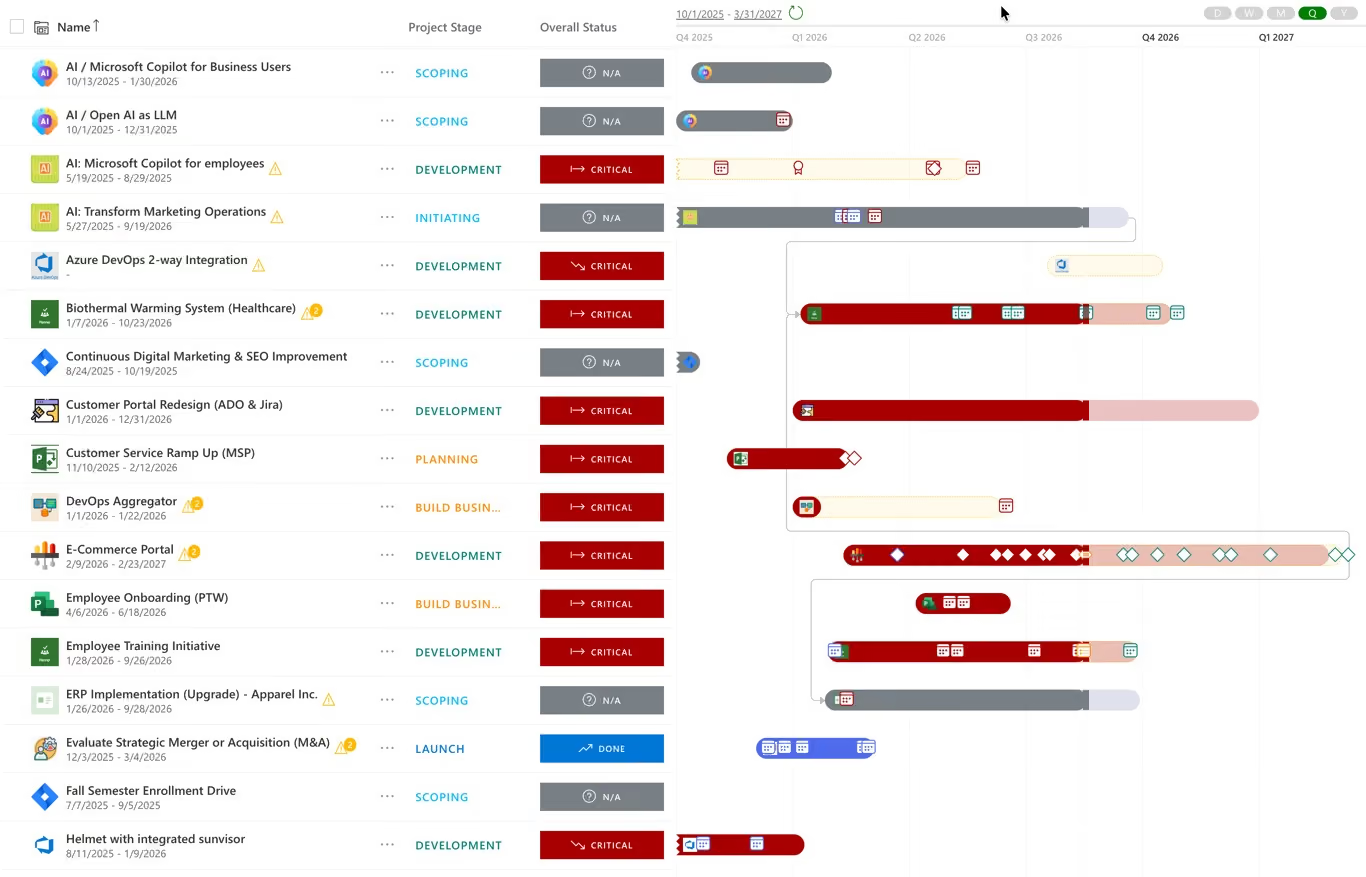
Work managed in Planner, Smartsheet, Monday.com, Microsoft Project or a delivery team's Jira all rolls up to the same view, so a cross-functional initiative finally has one owner and one number instead of four partial ones. Portfolios, programs, business units and geographies, with your own fields, stages and cost structures.
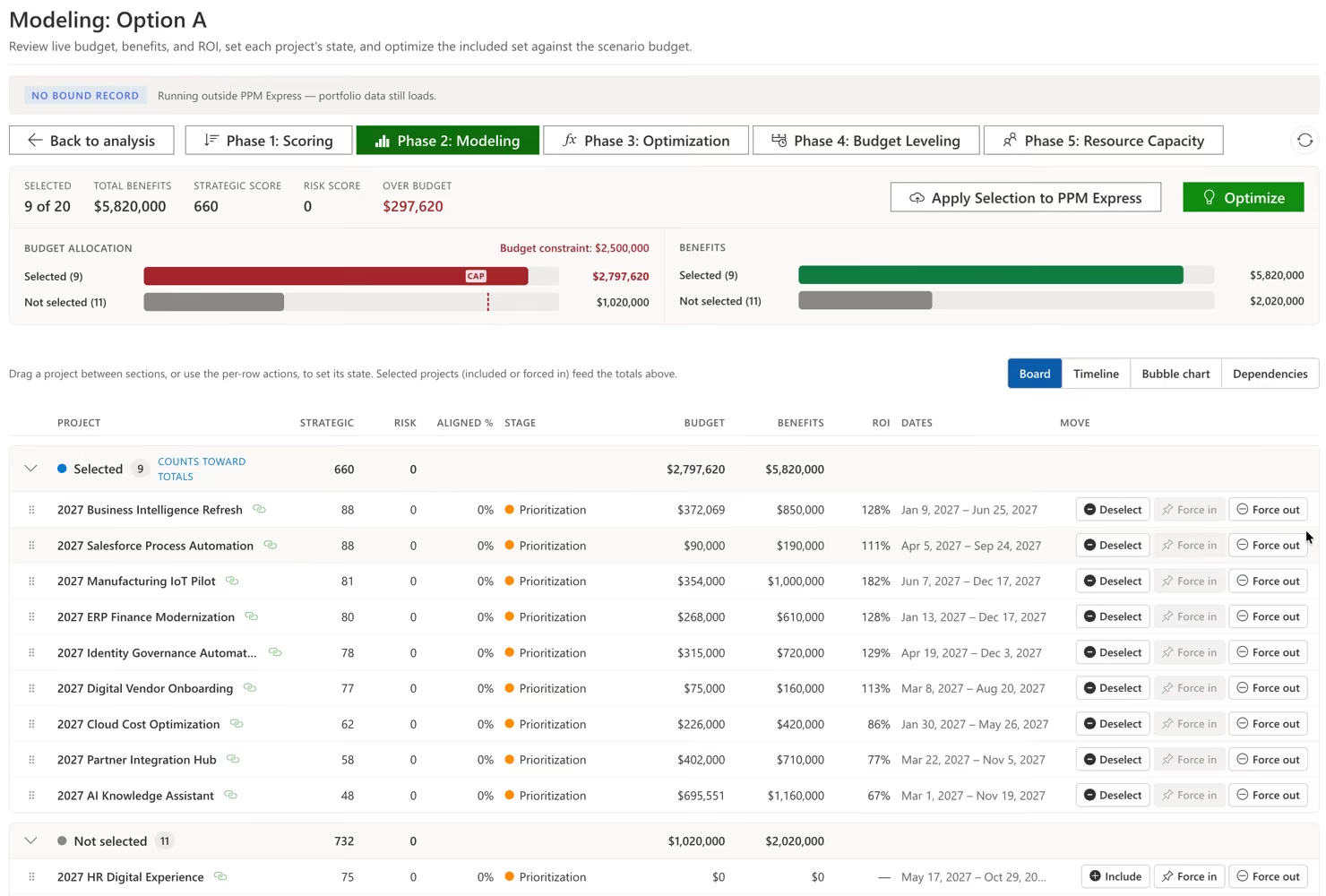
Per-person work weeks and calendar exceptions for holidays and closures, allocation in hours or % FTE across several people and projects at once, and utilization views that show where you are over-committed — and which function is quietly absorbing everyone else's demand. Resource planning at project, program or portfolio level, whichever matches how you commit people.
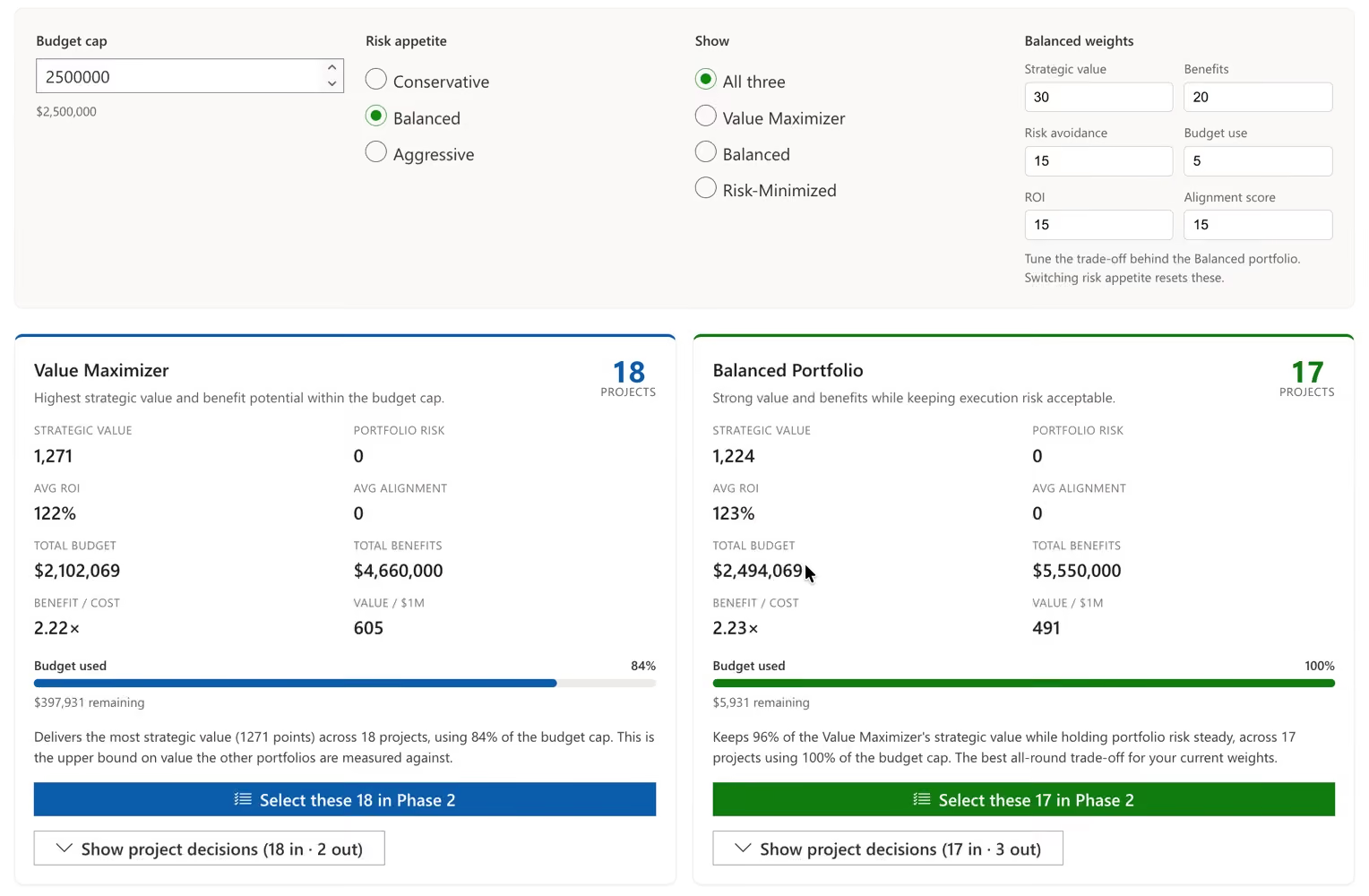
Rank competing initiatives with a weighted model, or with four MoSCoW buckets that total budget and benefits rather than cards. Then start what you can finish — and make “not this quarter” a decision with reasoning attached rather than a disappointment.

Enterprise PPM platforms cover broadly the same ground. Where they differ most is what it costs to give your whole organization access to it.
| PPM Express | Planview | Planisware | Meisterplan | ServiceNow SPM | |
|---|---|---|---|---|---|
| Portfolio and programme hierarchy | Yes | Yes | Yes | Yes | Yes |
| Weighted scoring and prioritization | Yes | Yes | Yes | Yes | Yes |
| What-if funding scenarios | Yes | Yes | Yes | Yes | Yes |
| Resource capacity planning | Yes | Yes | Yes | Yes | Yes |
| Stage-gate intake and approvals | Yes | Yes | Yes | Limited | Yes |
| Budgets, forecasts and benefit realization | Yes | Yes | Yes | Yes | Yes |
| Improvement work against business-as-usual capacity | Yes | Yes | Limited | Yes | Limited |
| Multi-site operational programme rollup | Yes | Yes | Yes | Limited | Yes |
| Time tracking with routed approvals | Yes | Yes | Yes | Limited | Yes |
| Microsoft Project, Planner and Project for the Web | Native two-way | Yes | Limited | Limited | Limited |
| Jira and Azure DevOps | Native two-way | Yes | Limited | Limited | Yes |
| Power BI reporting pack | 200+ reports | Limited | Limited | Limited | Limited |
| Unlimited users included | Yes | No, per seat | No, per seat | No, per seat | No, per seat |
| Typical annual cost | $8,000 to $25,000 flat | $100,000+ | $100,000+ | Mid five figures | $100,000+ with platform |
Planview is the broadest suite in the category and the strongest analyst position. If you need enterprise architecture, value stream management and PPM from one vendor, it covers more ground than we do, with the longest implementation and the highest cost to match.
Planisware is genuinely excellent at R&D and new product development pipeline modelling. For an operations portfolio of improvement initiatives, systems work and cross-functional programmes, that depth is largely unused and still paid for.
Meisterplan is fast to deploy and genuinely strong on the specific problem operations leaders have most often: seeing what improvement work costs the people already running the day job. If that is your only requirement, it is a fair choice. It is deliberately lighter on financials, benefit realization and gated intake.
ServiceNow SPM is a strong choice if you already run ServiceNow, because the platform and data are already there. If not, you are buying the platform to get the portfolio module, and the cost and implementation footprint follow.
PPM Express covers the same core portfolio capabilities on one flat annual subscription with unlimited users. We are not the deepest R&D pipeline tool or the broadest enterprise suite. We are the portfolio layer that keeps operational change visible and resourced instead of absorbed into the day job.
Enterprise PPM platforms cover broadly the same ground. For an operations portfolio the difference that matters is how much reporting effort the platform removes, and what it costs to give every stakeholder the view.
| PPM Express | Planview | Planisware | Meisterplan | ServiceNow SPM | |
|---|---|---|---|---|---|
| Automated status reporting across every project | AI-drafted | Yes | Yes | Limited | Yes |
| Dashboards and portfolio reporting | Yes | Yes | Yes | Yes | Yes |
| Power BI reporting pack | 200+ reports | Limited | Limited | Limited | Limited |
| Resource capacity planning | Yes | Yes | Yes | Yes | Yes |
| Gated intake with configurable approval workflow | Yes | Yes | Yes | Limited | Yes |
| Portfolio and programme hierarchy | Yes | Yes | Yes | Yes | Yes |
| Budgets, forecasts and benefit realization | Yes | Yes | Yes | Yes | Yes |
| Weighted scoring and prioritization | Yes | Yes | Yes | Yes | Yes |
| Microsoft Project, Planner and Project for the Web | Native two-way | Yes | Limited | Limited | Limited |
| Portfolio AI over Copilot, Claude or ChatGPT | MCP server | Limited | Limited | No | Limited |
| Unlimited users included | Yes | No, per seat | No, per seat | No, per seat | No, per seat |
| Typical annual cost | $8,000 to $25,000 flat | $100,000+ | $100,000+ | Mid five figures | $100,000+ with platform |
Planview is the broadest suite in the category and the strongest analyst position. If you need enterprise architecture, value stream management and PPM from one vendor, it covers more ground than we do, with the longest implementation and the highest cost to match.
Planisware is genuinely excellent at R&D and new product development pipeline modelling. For an operations portfolio of process improvement, systems change and service work, that depth is largely unused and still paid for.
Meisterplan is fast to deploy and very good at lean capacity and scenario planning. If contention over shared specialists is your single problem, it will solve it quickly. It is deliberately lighter on financials, benefit realization and gated intake, so operations teams with audit and reporting obligations tend to outgrow it.
ServiceNow SPM is a strong choice if you already run ServiceNow for ITSM, because the platform and data are already there. If not, you are buying the platform to get the portfolio module, and the cost and implementation footprint follow.
PPM Express covers the same core portfolio capabilities on one flat annual subscription with unlimited users. We are not the deepest R&D pipeline tool or the broadest enterprise suite. We are the portfolio layer for operations teams that need one current view across Microsoft and Jira delivery work without an eighteen-month implementation.
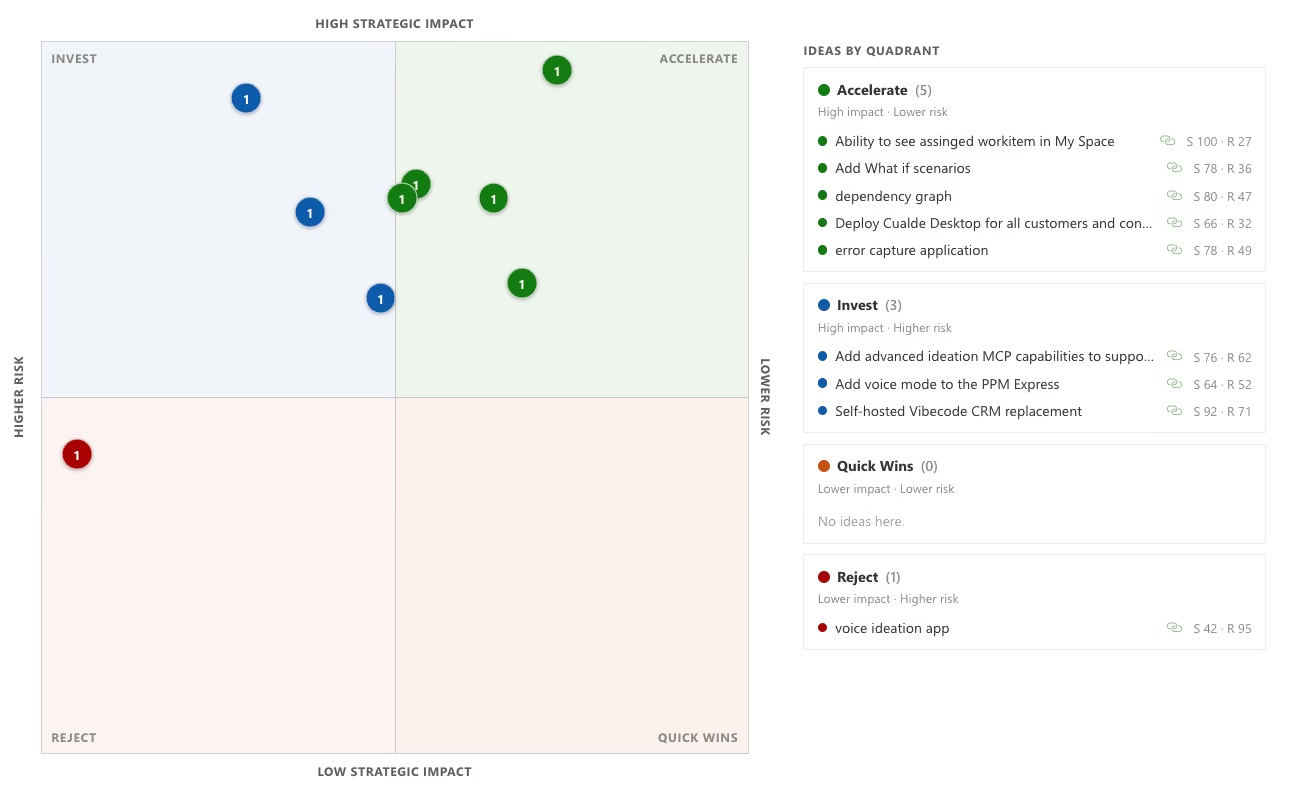
Twelve improvement initiatives, all worthwhile, all drawing on the same handful of people who know the process. Start them together and you finish none of them this year — while the people who could have finished three are the ones who burn out. Explicit criteria, agreed in advance, make the sequencing a decision rather than an argument.
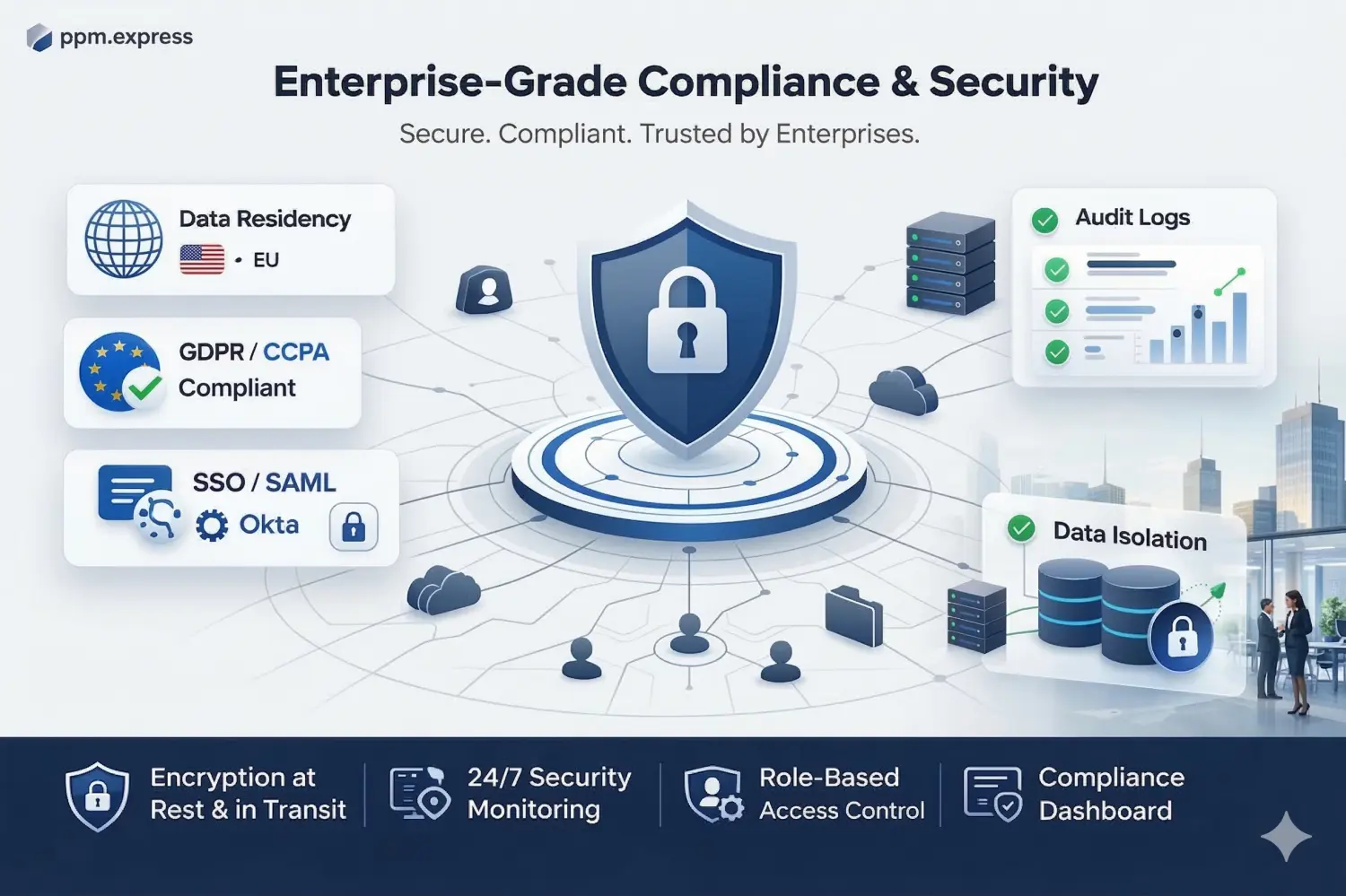

Security & Trust
Enterprise-grade security is built into our platform. We offer US and EU data residency, full GDPR compliance, and custom DPAs to meet strict regulatory requirements.
Need app availability in your region/country to meet data residency requirements? We can provide.
Microsoft 365 and Okta SSO ensure secure identity management, while centralized user management, advanced permissions, detailed audit logs, and strict data isolation protect sensitive enterprise data.
Bring your security reviewers to the same call.
Book Enterprise Demo

What our clients say
250+
Customers
use our software daily
100 hours
Saved every year
on monitoring state and statuses of projects, per PM
100K+
Projects
tracked on the PPM Express platform
Unlimited
Users
on every paid plan, so visibility is never rationed
Data residency
US & EU Data Residency
Encrypted in transit and at rest, with SSO, audit logs and tenant isolation. No customer data used to train AI models.
Reporting
200+ ready-to-use reports
Power BI reports built on live portfolio data, so stakeholders get self-service dashboards instead of a request queue.
Pricing
One flat annual subscription
$25,000/year for large enterprises, $8,000/year for SMB. No per-seat penalty.

Streamline Project Portfolio Management and Visibility at Scale
Integrations

Capture new project request, streamline evaluation and prioritization
Product

Structured Approach for prioritizing and aligning portfolios with strategic priorities and resource constraints
Product
Last updated 20 August 2026
Operations portfolio management, answered.
It's the full set of improvement, efficiency and cross-functional initiatives the organization has committed to, treated as one investment decision instead of eight departmental lists. Running it as a portfolio is what makes the collisions visible: two functions booking the same specialist, four initiatives all claiming the same saving. Without that view nobody ever actually decides the total.
Continuous improvement tools are built around the idea funnel: collect suggestions, run kaizen events, log small wins. Portfolio tools are built around the investment decision: score, fund, staff and track to benefit. PPM Express covers both. Ideas and challenges are captured and progressed, and the ones that graduate into funded initiatives get the same budget, benefit and capacity discipline as any other project.
Give ideas somewhere to go after submission. PPM Express supports business challenges, which invite ideas against a specific problem, and each idea moves through defined stages from draft to proposed, active, and then selected or rejected. Collection is never the hard part with suggestion schemes. The silence afterward is what kills the next round, so a visible stage and a named owner matter more than the form design.
Ideas are submitted against a challenge, can be voted on, and are reviewed by the challenge manager, who selects or rejects them. Selected ideas become initiatives in the portfolio, where they pick up scoring, budget, benefits and resource plans like anything else. Beyond that, projects can run a stage-gate process with approvals at whichever gates you choose, so early funding stays small until the case firms up.
The supported connections cover Microsoft Project, Microsoft Planner, Smartsheet, Monday.com, Jira and Azure DevOps, which between them cover how most operational teams really track work. Initiatives from all of them roll into one portfolio with shared scoring, budgets and benefits. Teams that have settled into a tool keep it. Operations leadership stops maintaining the spreadsheet that reconciles them.
Yes. PPM Express Project Publisher installs into the Microsoft Project Desktop client, and you publish an open plan into PPM Express from the ribbon. Tasks arrive in PPM Express in editable form, so people who don't own a Project license can work with them afterward. Two limits are worth knowing: up to 2,000 tasks per plan, and ten levels of hierarchy.
Track the benefit case from the start rather than reconstructing it later. Every initiative carries budget, forecast, benefits and impact, and the numbers are baselined at the moment of the funding decision. When Finance asks what was promised against what landed, the comparison already exists. That's a very different conversation from assembling evidence for a claim someone made eighteen months ago.
Most of them won't need to. Teams keep tracking work where they already do and PPM Express reads from it. The named users are the people running the portfolio: operations leadership, improvement leads, finance partners. Ideation is the exception, because there the whole point is broad participation, and flat pricing for unlimited users means opening it up doesn't change your cost.
Capacity comes from each person's work week and calendar exceptions, and allocation is shown against it in hours, percent or FTE, with overallocation color-coded. Improvement portfolios overcommit in a particular way: the same handful of process specialists and data analysts appear in every initiative. That pattern shows up immediately once allocation is visible in one place.
Score them against shared criteria rather than merging the lists. Weighted strategic and risk factors with published value ranges mean a supply chain initiative and a customer service one get assessed on the same scale. Where the decision doesn't justify the full model, MoSCoW or ICE work fine, and running two frameworks side by side shows you where they disagree.
No. The portfolio holds anything that consumes budget and people: process improvement, site changes, compliance work, cross-functional programs. Microsoft Planner, Smartsheet and Monday.com are supported connections precisely because a lot of operational work never goes near a developer tool. Nothing in the scoring, capacity or benefits model assumes software delivery.
Make stopping a normal review outcome rather than an admission of failure. Scenario comparison shows the portfolio with an initiative and without it, in the same units as everything else: strategic value, benefits, risk, cost and the capacity that comes back. Once people can see what those specialists would otherwise be doing, closing something stops being a referendum on whoever proposed it.
The first real output is usually the consolidated list itself, which many operations functions have never actually had. That appears as soon as the connections are configured, because there's no migration step. Agreeing the scoring model takes longer, and it should. Those criteria are the governance decision, and the software only enforces what you settle on.
.svg)


