
Teams choose Microsoft Planner because it is light, fast and already inside Microsoft 365, and Planner Premium when a plan needs real scheduling. Neither was built to run programs and portfolios, resource capacity, project financials or risk. PPM Express reads plans from both into one enterprise portfolio and changes nothing about the way your teams work.
No migration, no plugin, no new tool for the teams — and no lock-in: Planner sits alongside Jira, Azure DevOps, Microsoft Project, Smartsheet and Monday.com in the same portfolio.
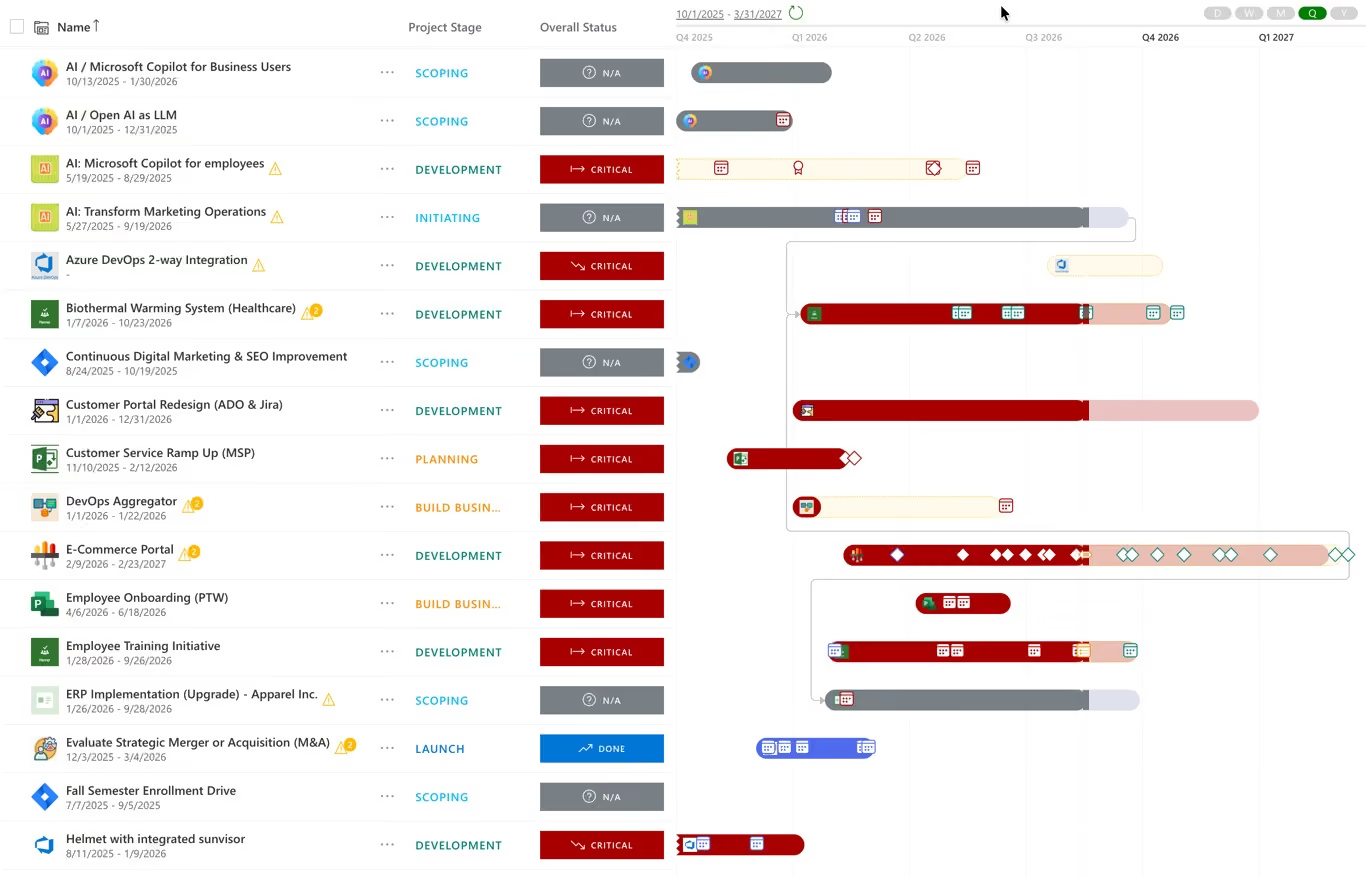


Each plan lives inside its own group or team. Nothing sits above it, so twenty plans are twenty separate answers and never one portfolio.
Somebody checks each board, counts what is done, screenshots the buckets and writes the commentary. It takes days every month, and it is out of date before the meeting starts.
Planner has assignments but not availability, tasks but not budget, buckets but not risks or issues. The questions a steering committee asks are simply not in the tool.
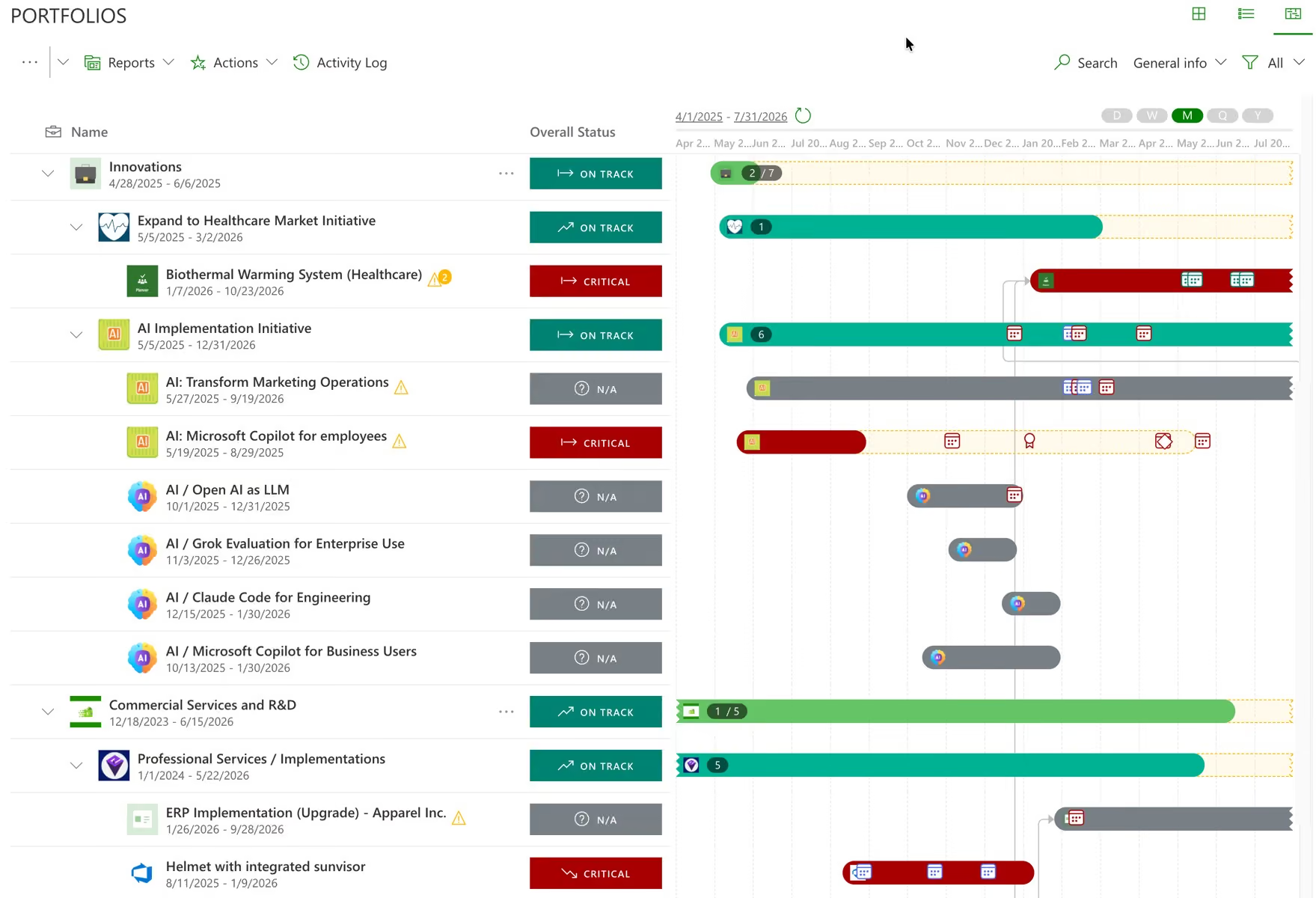
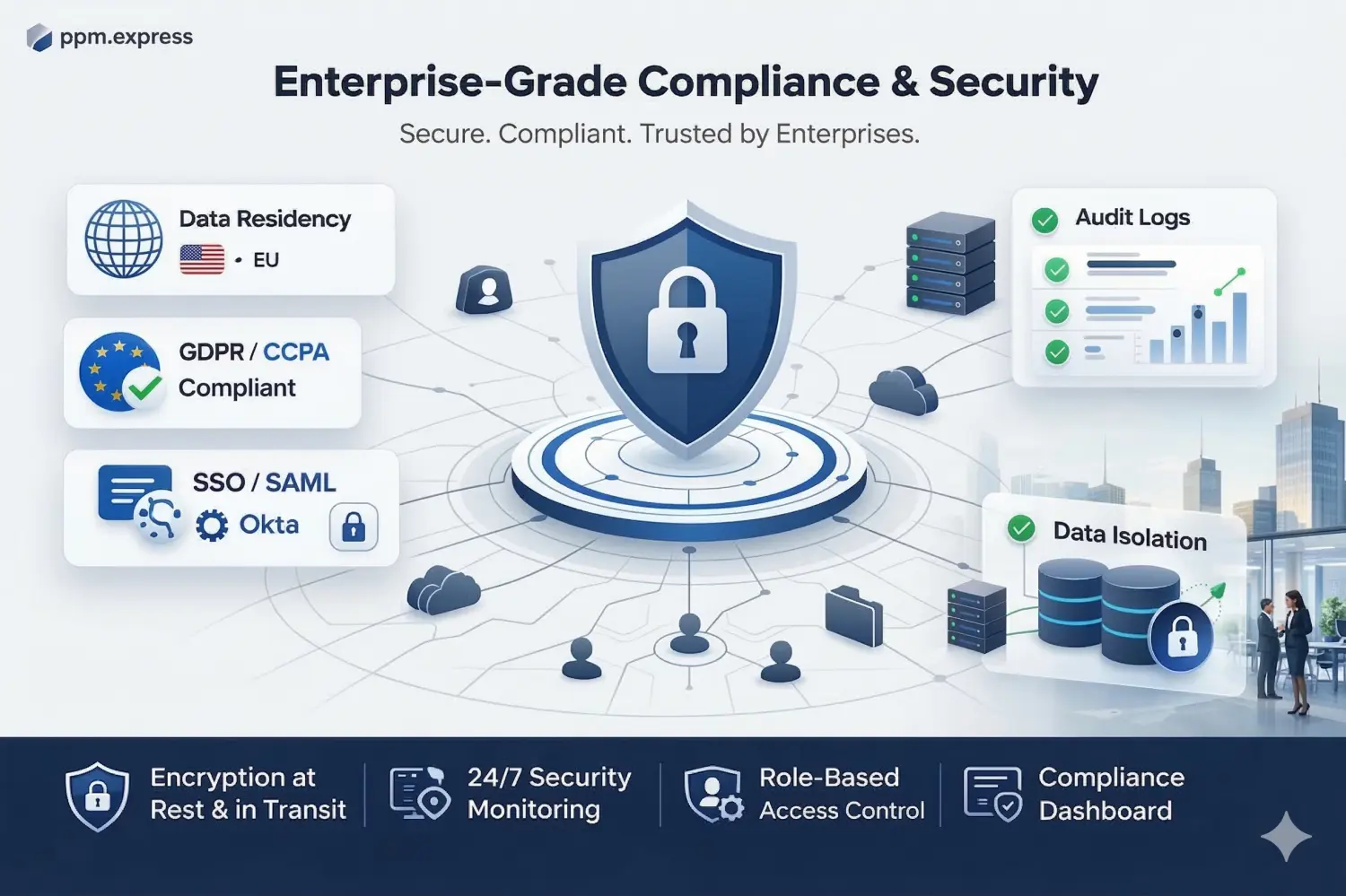
PPM Express reads Microsoft Planner work data only — plans, buckets, tasks, assignments, dates and progress, from both Planner and Planner Premium. Nothing is installed, no field is imposed on your teams and nobody has to learn a second tool. There is no access to Teams conversations, SharePoint files or mailboxes, which keeps the security review short. Identity runs through Microsoft 365 or Okta SSO, so nobody manages another credential.
Microsoft Planner and Microsoft Planner Premium in Microsoft 365, including plans created inside Microsoft Teams. Both roll into the same portfolio.
Teams conversations, SharePoint documents and mailboxes. The connection reads plan data and nothing else.
Microsoft 365 or Okta SSO, with central user management and granular permissions.

Planner sprawls by design — anyone in Microsoft 365 can start a plan. Choose which ones belong in the portfolio and leave the rest alone. Connecting takes minutes and changes nothing your teams see.
Group plans into portfolios and programs, and attach everything a task board cannot hold: budget and forecast, benefits, strategic score, risks and issues, and the people who have to deliver it.
Prioritise, fund and sequence in PPM Express, and test the result against the capacity you actually have. Your teams carry on in Planner and never see the machinery above them.
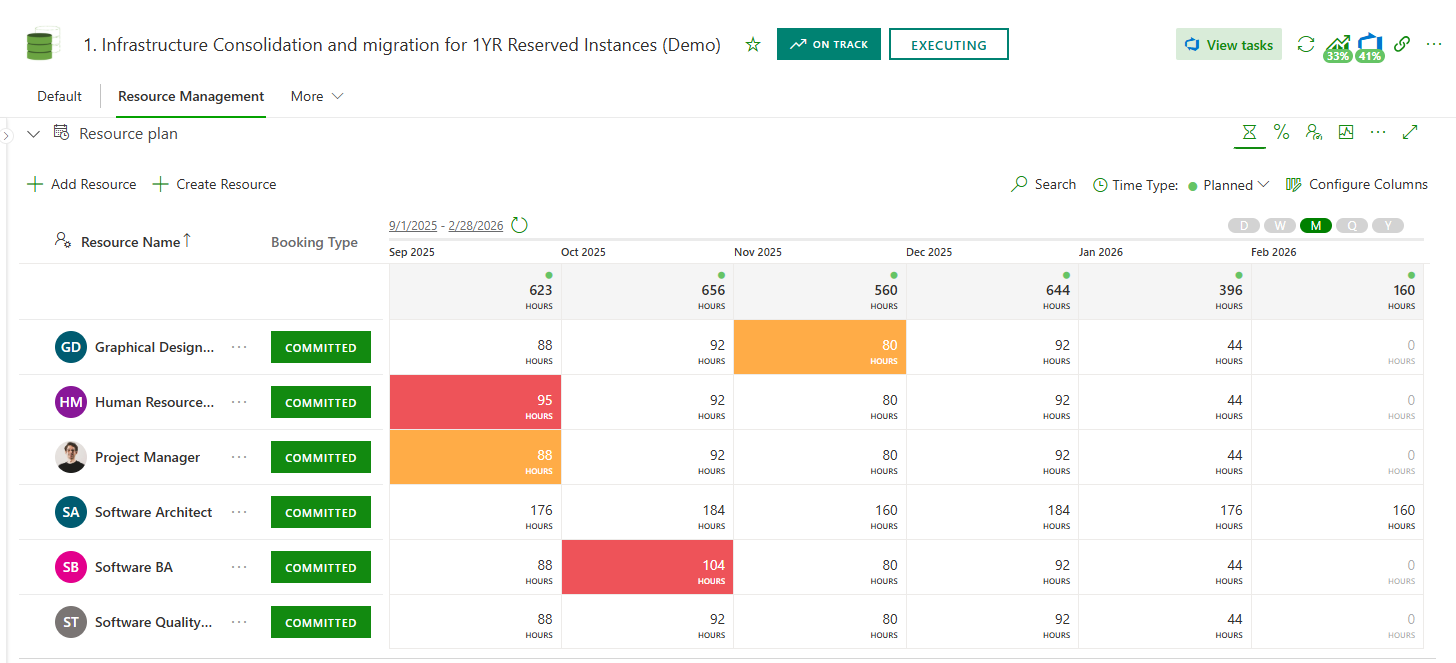
Plans become initiatives inside portfolios and programs, with the structure your organization is actually run by. Every initiative carries its status, timeline, budget, capacity and risk in the same row, so a portfolio review reads as one table instead of thirty Planner tabs.
Portfolios, programs and initiatives above the plans your teams already keep.
Status, dates, budget, forecast, benefits, capacity and risk, lined up so initiatives can be compared rather than described.
Read-only status access for executives and sponsors, so the portfolio is something they open themselves rather than something you assemble for them.
Progress is read from the tasks your teams are already ticking off: bucket, assignee, dates and completion. Nobody fills in a status form, and the portfolio cannot drift from Planner because it is not a copy of Planner.
The roll-up reflects what the plans say now, not the moment somebody last opened them.
If dates or completion change after you have built an analysis, PPM Express shows exactly what changed and asks whether to take it, instead of absorbing it silently.
AI-written summaries drawn from live plan data, so project leads stop writing updates about work the system can already see.
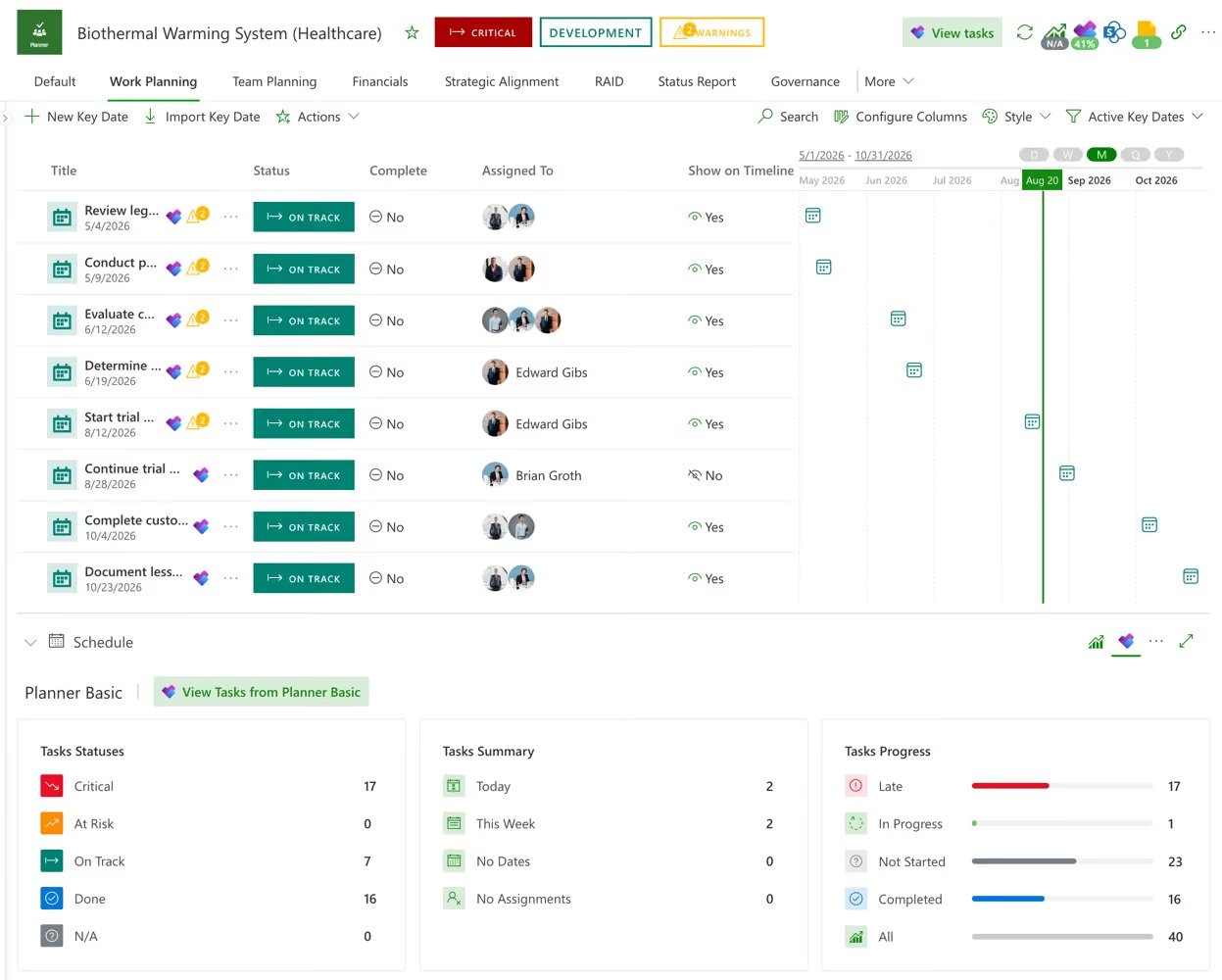
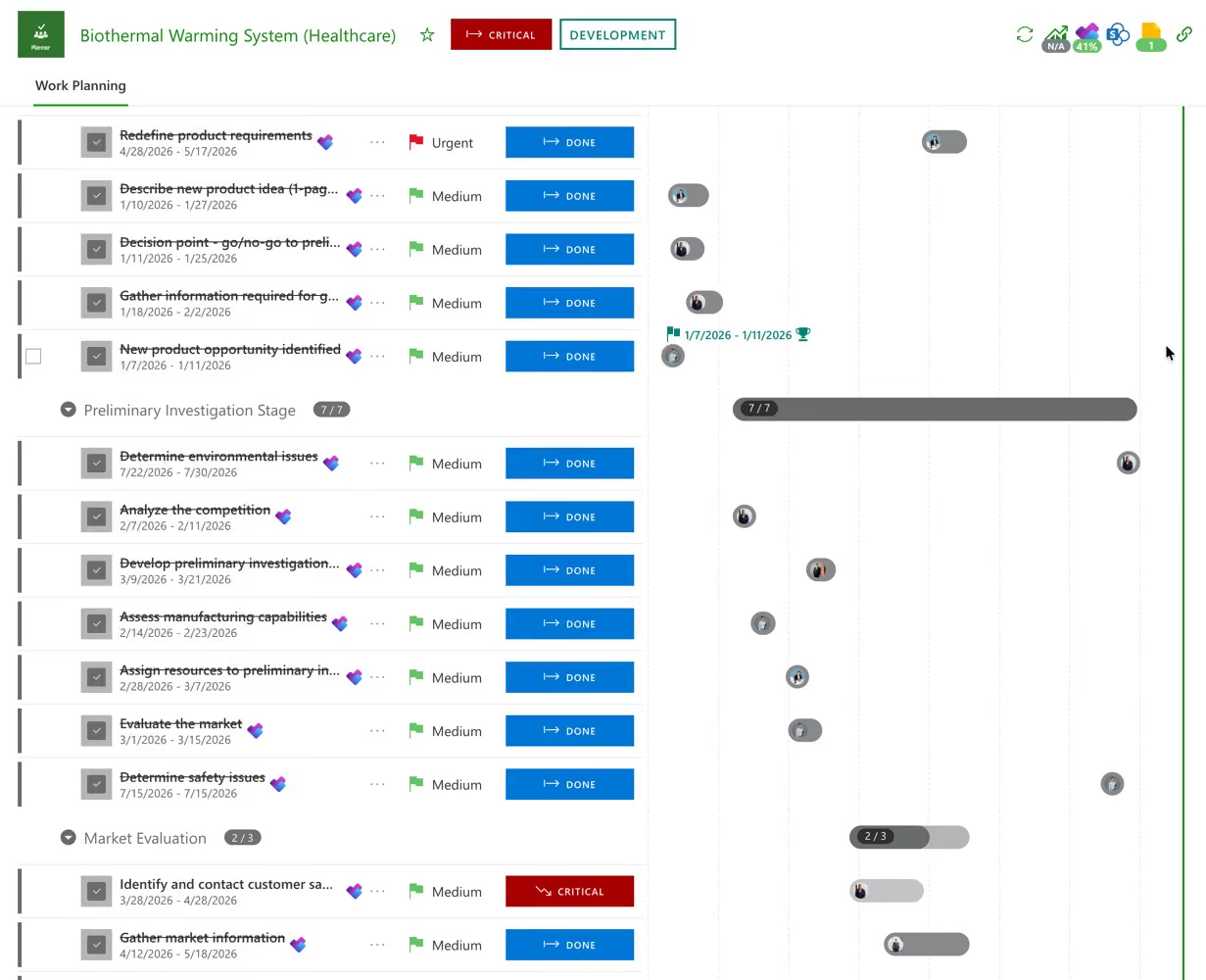
A bucket board has no dependencies, no milestones and no view across plans. PPM Express puts every connected plan on one Gantt with the dependencies between them, so the portfolio has a timeline even though the work is managed on boards.
Plans, initiatives and tasks on a single Gantt, with dependencies drawn between work that Planner keeps apart.
Milestones, owners and due dates in one place, updated once and reflected everywhere.
Built from live plan data, so when the work moves the roadmap moves with it instead of being redrawn.

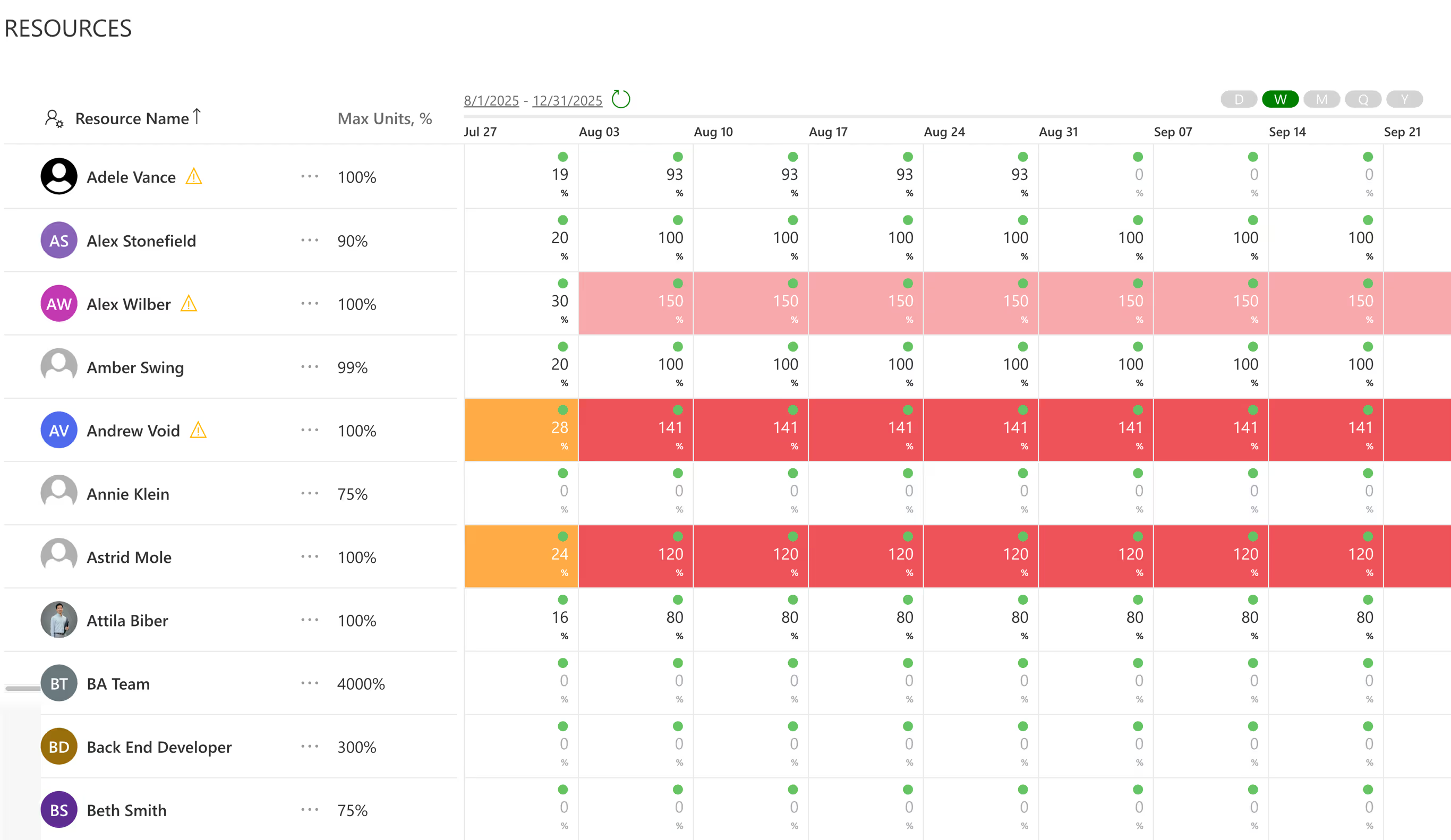
Planner tells you a task is assigned. It does not tell you whether that person has any time, what the initiative costs, what it is expected to return, or what might stop it. PPM Express adds resource capacity, budgets and forecasts, benefits, and a risk and issue register on top of the plans you already keep.
Allocate people to initiatives in hours or percentage FTE, and read the pool as a table or a histogram before anything is committed.
Cost and forecast per initiative, tracked against the benefit it was funded to deliver — the conversation Planner cannot have.
A register per initiative, rolled up to the portfolio, so problems are visible before they are history.
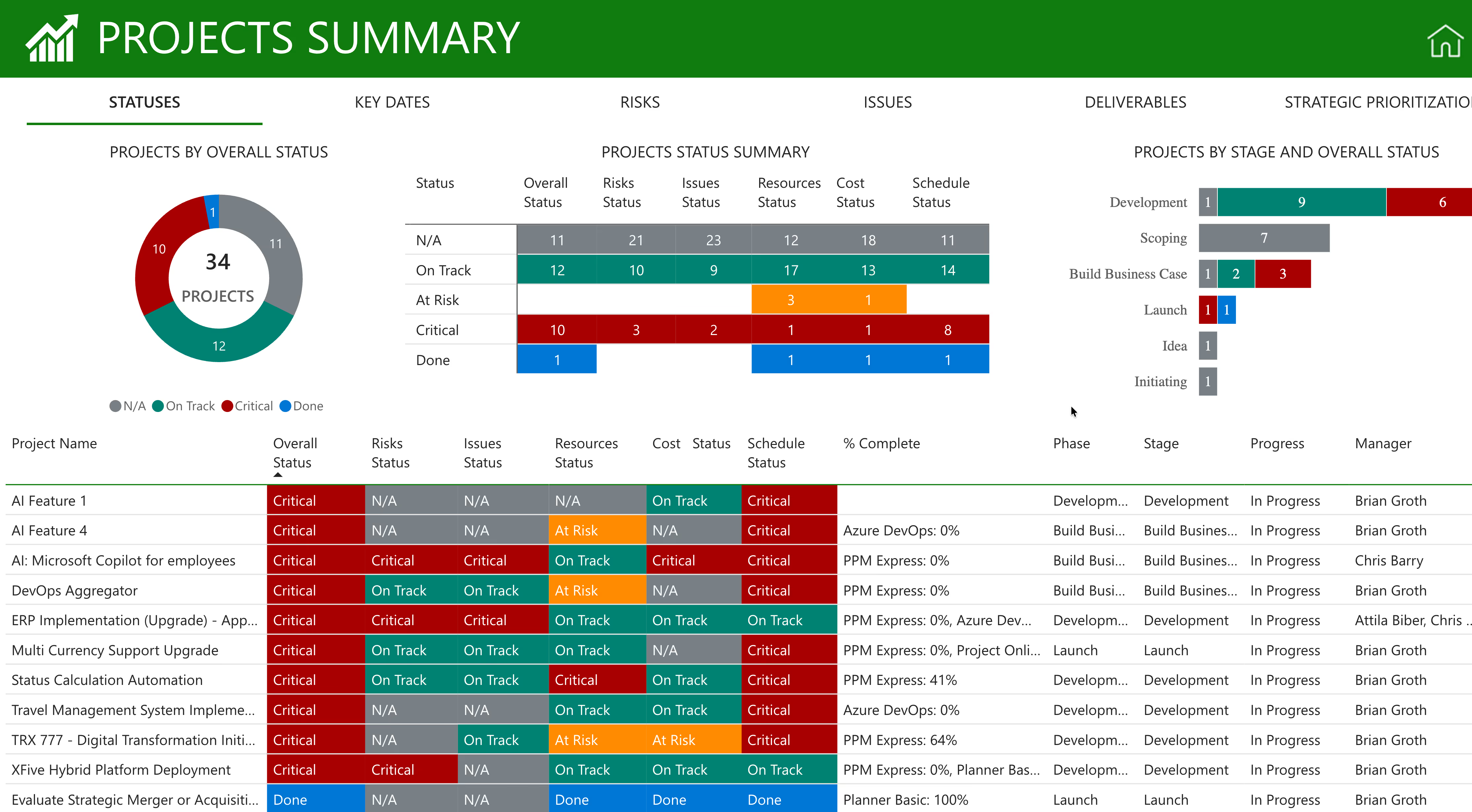
Work managed in Planner is reported next to everything else the enterprise delivers. Where other teams run Jira, Azure DevOps, Microsoft Project, Smartsheet or Monday.com, those roll into the same portfolio and the same reports — nobody migrates, and no team is told to abandon the tool that suits it.
Portfolio and project health, risks, issues, costs and capacity, ready to use rather than waiting to be built.
Planner alongside Jira, Azure DevOps, Microsoft Project, Smartsheet and Monday.com.
For executives, sponsors and external stakeholders — the same numbers, without a rebuild for each audience.
Adding a portfolio layer usually means replacing the tool people like. This does not. Planner keeps running exactly as it does today, PPM Express reads from it, and if a team later moves to Jira, Microsoft Project or anything else on the list, the portfolio does not change — only the connection behind it does.
Plans, buckets and tasks are read into PPM Express and nothing is written back. Planner stays the single source of truth for the work, and the portfolio layer observes rather than intervenes — which is also the shortest path through a security review.
No plugin, no app to approve, no custom field and no new process for the people doing the work. If you disconnect tomorrow, Planner is exactly as you left it.
Anyone in Microsoft 365 can create a plan, so not every plan deserves a place in the portfolio. Promote the ones that represent funded initiatives and leave the rest to the teams.
Plan data only: plans, buckets, tasks, assignments, dates and progress. No Teams conversations, no SharePoint files and no mailboxes. Microsoft Planner and Planner Premium are both supported, including plans created in Teams.

Enterprises rarely run on one tool, and they should not have to. PPM Express lets Planner stay what it is good at — fast, simple work management for a small initiative — while the portfolio above it carries programs, capacity, financials, risk and reporting at enterprise scale.
No migration project, no retraining, no vendor lock-in — and no argument with the teams about giving up a tool that works for them.
Adoption is the hardest part of any PPM rollout. Nobody has to be persuaded to abandon Planner.
Portfolio and program management, resource capacity, financials, benefits, risks and issues, and reporting leadership can read without asking.
If a team outgrows Planner and moves to Jira or Microsoft Project, the portfolio stays put. Only the connection behind it changes.
Leadership cannot see what is in flight without asking, and the monthly answer is assembled plan by plan.
Availability is guessed, budgets sit in a finance spreadsheet, and risks are remembered rather than recorded.
Every PPM proposal starts with a migration and ends with an adoption problem.
Leadership reads the portfolio directly, and the monthly assembly job disappears.
Availability is calculated, budgets and benefits are tracked per initiative, and risks have an owner and a date.
The only people who need a PPM Express account are the ones asking portfolio questions: the PMO, sponsors, finance partners and leadership.

Every project, person and dollar in one live view.
Integrations

Capacity from real work weeks, so over-allocation surfaces before you commit.
Product

Jira, Azure DevOps, Planner, Project Online, monday.com and Smartsheet in one portfolio.
Integrations
Last updated 20 August 2026
PPM for Microsoft Planner and Planner Premium, answered.
Not on its own, in either edition. Planner is work management: plans, buckets, tasks and assignments, with Premium adding scheduling. Neither has a level above a plan, resource capacity, budgets or benefits, or a risk register, so neither can answer what the organization is delivering, what it costs or whether the people exist to deliver it. PPM Express adds that layer while the plans stay in Planner.
No. Nothing moves and nothing is rebuilt. PPM Express reads the plans you choose to connect, and your teams carry on in Planner exactly as before. If you disconnect later, Planner is untouched.
One-way, for both editions. Plans, buckets and tasks are read into PPM Express and nothing is written back to Planner. Planner stays the single source of truth for the work, which keeps the connection simple to approve and impossible to disrupt.
The opposite. The portfolio layer is deliberately separate from the tool the work sits in, so different teams can use different tools and a team that outgrows Planner can move to Jira, Azure DevOps, Microsoft Project, Smartsheet or Monday.com without the portfolio being rebuilt. Only the connection behind it changes.
Yes. Both editions connect and both roll into the same portfolio. Planner Premium adds richer scheduling, dependencies and licensing on the Microsoft side; from the portfolio side it makes no difference which edition a plan came from, and an organization running a mix of the two sees one portfolio, not two.
Plan data only: plans, buckets, tasks, assignments, dates and progress. There is no access to Teams conversations, SharePoint files or mailboxes, which tends to keep the security review short. Identity runs through Microsoft 365 or Okta SSO.
That is the normal case, and it is a common reason enterprises adopt PPM Express. Planner, Jira, Azure DevOps, Microsoft Project, Smartsheet and Monday.com are all supported connections and roll into one portfolio. No group of teams migrates, and nobody maintains a sync layer between trackers purely to produce a leadership report.
No. The people doing the work stay in Planner and never open PPM Express. Accounts are for the people asking portfolio questions: the PMO, sponsors, finance partners and leadership. A portfolio tool that makes delivery teams maintain a second set of records is a portfolio tool holding stale data by the end of the quarter.
You decide which plans are promoted into the portfolio. Plans a team creates for its own week stay where they are; the ones that represent funded initiatives are connected and given an owner, a budget and a place in a program. Sprawl stays in Planner, where it does no harm.
Yes. PPM Express is used by enterprises running hundreds of initiatives across multiple portfolios, with delivery spread across Planner and other tools. Leadership works from live progress, capacity, cost and risk, with reporting automated across every portfolio rather than assembled for each review.
Because the pack was built by hand at a point in time and the plans moved afterward. Reading the portfolio live from Planner removes the gap. When dates or completion change upstream after you have built an analysis, PPM Express shows you exactly what moved and asks whether to take it, rather than absorbing the change silently.
Boards in monday.com, covered by the same portfolio layer. monday.com portfolio management
Sheets in Smartsheet, covered by the same portfolio layer. Smartsheet portfolio management
Capacity across every plan and every board, calculated in one place. Resource capacity planning and utilization
Every system PPM Express connects to, and what each connection reads. All PPM Express integrations
Hosting, identity, permissions, and the data PPM Express never touches. Security and trust




.svg)


