
Strategic PPM
PPM Express turns a list of approved projects into a portfolio you can govern — objectives, investment categories, funding buckets, scored business cases, real capacity, stage gates and benefits, in one place. Your teams keep delivering in Azure DevOps, Jira, Microsoft Project, Planner, Smartsheet or monday.com.
Book Enterprise DemoOne of the largest law firms in the US governs 7 IT portfolios and over 200 projects this way — 2,000+ attorneys, 14 offices, one set of portfolio decisions.
7
IT portfolios
200+
Projects governed
US & EU
Residency
Definition
Strategic portfolio management (SPM) is the discipline of deciding which initiatives an organization funds, staffs and stops — and governing that decision as conditions change. Project and program management deliver the work; SPM decides which work deserves the money and the people in the first place, then checks afterward whether the choice paid off.
01
Strategic goals translate into investment categories and funding buckets, so a compliance mandate and a discretionary growth bet compete against others of their own kind instead of against everything at once.
02
Initiatives are scored against weighted criteria you define, ranked against a funding cut line, and tested across alternative scenarios before any budget is committed.
03
Portfolios are checked against real people capacity before approval, released in funded stages with gate reviews, and measured against the benefits they promised once delivered.
Most enterprises deliver projects well. What they cannot do is say, with evidence, why this initiative was funded and that one was not — or whether the money spent last year bought what the business case promised. The list of approved projects grows, the capacity behind it does not, and the ranking that would settle it either does not exist or cannot be defended when it is questioned.
Business cases arrive one at a time and are judged one at a time. Nothing forces the question of whether this initiative is worth more than one already funded, so the portfolio grows by addition rather than by choice.
Money is committed once a year against estimates that were never tested against capacity. By the time reality arrives, re-planning means renegotiating the budget instead of reallocating inside it.
The business case wins the approval and is then filed. Without benefits tracked past go-live, the next funding round is argued from opinion rather than from what the last one actually returned.
What-if scenario planning framework
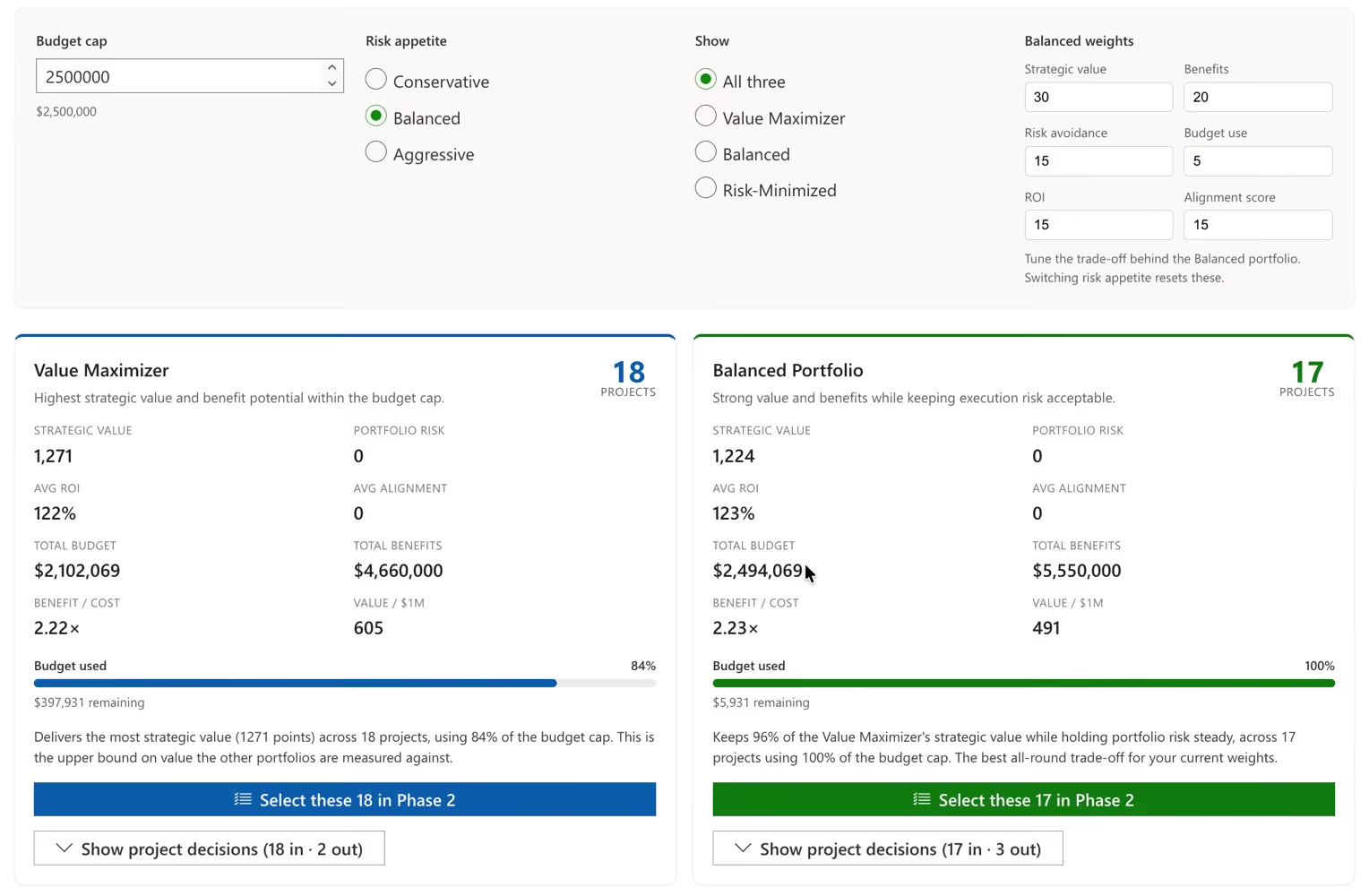
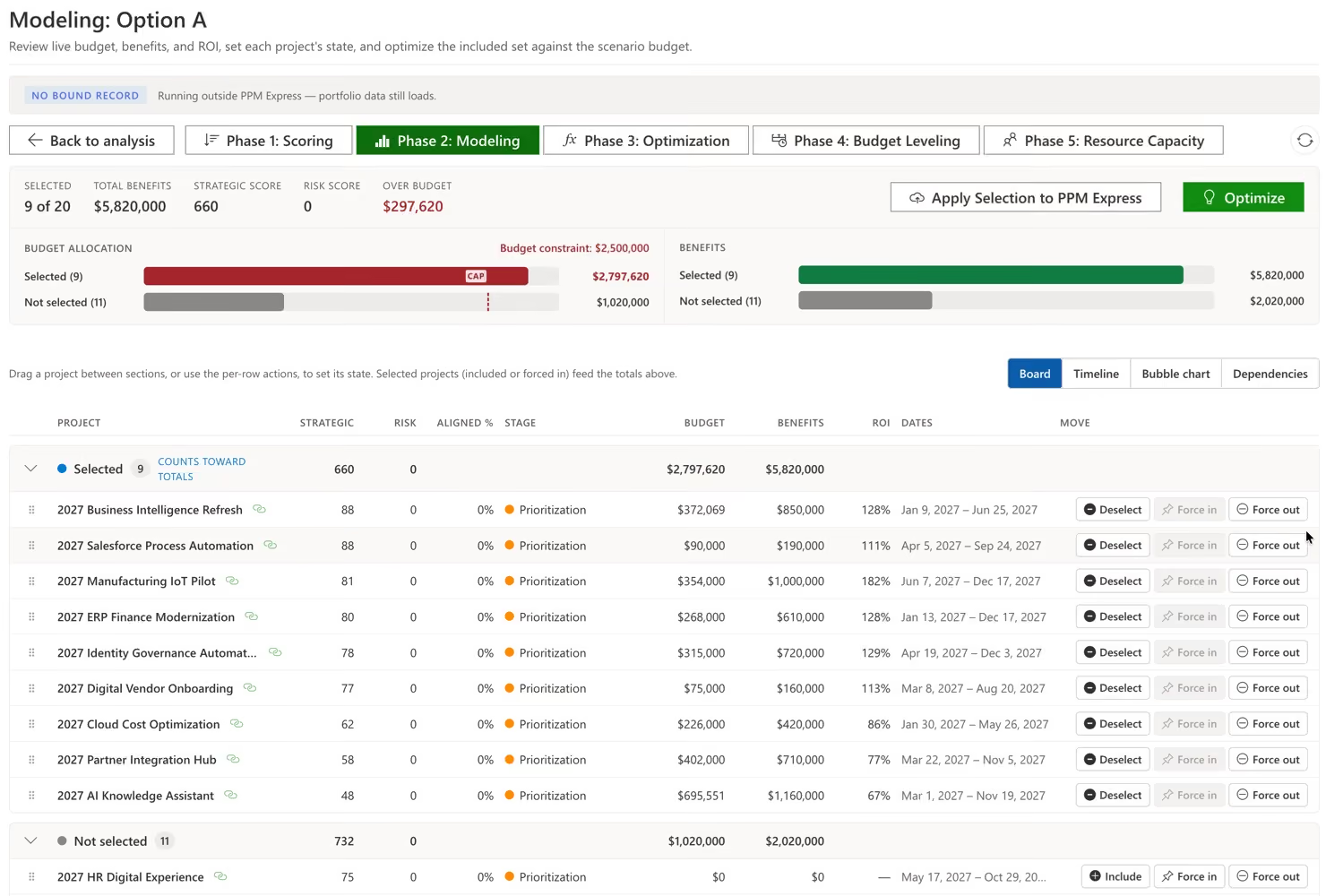
Build competing funding scenarios on your live portfolio, see the genuine trade-offs, and publish the decision back onto every project. Today those answers come from a spreadsheet one analyst owns, invisible to everyone else, stale the day after it's built, and impossible to defend when a sponsor asks why their project was cut.
Plan Portfolios
An analysis owns the budget ceiling, the scoring model and the candidate projects, so every scenario inside it is judged by the same rules, which is what makes comparing them mean something.
Weighted strategic and risk factors, each with a published value range, so a score means the same thing to everyone who enters one.
For each project, collect and track Budgets, Benefits and Impact
Select a Scenario
Pareto optimization shows the options where you can't improve strategic value, benefits, risk or cost without giving something up, so the committee chooses a point on the frontier instead of arguing toward a number.
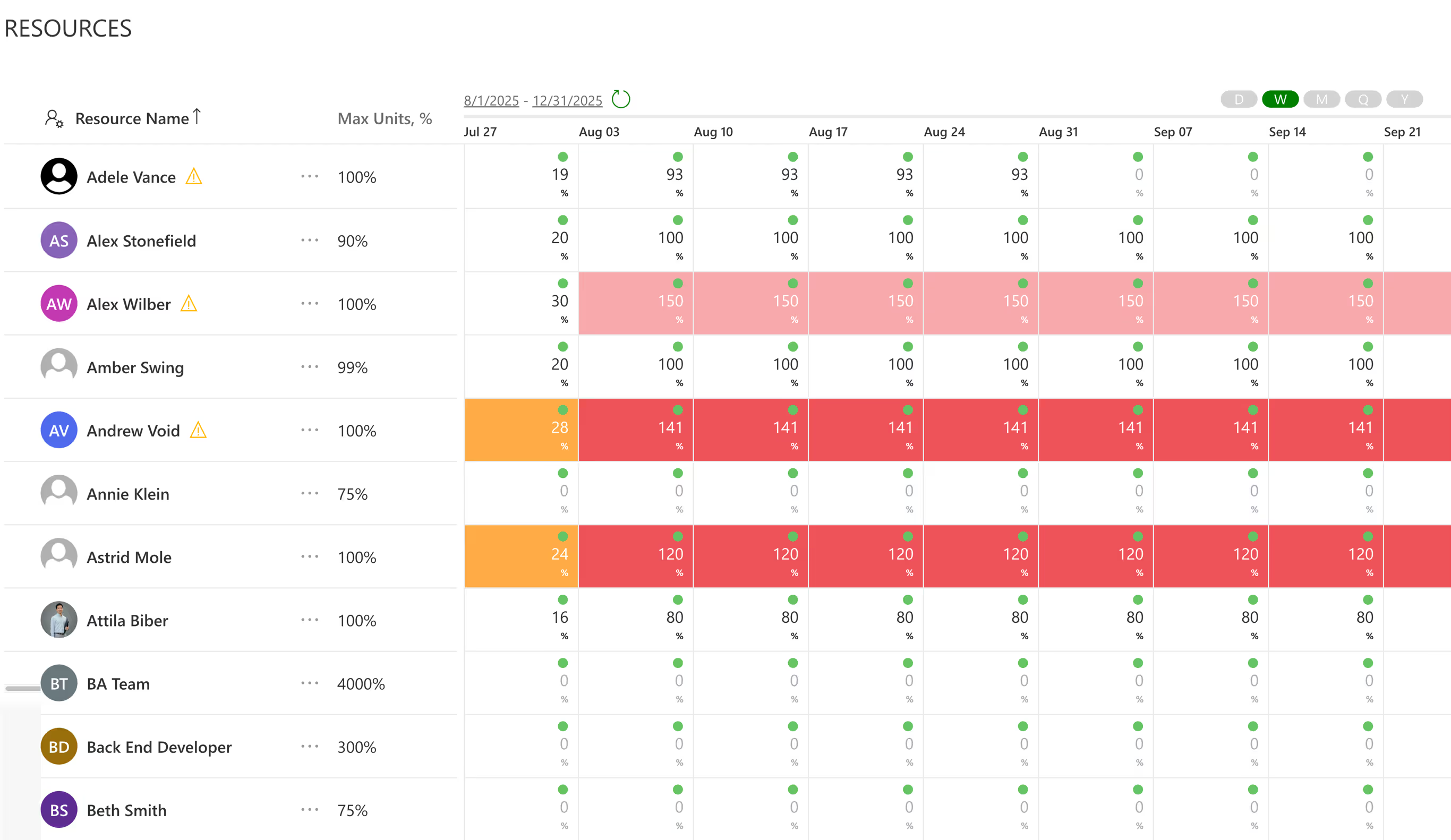
A person whose committed work exceeds capacity for a period shows red. Someone who is fine overall but breaches on a handful of dates shows amber, and that second case is the one that quietly sinks delivery dates.
Select one scenario and every project is stamped with the outcome in PPM Express, with the numbers baselined at the moment of decision and the full decision history kept.
PPM Express sits above delivery, not inside it. Portfolios, programs, investment categories, funding, scoring models, capacity, financials and benefits live here. The work itself stays where your teams already do it and is read into the portfolio automatically.
Objectives, investment categories, funding buckets, business cases, scores, stage gates, capacity, financials, risks and benefits.
Your delivery tools. Teams keep their boards, plans and sheets. Nothing is migrated, and there is no second place to update the work.
Microsoft 365 or Okta SSO, with centralized user management and advanced permissions.
The plan
1
Define the strategic objectives the portfolio exists to move, then split the investment into categories and funding buckets — run-the-business, growth, compliance, technical debt — so every proposal competes inside a bucket instead of against everything at once. Connect strategic objectives and OKRs to funded initiatives.
2
Score business cases against weighted criteria you define — strategic fit, value, risk, cost, effort. Rank them, then run scenarios against real capacity and available funding to find the mix that is deliverable rather than the one that is merely desirable.
3
Approve at gates rather than once a year, release money in stages, and keep the business case attached to the initiative so benefits are measured after go-live and feed the next planning round.
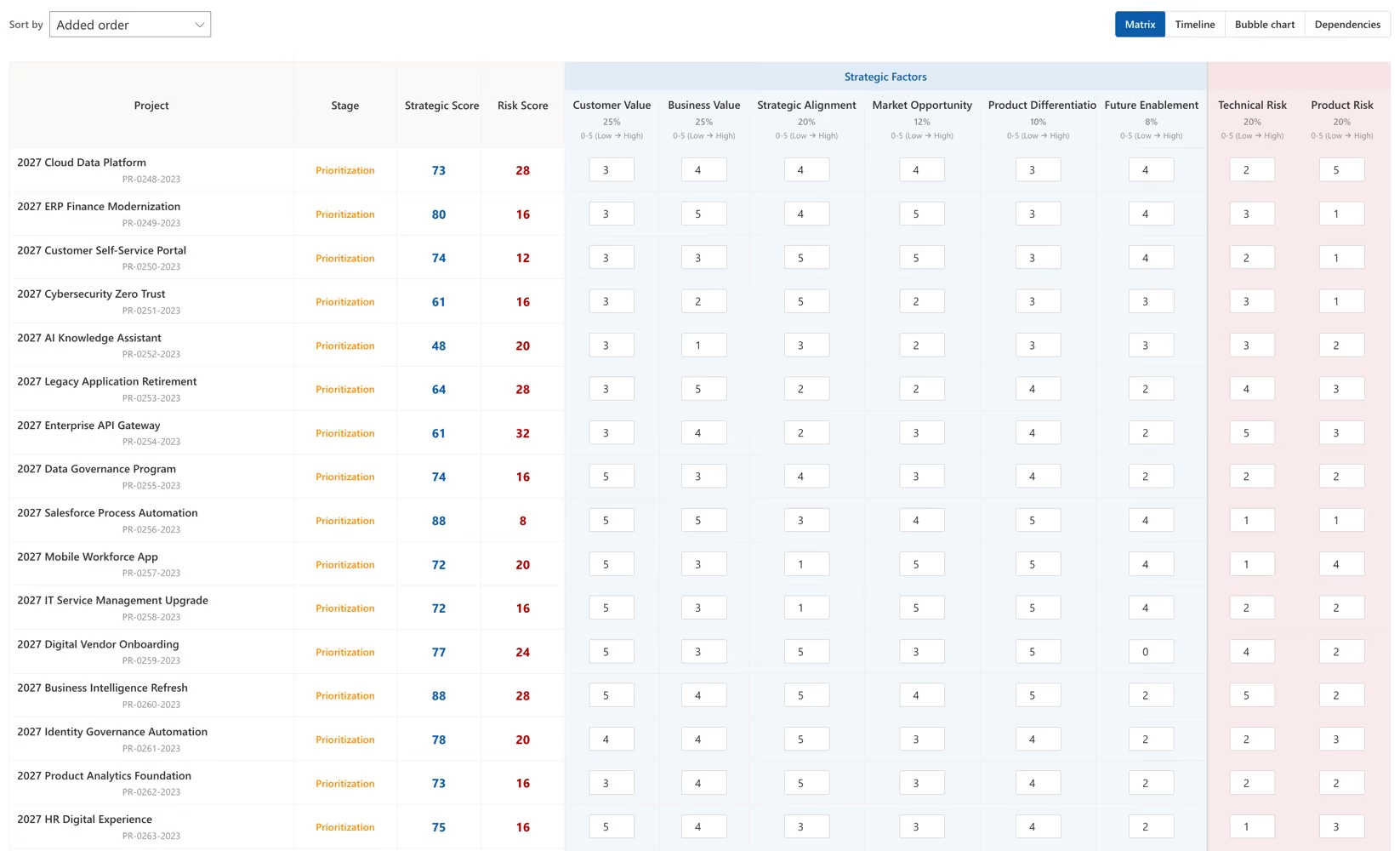
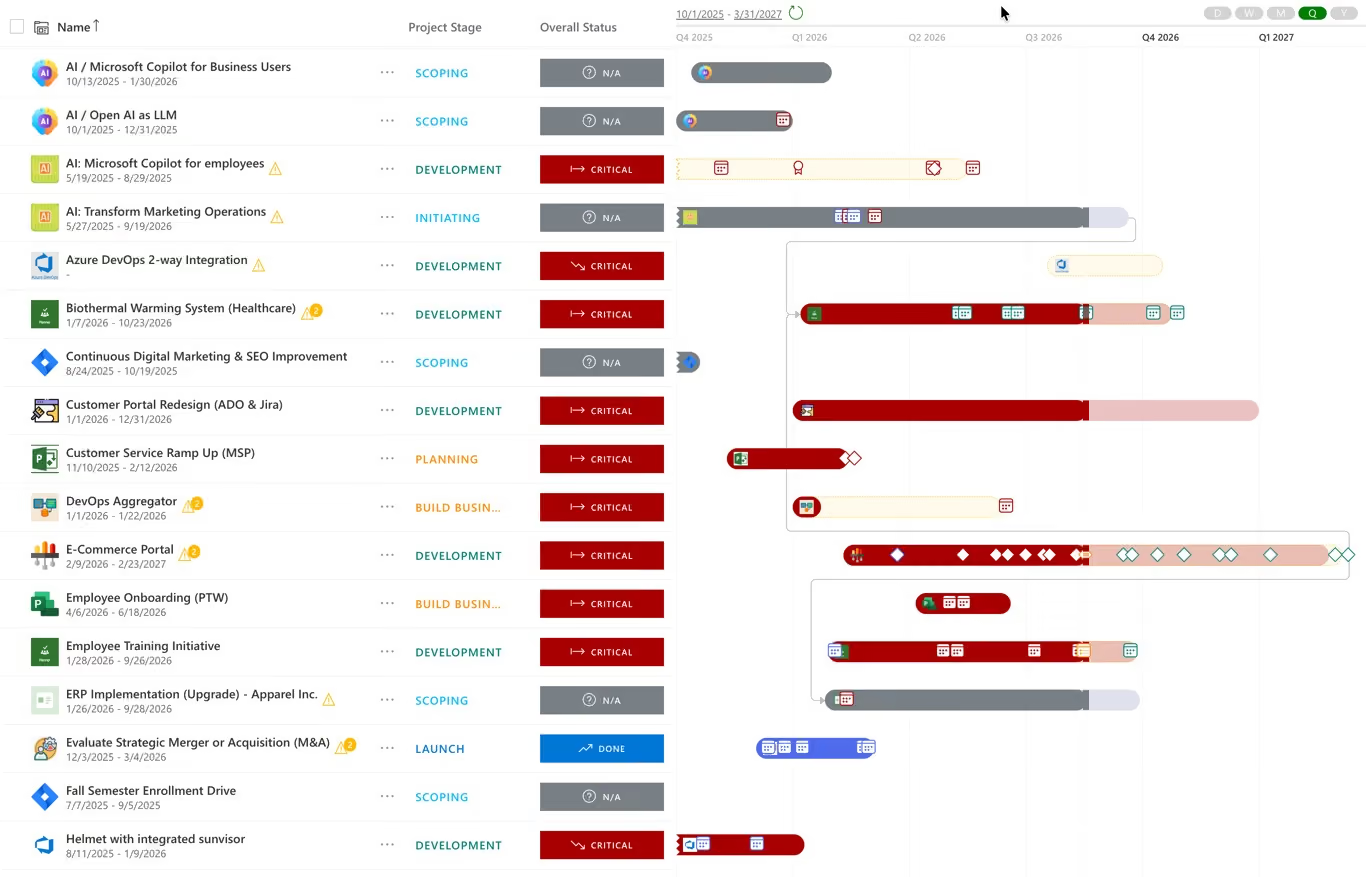
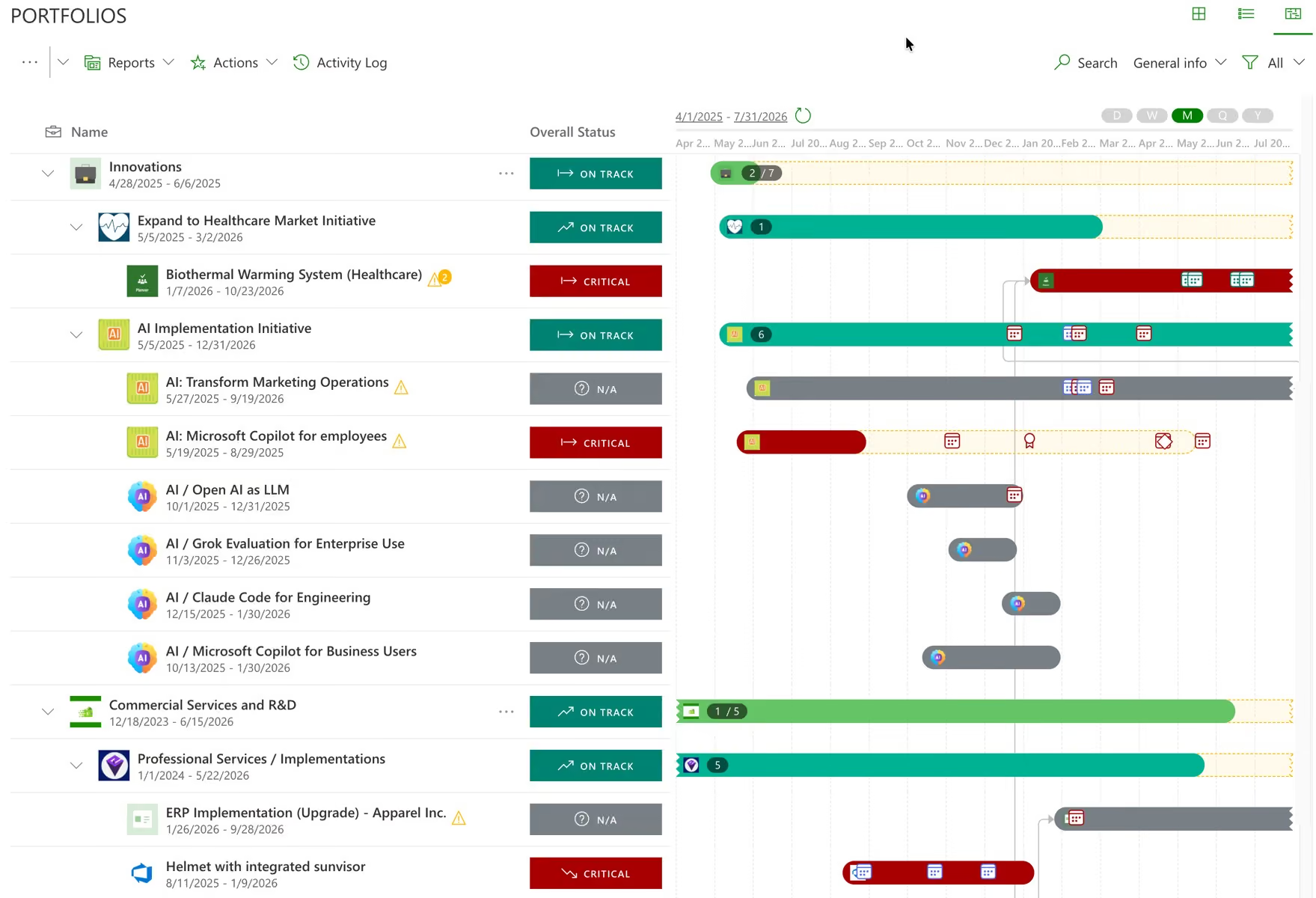
Objectives, investment categories, portfolios, programs and initiatives, with every project sitting under the funding line it was approved against. One hierarchy, whatever tool the work is delivered in. One live portfolio across every tool.
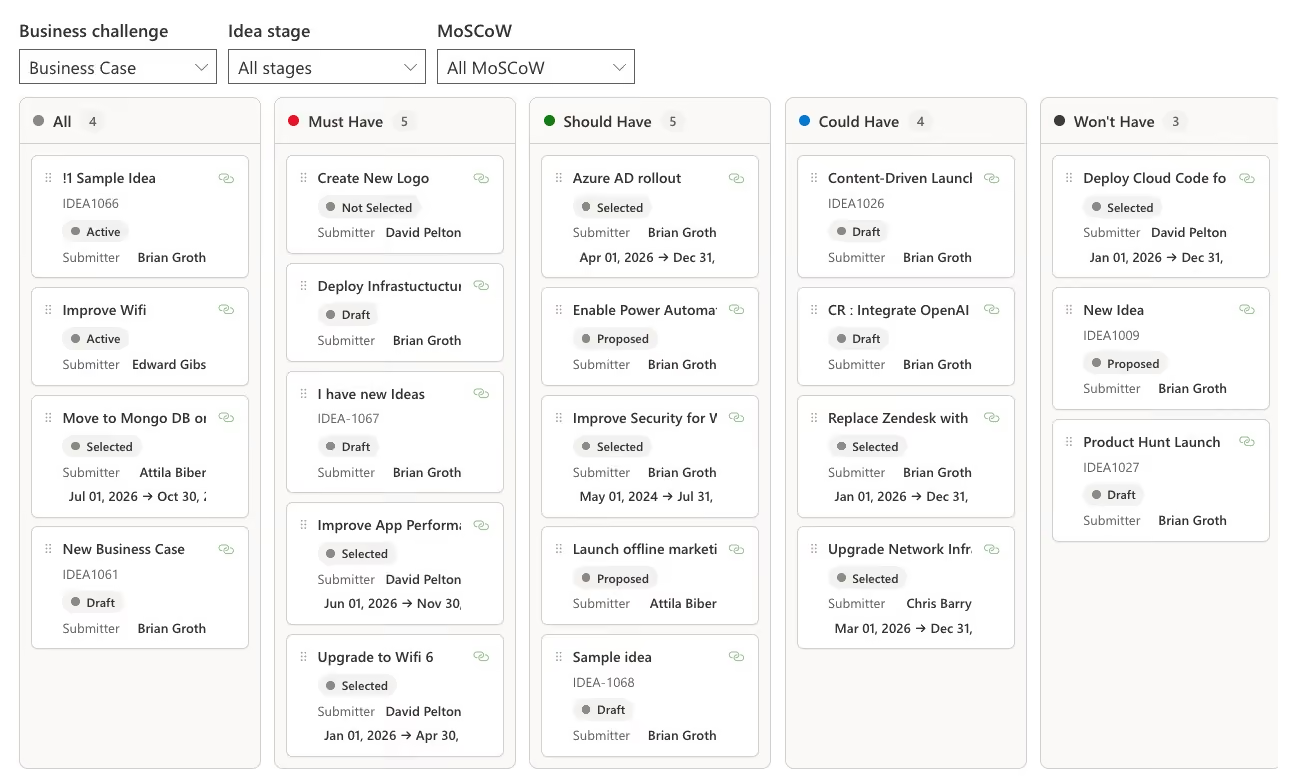
Split the budget by category — growth, run-the-business, compliance, technical debt — and make proposals compete inside their own bucket.
Score, status, dates, budget, forecast, capacity, risk and benefit, comparable across the whole portfolio.
Read-only portfolio access for executives, finance partners and sponsors, so the portfolio is something they look at rather than something you send them.
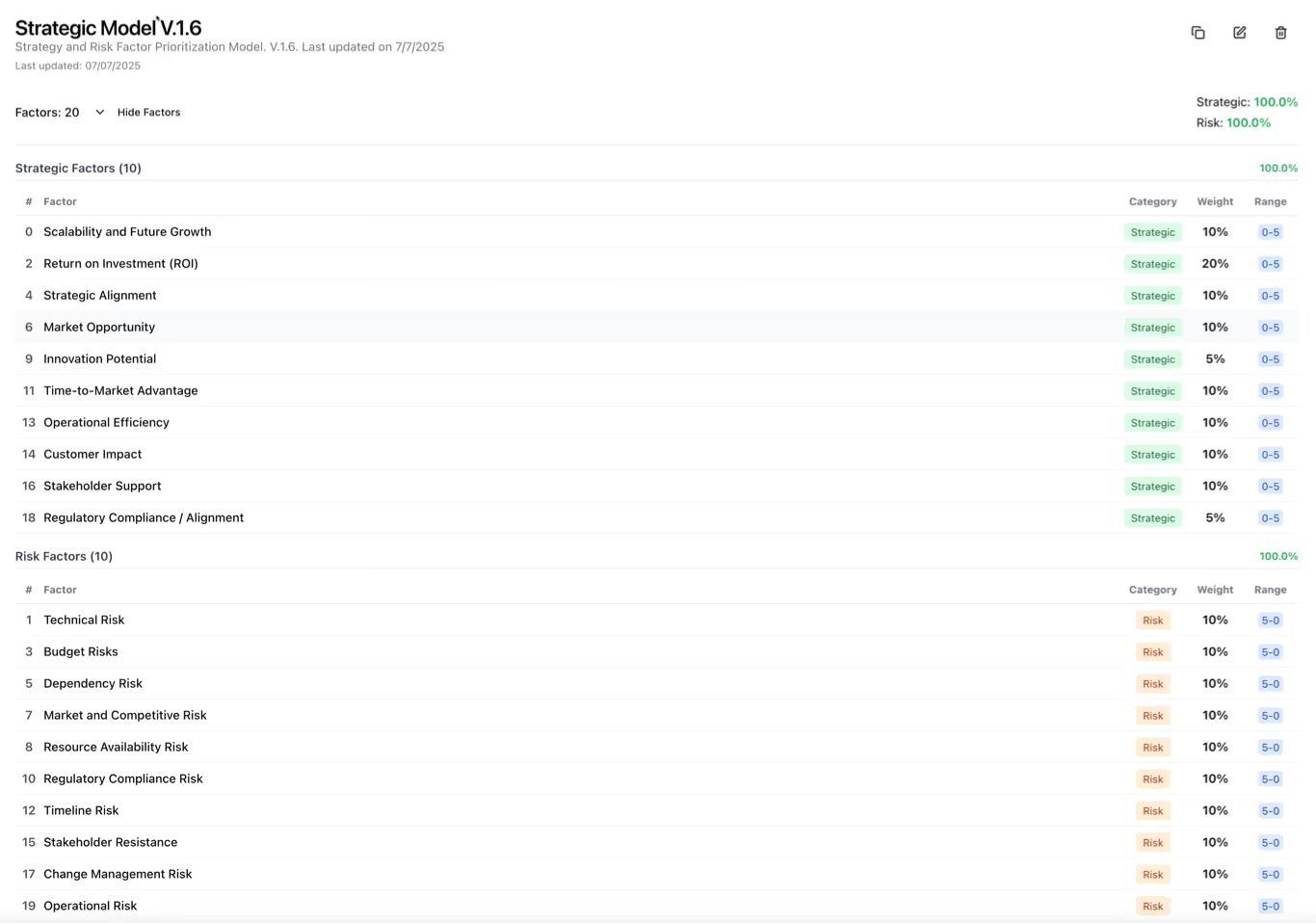
Prioritization only survives scrutiny when the model is explicit. PPM Express ranks initiatives on weighted criteria you configure — strategic alignment, financial value, risk, effort, compliance obligation — so a ranking can be defended line by line and re-run when the weights change. How project scoring and ranking works.
Choose the criteria, set the weights, and change them later without rebuilding the model.
A mandatory compliance program and a discretionary growth bet should not be scored the same way, and do not have to be.
Every score traces back to the inputs behind it, so the decision survives the question “why is this one above that one?”
A ranked list is a proposal, not a plan. Model alternative portfolios — add an initiative, defer another, move a date, change a budget — and see the effect on capacity, cost and delivery before anything is approved. Portfolio what-if scenario planning.
Compare portfolio options against the same objectives, the same money and the same people.
Where a scenario breaks — money, people or a date — is shown before the commitment, not after it.
The chosen scenario becomes the plan of record and the roadmap that follows from it.
Most portfolios are over-committed on the day they are approved, because the plan was tested against budget and not against people. PPM Express calculates availability from each person’s work week and calendar exceptions, allocates them to initiatives in hours or percentage FTE, and surfaces the collision while it is still a planning decision. Resource capacity planning and utilization.
Plan people against portfolio initiatives across programs in a single pass.
Calculated from real work weeks, calendars and calendar exceptions, not from an assumed eight-hour day.
“Can we take this on as well?” becomes “here is what would have to move for it to fit”.
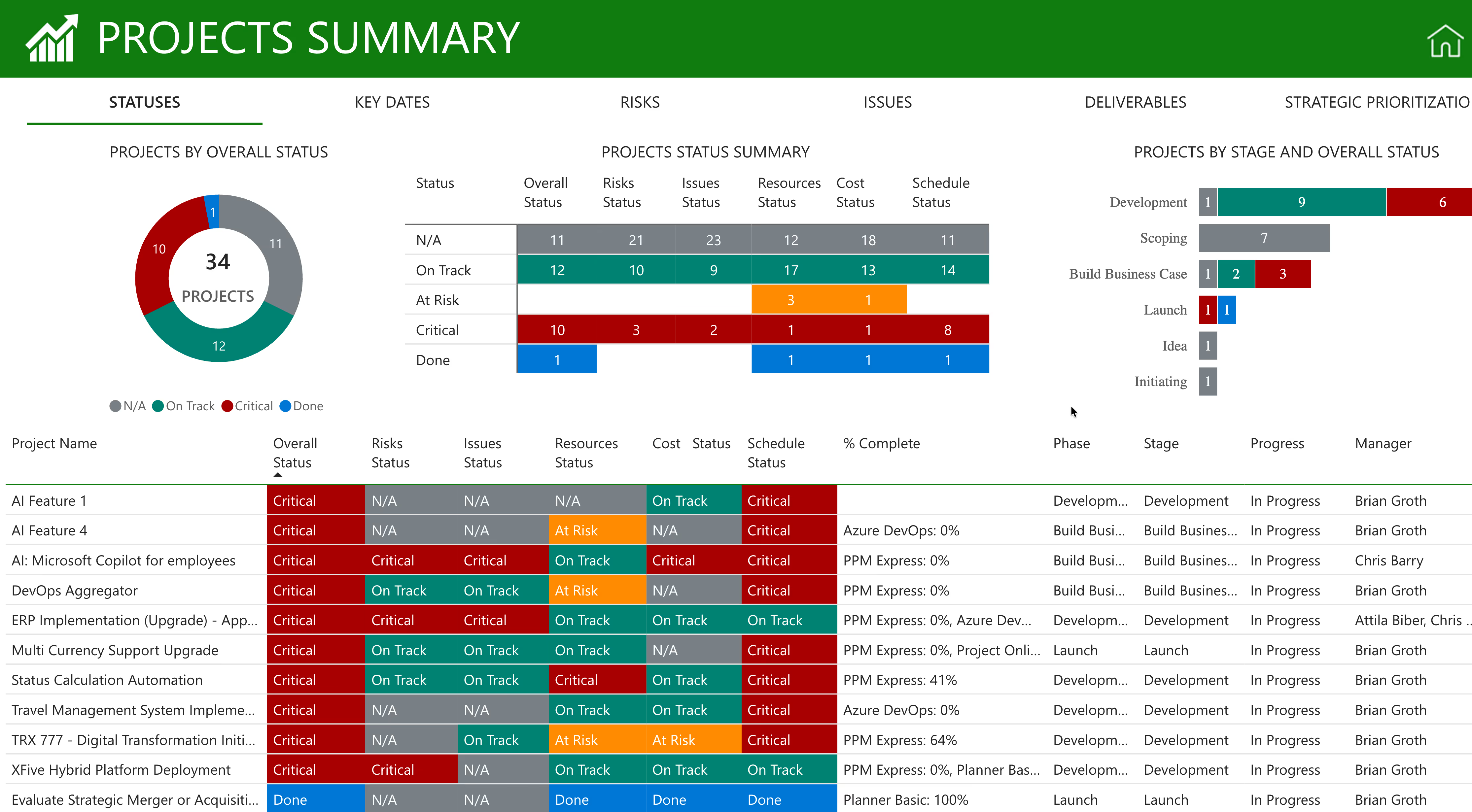
Portfolio performance reported once, across every tool the organization delivers in. The investment committee, finance and audit read the same numbers, and nobody rebuilds a deck to produce them. Portfolio reporting and analytics.
Portfolio and project health, scores, financials, risks, capacity and benefits — ready to use rather than ready to build.
Azure DevOps, Jira, Microsoft Project, Project Online, Planner, Smartsheet and monday.com, in one portfolio.
For the investment committee, the board and external stakeholders — the same numbers, without a rebuild per audience.
Annual planning cannot govern a portfolio that changes every month. PPM Express supports a rolling portfolio cadence — intake, scoring, gate reviews and re-prioritization on a schedule — so the portfolio is adjusted continuously instead of renegotiated once a year.
01
New ideas and requests arrive through a structured intake, are scored on the same model as everything else, and join the queue rather than jumping it. Idea scoring and prioritization.
02
Fund in stages. Each gate is an explicit decision to continue, change or stop, with the current business case, spend, capacity and benefit evidence attached to it.
03
Quarterly or monthly re-ranking against current capacity and current results, rather than against last year’s assumptions.
04
Benefits stay attached to the initiative after delivery, so expected return can be compared with realised return and the next funding round is argued from evidence.
Security & Trust
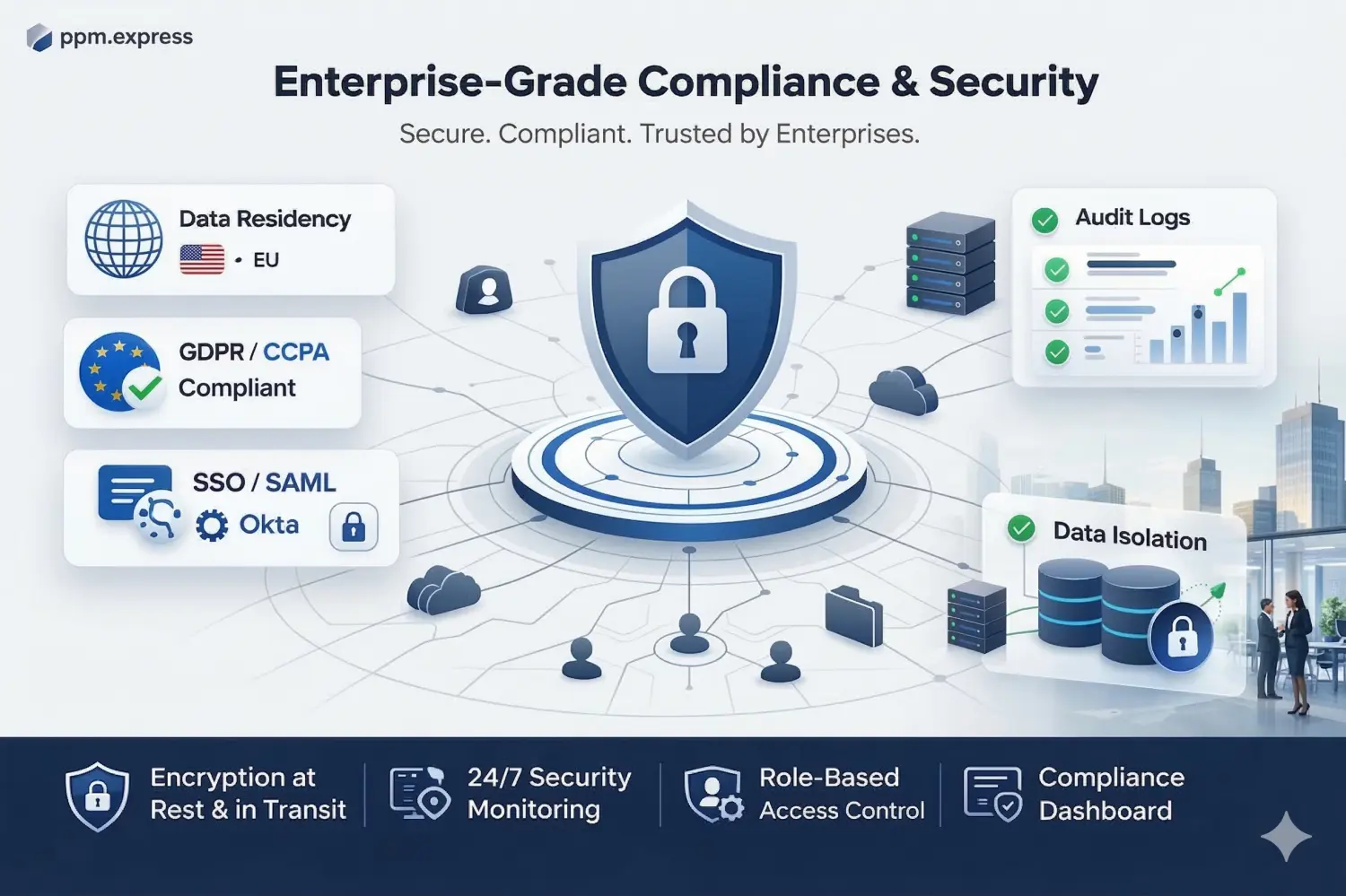
PPM Express holds portfolio data — objectives, business cases, scores, budgets, capacity and benefits — and reads work-tracking data from your delivery tools. It never connects to repositories, pipelines or source code.
We offer US and EU data residency, full GDPR compliance, and custom DPAs to meet strict regulatory requirements. Need app availability in your region or country to meet data residency requirements? We can provide.
Microsoft 365 and Okta SSO ensure secure identity management, while centralized user management, advanced permissions, detailed audit logs and strict data isolation protect sensitive enterprise data.
Outcomes
Every proposal is judged on its own
Business cases arrive one at a time, and approval depends on who is presenting rather than on how the initiative compares with what is already funded.
Proposals compete inside a funding bucket
Every initiative is scored on the same model, inside the investment category it is funded from, and the ranking can be defended line by line.
The plan is never tested against capacity
Commitments are made against budget and estimate. The collision with real availability shows up in delivery rather than in planning.
The portfolio is approved against capacity
Scenarios are tested against real availability before commitment, so the re-plan happens in planning instead of six months into delivery.
Benefits are claimed at approval and never measured
The business case closes the moment funding is granted, and nobody returns to it after go-live.
The next funding round is argued from evidence
Benefits tracked past go-live feed the following decision, so the portfolio improves rather than simply repeating.
Enterprise scale
One of the largest law firms in the United States — over 2,000 attorneys across 14 offices worldwide — governs 7 IT portfolios and more than 200 projects in PPM Express. Their leadership team does not commission a portfolio review. They work from live dependencies between initiatives, actual progress, timelines and milestones, with reporting generated automatically across all seven portfolios.
Not only what each program is doing, but what it is waiting on — visible before it becomes a delay.
Read from the delivery tools the teams are already updating, across every connected project.
Automated across portfolios and programs, so leadership reviews the portfolio instead of commissioning a view of it.
01
Quick, 15-20 minutes call to understand your objectives, requirements, expectations.
02
Personalized, 60-minutes demo of PPM Express to show how it can support your use cases.
03
30-day long, supervised FREE Trial / Pilot to experience PPM Express firsthand. + Free Onboarding
Learn More
Integrations
Weighted Prioritization Model for selecting right investment
Read more
Product
Capacity from real work weeks, so over-allocation surfaces before you commit.
Read more
Product
Structured Approach for prioritizing and aligning portfolios with strategic priorities and resource constraints
Read more
What enterprises ask before changing how the portfolio is governed
Strategic portfolio management (SPM) is the discipline of deciding which initiatives get funded, staffed and stopped, and governing that decision over time. It covers strategic objectives, investment categories and funding buckets, scored business cases, resource capacity, stage gates and benefits realisation. Project management delivers the work; strategic portfolio management chooses the work and proves afterwards that it was worth choosing.
Project management asks whether an initiative is delivered on time and on budget. Portfolio management asks whether it should exist at all, given everything else competing for the same money and the same people. PPM Express does both, but the portfolio layer is the one that changes what gets funded.
No. PPM Express reads from Azure DevOps, Jira, Microsoft Project, Project Online, Microsoft Planner, Smartsheet and monday.com. Teams keep their tools and nothing is migrated. Only the people asking portfolio questions need an account.
You configure weighted criteria — strategic alignment, financial value, risk, effort, compliance obligation — and set the weights yourself. Initiatives are scored against them and ranked. Different investment categories can use different models, and every score traces back to the inputs behind it, so the ranking can be defended rather than merely presented.
Yes. Build alternative portfolios, add or defer initiatives, change budgets or dates, and compare the effect on cost, capacity and delivery side by side. The chosen scenario becomes the plan of record and the roadmap that follows from it.
Availability is calculated from each person’s work week, calendar and calendar exceptions. People are allocated to initiatives in hours or percentage FTE across programs, and over-allocation is flagged before the portfolio is approved rather than discovered during delivery.
A way of splitting the budget so proposals compete inside a class rather than against everything at once — typically run-the-business, growth, compliance and technical debt. Without them, a mandatory compliance program and a discretionary growth bet end up in the same ranking, and the discretionary work loses every time regardless of its value.
Yes. Funding can be released in stages with a gate review at each one. Every gate is an explicit decision to continue, change or stop, taken with the current business case, spend to date, capacity position and benefit evidence attached.
The business case stays attached to the initiative after go-live, so expected benefits can be compared with realised ones. That comparison is what turns the following funding round into an evidence-based conversation instead of a negotiation between opinions.
Most organizations running this well move to a quarterly re-ranking with monthly gate reviews and continuous intake in between. Annual-only planning cannot govern a portfolio whose capacity, costs and results change every month — by the time the plan is agreed, the assumptions behind it have already moved.
Yes. One of the largest law firms in the United States — over 2,000 attorneys across 14 offices worldwide — governs 7 IT portfolios and more than 200 projects in PPM Express, with every initiative delivered in its own team’s tooling.
Related
Enterprise SPM and PPM platforms cover broadly the same ground. Where they differ most is what it costs to give your whole organization access to it.
| PPM Express | Planview | Planisware | Meisterplan | ServiceNow SPM | |
|---|---|---|---|---|---|
| Strategy and OKR linkage to funded work | Yes | Yes | Limited | Limited | Yes |
| Investment categories and funding buckets | Yes | Yes | Yes | Yes | Yes |
| Weighted scoring and prioritization | Yes | Yes | Yes | Yes | Yes |
| Capacity-tested funding scenarios | Yes | Yes | Yes | Yes | Yes |
| Pareto trade-off optimization | Yes | Yes | Yes | Limited | Limited |
| Stage gates with retained decision history | Yes | Yes | Yes | Limited | Yes |
| Budgets, forecasts and benefit realization | Yes | Yes | Yes | Yes | Yes |
| Resource capacity planning | Yes | Yes | Yes | Yes | Yes |
| Microsoft Project, Planner and Project for the Web | Native two-way | Yes | Limited | Limited | Limited |
| Jira and Azure DevOps | Native two-way | Yes | Limited | Limited | Yes |
| Power BI reporting pack | 200+ reports | Limited | Limited | Limited | Limited |
| Unlimited users included | Yes | No, per seat | No, per seat | No, per seat | No, per seat |
| Typical annual cost | $8,000 to $25,000 flat | $100,000+ | $100,000+ | Mid five figures | $100,000+ with platform |
Planview is the broadest suite in the category and holds the strongest analyst position in strategic portfolio management. If you need enterprise architecture and value stream management alongside SPM, it covers more ground than we do, with the longest implementation and the highest cost to match.
Planisware is genuinely excellent at R&D and new product development pipeline modelling, including probability-weighted valuation we do not attempt to match. If your strategic portfolio is predominantly R&D, evaluate it seriously. For a mixed portfolio, that depth is largely unused and still paid for.
Meisterplan is fast to deploy and very good at lean capacity and scenario planning. If the strategic question you need answered is purely about capacity, it will answer it quickly. It is deliberately lighter on financials, benefit realization and gated governance, which is where strategic portfolios are eventually judged.
ServiceNow SPM defined much of the category vocabulary and is a strong choice if you already run ServiceNow, because the platform and data are already there. If not, you are buying the platform to get the portfolio module, and integration with Microsoft delivery tooling is thinner than it looks on a feature list.
PPM Express covers the same core strategic portfolio capabilities on one flat annual subscription with unlimited users. We are not the deepest R&D pipeline tool or the broadest enterprise suite. We are the portfolio layer that connects strategy to funded work for organizations running on Microsoft and Jira, without a six-figure licence.
.svg)


