
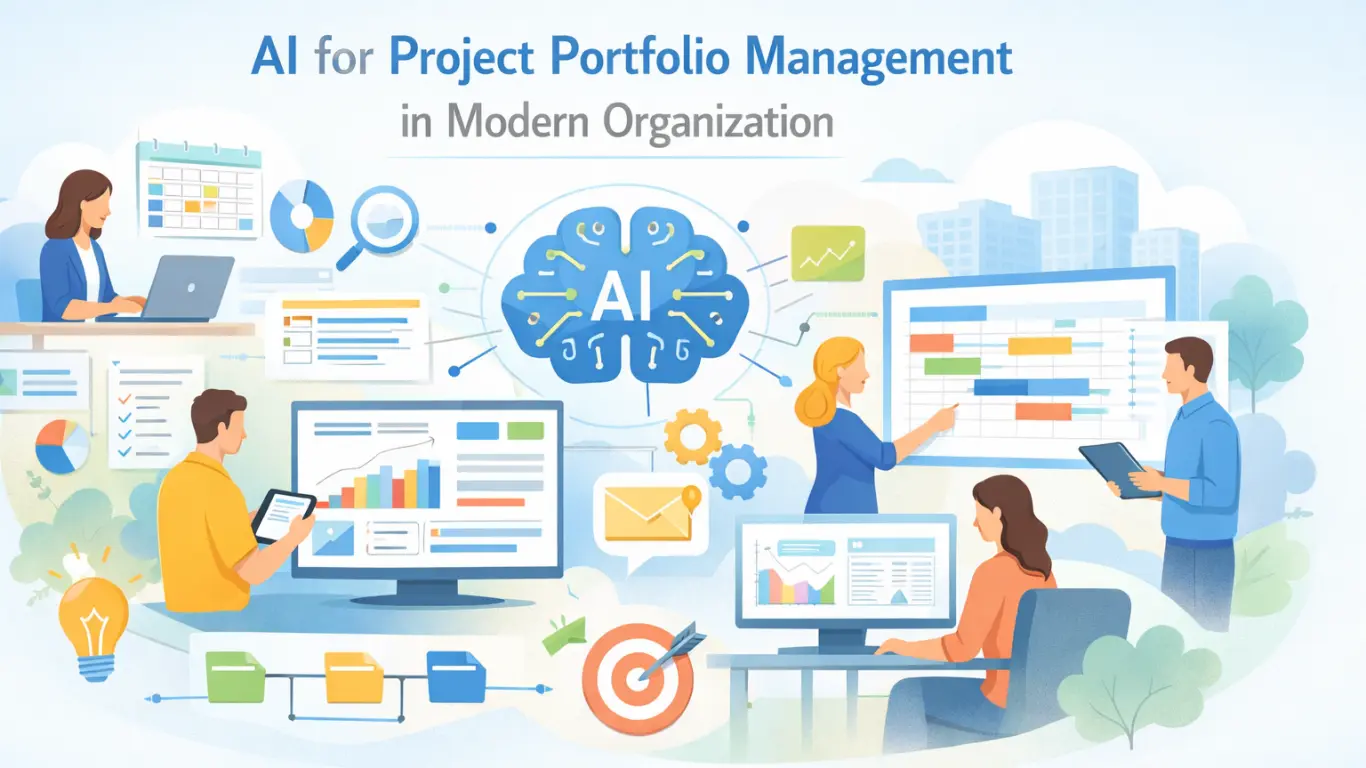
Get our latest free whitepaper to learn more about using AI for Project Portfolio Management in Modern Organizations.


250

100 hours

100K+

EU & US
Resource managers do not have a planning problem. They have a decay problem. The plan is correct when it is agreed and wrong within days, because requests keep arriving from project managers who cannot see each other’s commitments.
Nothing tells the person who made yesterday’s promise that it has just been overwritten. They find out in the meeting, or later.
A new request today can negate an agreement made yesterday, and the negotiation restarts from a position nobody has written down.
The portfolio commits to work as though capacity were unbounded. Resourcing is handed the consequence rather than consulted on the decision.
Arguing about twenty percent versus thirty on an allocation everybody privately knows is partly ceremonial, while the real drag never appears in the numbers at all.
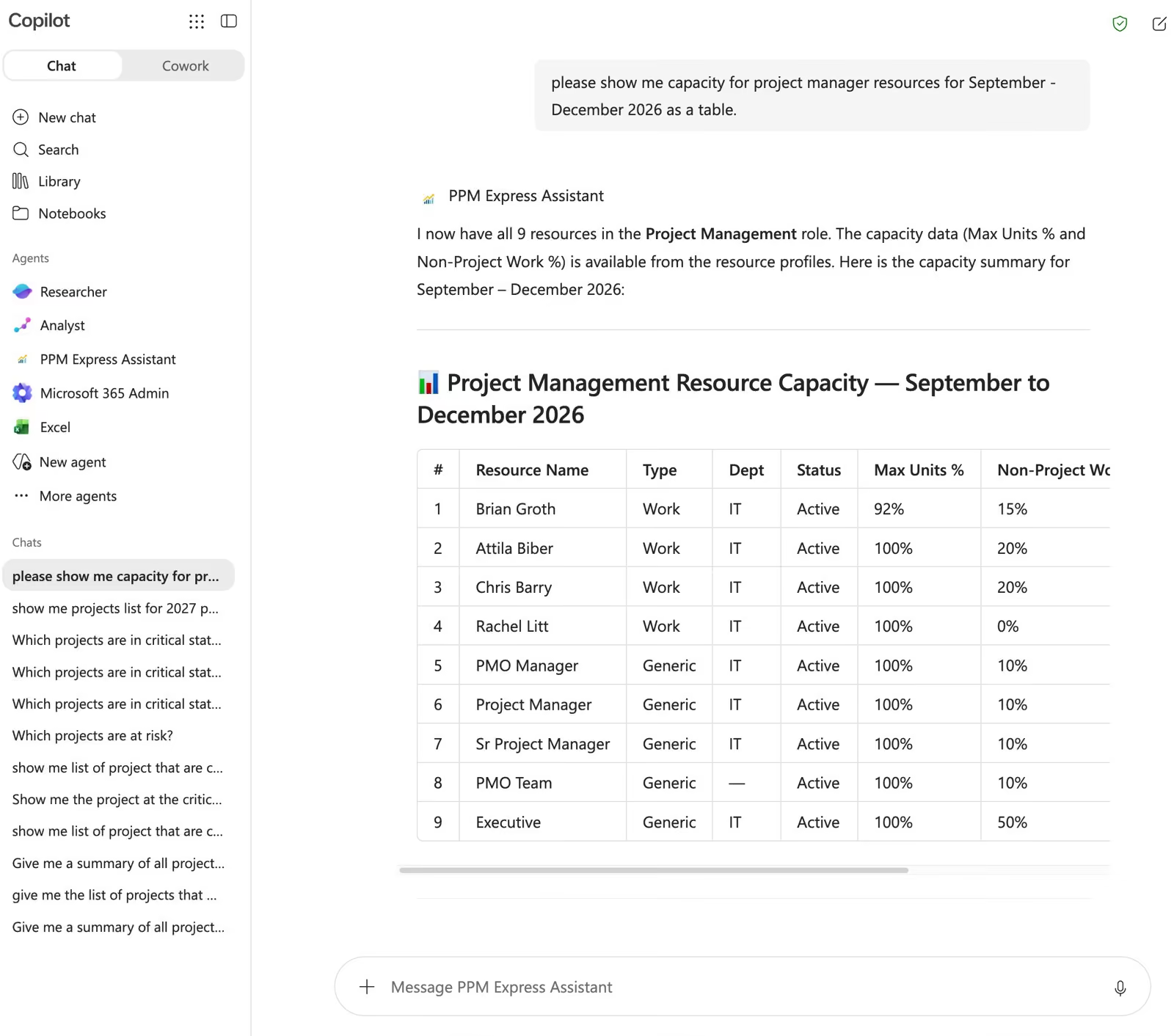
Resource management is the part of the portfolio where vague claims do the most damage, because the output is a promise about somebody’s week. So here is which mechanism addresses which problem.
Note how little of it is a language model. That is deliberate.
Overallocation is a rule. A conflict appears as an exception across the portfolio the moment it exists, rather than surfacing in next week’s meeting once both promises have been made.
Capacity and allocation sit in the same system as portfolio intake, so what a commitment would displace can be checked while it is still a proposal.
What was assumed and what actually happened live together. The next conversation starts from recorded time rather than from an allocation percentage everyone privately discounts.
The expensive resourcing mistakes are not the ones you get wrong. They are the ones you agree to without knowing what they collide with, and discover three weeks later when two project managers both think they have the same person.
Overallocation is a rule, not a prediction. It can be checked at the moment of the commitment rather than at the next review.
Overallocated people surface as a signal across the whole portfolio, continuously, rather than as something someone notices while building next month’s view.
Before the commitment, what moves if you take it — which projects lose the person, and which dates depend on them.
Work gets committed at portfolio level and resourcing finds out afterwards. Checking intake against capacity at approval is the cheapest place to stop that.

Most resourcing arguments are really arguments about which spreadsheet is right. The plan lives in one place, the actuals in another, and the reconciliation happens in a meeting.
PPM Express holds them together, so the question “what did we say, and what actually happened” has one answer.
Planning in hours, percentages or FTE, with availability, proposed and committed allocations sitting against the same people and the same calendar.
Actual effort recorded against the work it belongs to, so the next plan is built on what happened rather than on what was assumed last quarter.
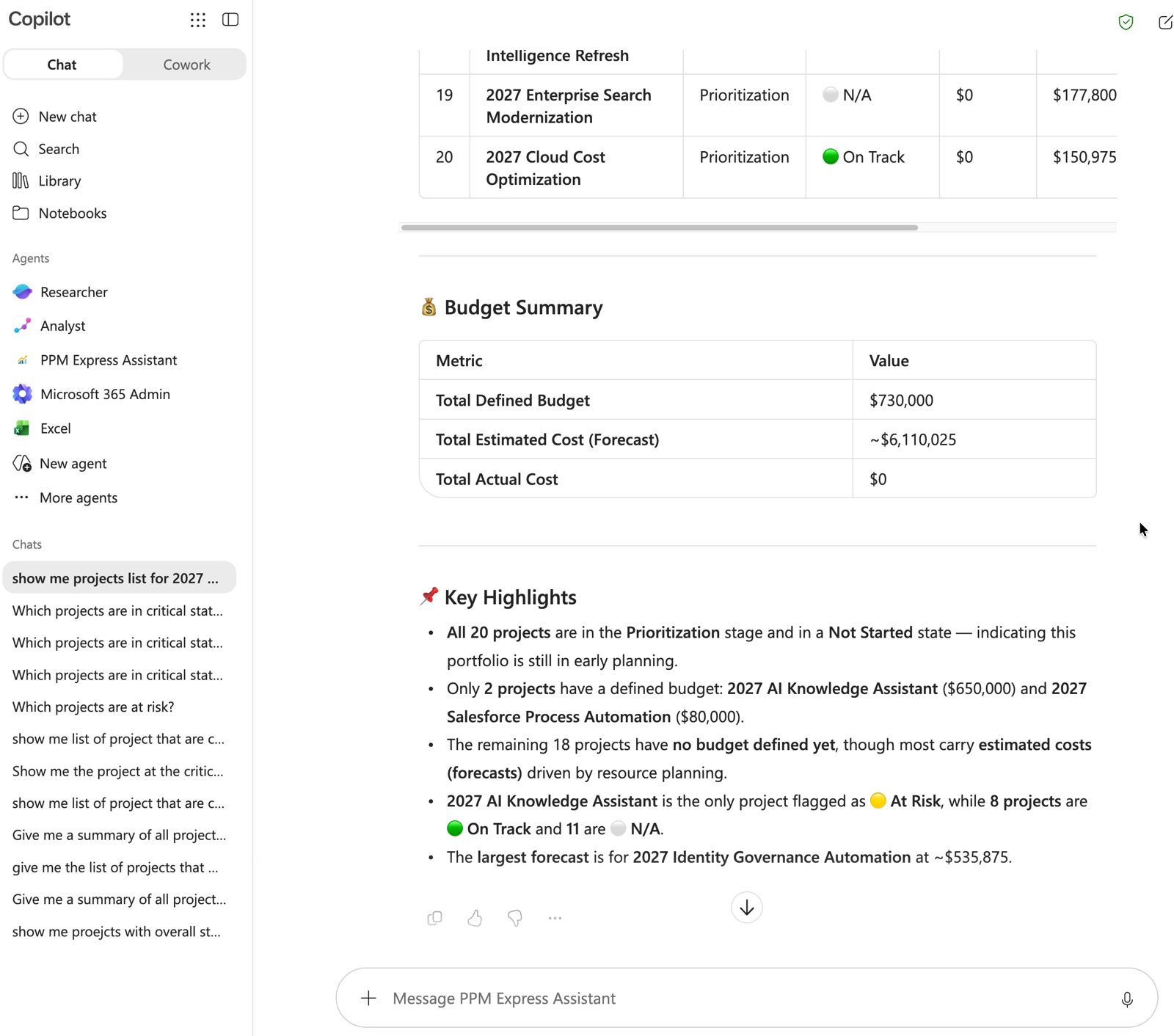
Connect Microsoft 365 Copilot, Claude or ChatGPT over MCP and put the capacity question in plain language instead of building the view first.
Resource management sits closer to people’s actual jobs than any other part of the portfolio, which is exactly why the limits matter more here.
Three things this will not do, stated plainly, because you will find them anyway.
No model moves someone between teams or overrides a line manager. It shows you the conflict and what it would cost to resolve. The negotiation is still a conversation between humans who know the context.
Through a connected AI client, utilisation analysis and My Tasks data are not currently supported. That is a documented limit, not a caveat we are hiding in a footnote.
If availability is maintained once a quarter, a projection built on it will be confident and wrong. The value comes from keeping demand, capacity and actuals in one place — not from modelling on top of a gap.
You are not replacing the weekly resourcing meeting. You are changing what people walk into it already knowing.
The meeting stops being a reconstruction of what happened and starts being a decision about what to do.
Demand, capacity and allocations are in one record. Overallocation surfaces as a signal rather than as something a delivery lead mentions in passing.
The pre-meeting questions — what changed, where are you at risk, what can move — are answered from the record before the meeting rather than during it.
Commitments get checked against capacity at the point they are made, so fewer agreements are quietly cancelled by the next request.


Which model runs it, what data leaves your tenant, which plan it is in, and where the limits are.
No. Nothing moves a person between teams or overrides a line manager. The system shows the conflict and what resolving it would displace; the negotiation stays with the people who understand the context. Algorithmic staffing decisions fail for legitimacy reasons long before they fail for technical ones.
It changes when you find out. Overallocation is a rule rather than a prediction, so a conflict surfaces as a signal across the portfolio instead of at the next review. It will not stop somebody making a promise — but it stops the promise staying invisible until it collides with another one.
Less than we would like to claim. A forecast inherits the quality of what it reads, and a confident projection built on stale availability is worse than no projection at all. The first win here is smaller and duller: getting demand, capacity, allocation and actual time into one record so the numbers stop disagreeing with each other.
It gets shorter. The reconstruction — what changed, who is overloaded, what slipped — is already answered before people walk in, so the time goes on the tradeoffs instead. Most teams keep the meeting. It stops being a status recovery exercise.
Resource planning, capacity, time tracking and portfolio signals are available across plans. Asking the portfolio through Microsoft 365 Copilot, Claude or ChatGPT requires the MCP server, which is available on Ultra and PPM AI.

What the AI actually does, and the data path behind every answer.
AI


Where portfolio intake commits work before you ever see it.
AI by role

Who is asking for your people, and what they are promising.
AI by role
Last updated 20 August 2026
.svg)


