
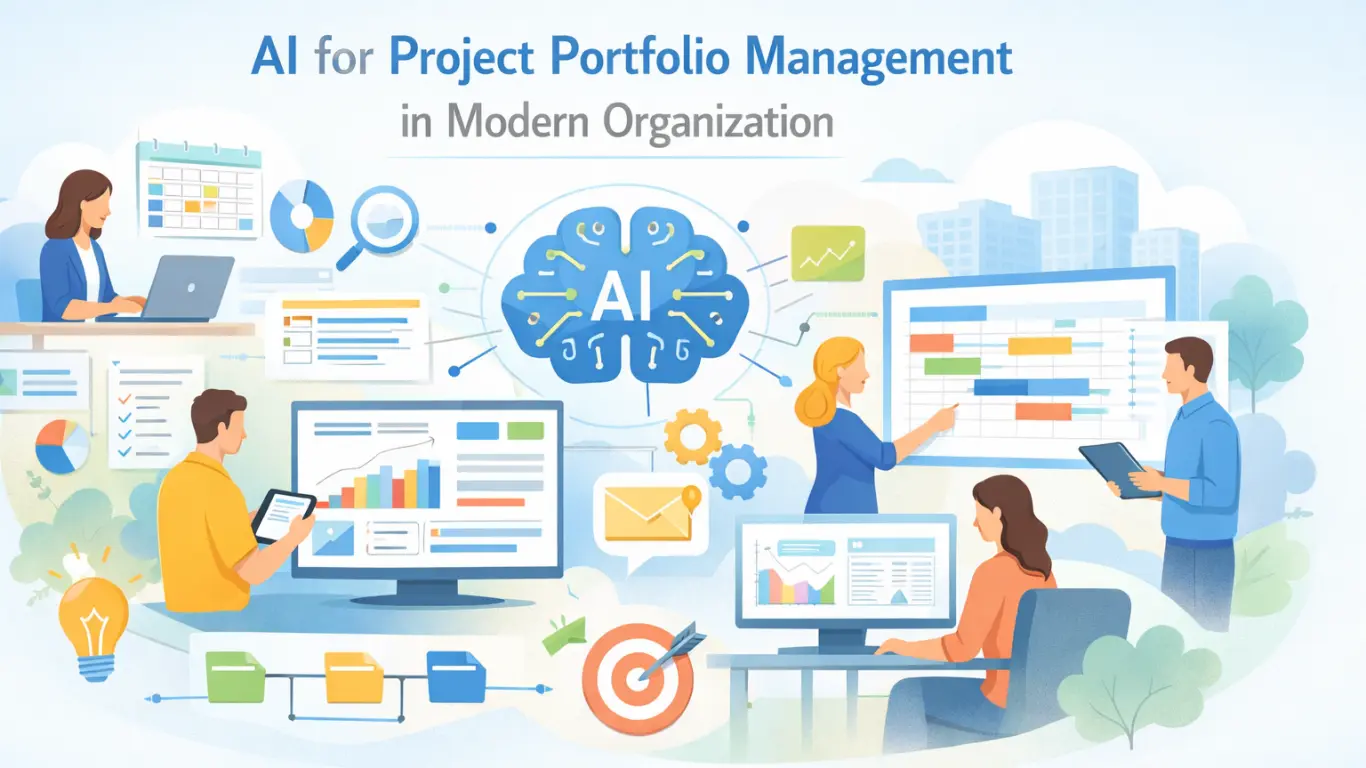
Get our latest free whitepaper to learn more about using AI for Project Portfolio Management in Modern Organizations.


250

100 hours

100K+

EU & US
A portfolio review is assembled over weeks. Status is requested, chased, reconciled and formatted, and the version on the screen is the version that was true when collation started.
Which is why the most common opening move in the room is someone saying the numbers are wrong. They usually are, and the meeting becomes about the data instead of the decision it was called to make.
Hundreds of hours of preparation, and the first challenge is that the figures have moved since they were collected. Nobody can answer it in the room.
A twenty-slide weekly pack for a question that needed a paragraph. Volume stands in for signal, and the exceptions are buried behind the summary of everything that is fine.
You ask why one programme is red. The answer needs an analyst and two weeks. After that happens twice, you stop asking and start relying on the narrative.
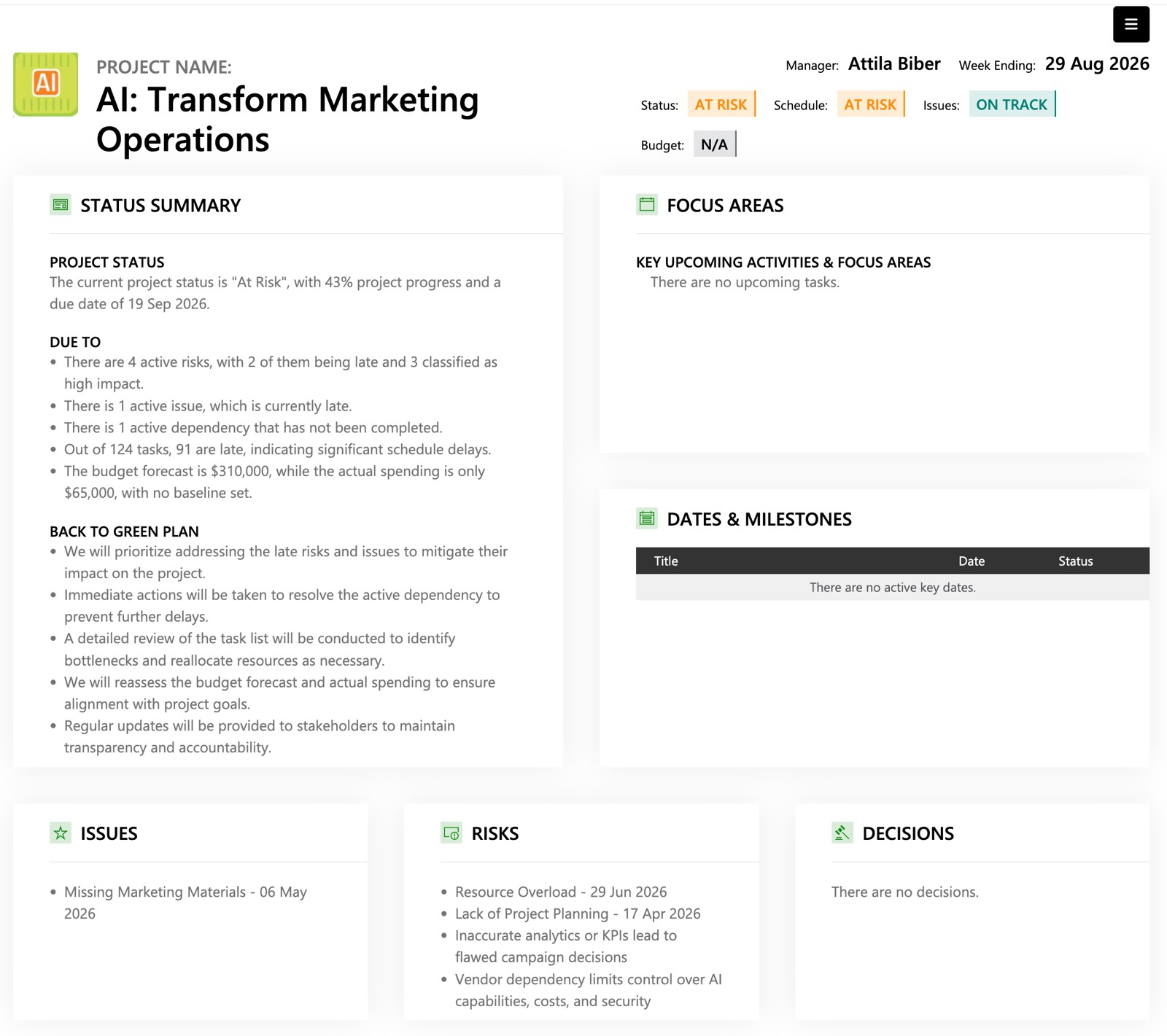
Those three problems are not solved by the same thing, and vendors in this category tend to blur that. Here is which part of PPM Express addresses which one.
Two of the three are not AI at all, which is the point worth noticing before you evaluate anybody.
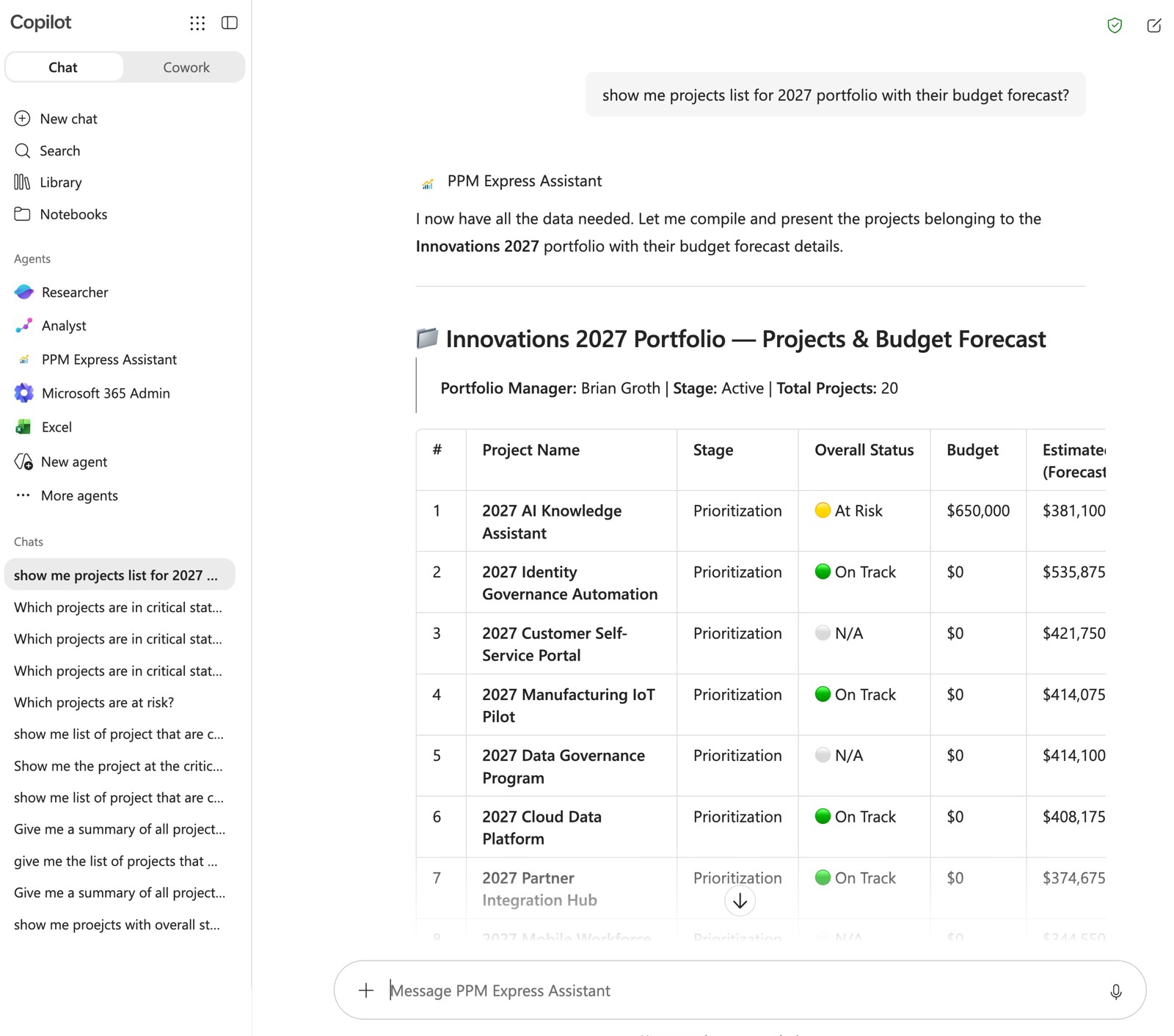
Connect PPM Express to Microsoft 365 Copilot, Claude or ChatGPT and the answer is drawn from the live portfolio at the moment you ask — not from a collation cycle that started three weeks earlier.
Slipped milestones, budget overruns and overallocated people are computed continuously. The exceptions surface on their own, without a twenty-slide pack built around them to provide context.
The follow-up gets answered in the meeting, from the record, by you. Asking stops costing an analyst two weeks, so the questions that matter get asked while the decision is still open.
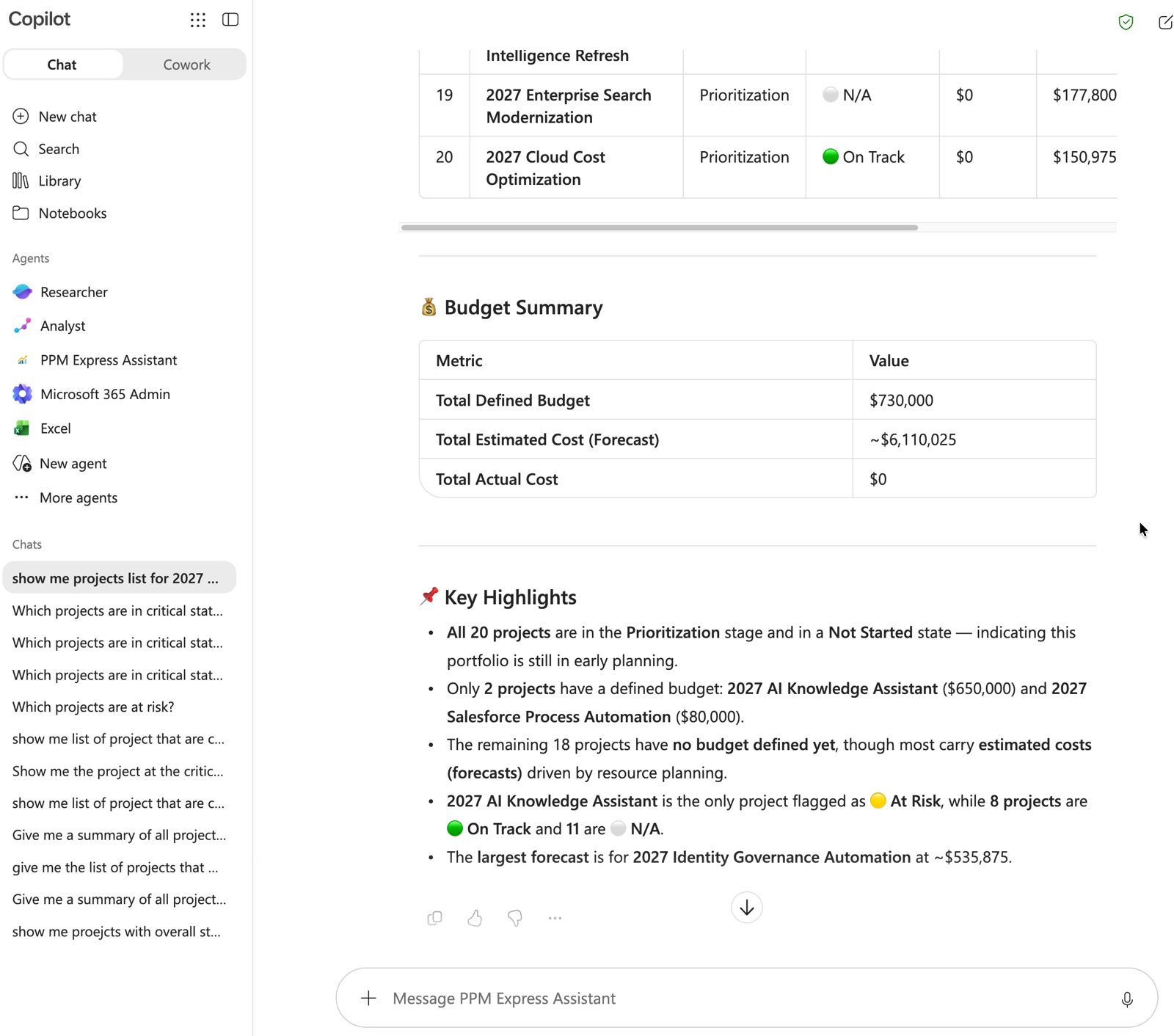
You are not going to log into a portfolio tool, and nobody should expect you to. PPM Express publishes an MCP server covering the whole portfolio, so the questions you would have sent to the PMO get answered inside Microsoft 365 Copilot, Claude or ChatGPT.
Same portfolio, same permissions, no new interface to learn. Available on Ultra and PPM AI.
“Which programmes changed status since we last met, and what moved?” Answered from the record, not from whoever remembers.
“Why is this one red?” The follow-up question stops being a two-week request to an analyst, so it gets asked more often.
“Draft the board summary from what the data says.” You edit the judgement in rather than assembling the facts from scratch.
A portfolio is not meant to be read. It is meant to be filtered down to what changed and what is about to break, and then to stop.
PPM Express watches for the conditions that do not need a language model to detect. A milestone is either past its baseline or it is not. Budget is either overrun or it is not. Those are rules — deterministic, auditable, the same answer twice.
Milestones slipped against baseline, budget overruns, overallocated people, projects reporting not on track across schedule, cost, risk and resources.
The same dependency named in nine risk registers. The same supplier late on three programmes. Patterns nobody finds because nobody reads two hundred registers.
Before you approve one more programme, what it displaces — which commitments move and which people are already spoken for.

The most useful thing a vendor can tell an executive is where the tool stops. Three limits worth knowing before you buy anything in this category, ours included.
Everything else on this page is a claim. This section is the part your PMO will check first.
A project reports green because reporting red has consequences. That is a culture problem, not a data problem, and no model reads intent. What we can show you is contradiction: a green status sitting next to a milestone that slipped twice and a risk count that doubled.
If a system feeds the portfolio monthly, AI gives you a faster summary of month-old truth. The fix is connecting the delivery systems, not adding a model on top of the gap.
You are accountable for the number you take to the board, and “the model produced it” is not a defence. Every answer traces back to the record it was drawn from, so you can check it before you use it.
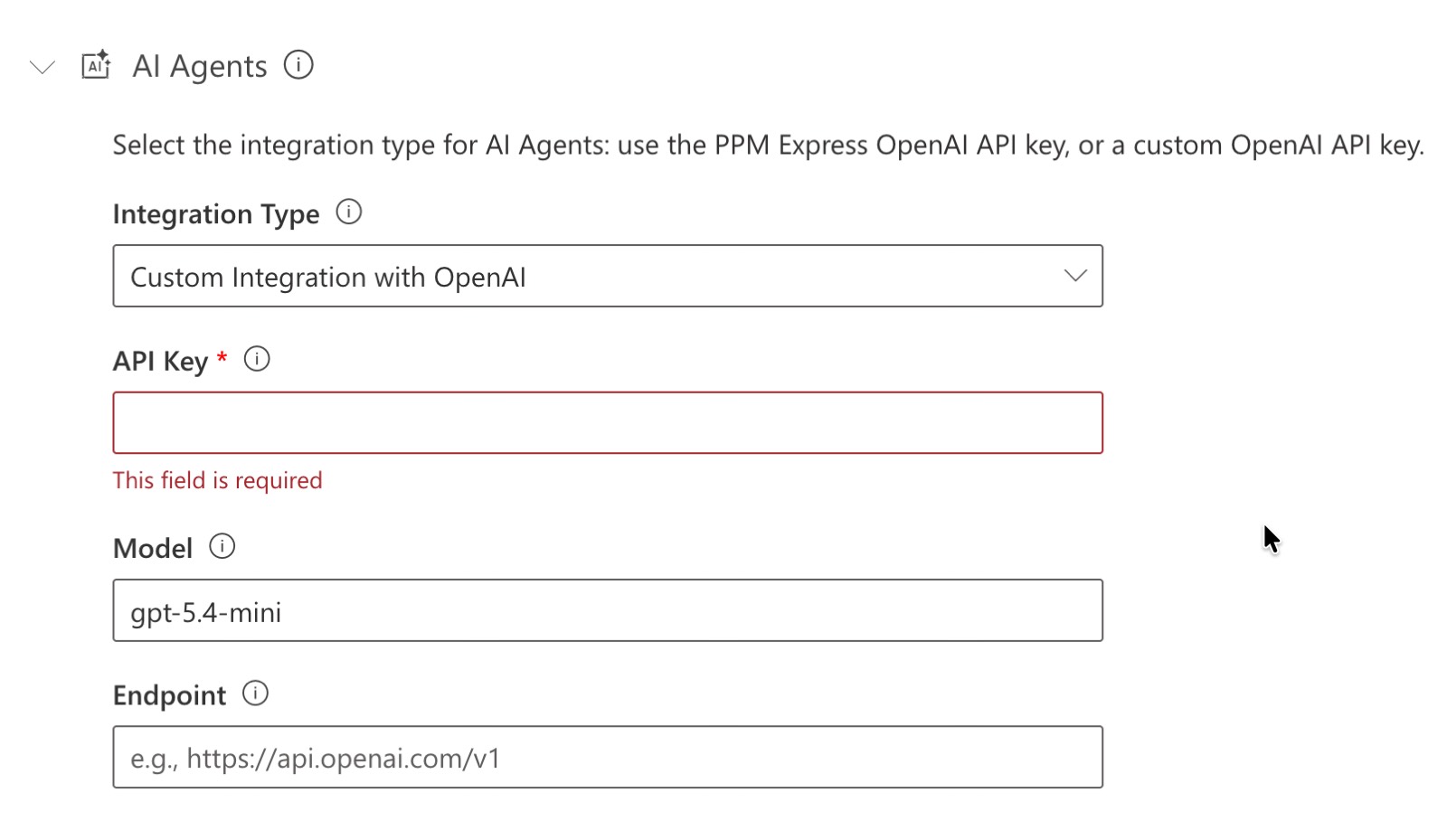
Nothing here needs a programme. Your teams keep working where they work, and the portfolio starts answering for itself.
The measure of success is unglamorous: fewer meetings that open with a caveat about the data.
The portfolio is connected. The first question you would have sent to the PMO gets answered in the client you already had open, from the live record.
The review pack arrives drafted rather than assembled, and the exceptions are at the front instead of on slide nineteen.
The mid-meeting question stops being a two-week analyst request. You ask, you get the number, and you see what it came from.
.jpg)

Which model runs it, what data leaves your tenant, which plan it is in, and where the limits are.
Neither, until you know why they differ — and that gap is the useful part. A disagreement usually means the reported status and the underlying record have diverged, which is exactly the conversation worth having while everyone is still in the room. Portfolio signals are rule-based, so you can open the specific milestones or financial entries behind them and settle it there rather than commissioning a follow-up.
You point at the record. Signals resolve to specific projects, milestones and financial entries in PPM Express, consolidated from the delivery systems your teams actually work in. This matters more for you than for anyone else who touches the portfolio, because you are the one whose name is on the decision. “The model said so” has never been a defence.
It changes what the meeting is for. When the data is current and the exceptions are already surfaced, the review stops being a reconciliation exercise and becomes the decision it was scheduled to be. Most organisations keep the cadence and shorten the meeting.
Quite possibly, and they are the people best placed to know. If the portfolio is assembled by hand once a month, this gives you a faster summary of month-old truth. The fix is connecting the delivery systems so the record maintains itself. Take the objection seriously — it is the strongest one anybody will raise, and it is not really an objection to AI.
You never open it. The portfolio answers inside Microsoft 365 Copilot, Claude or ChatGPT — whichever your organisation already runs — so there is no new destination to remember and nothing to log into. Executives do not adopt tools. They adopt answers that arrive where they already are.

What the AI actually does, and the data path behind every answer.
AI


How the pack in front of you gets assembled, and what changes.
AI by role

Why the capacity answer keeps moving between your reviews.
AI by role
Last updated 20 August 2026
.svg)


