
PPM for Manufacturing Industry
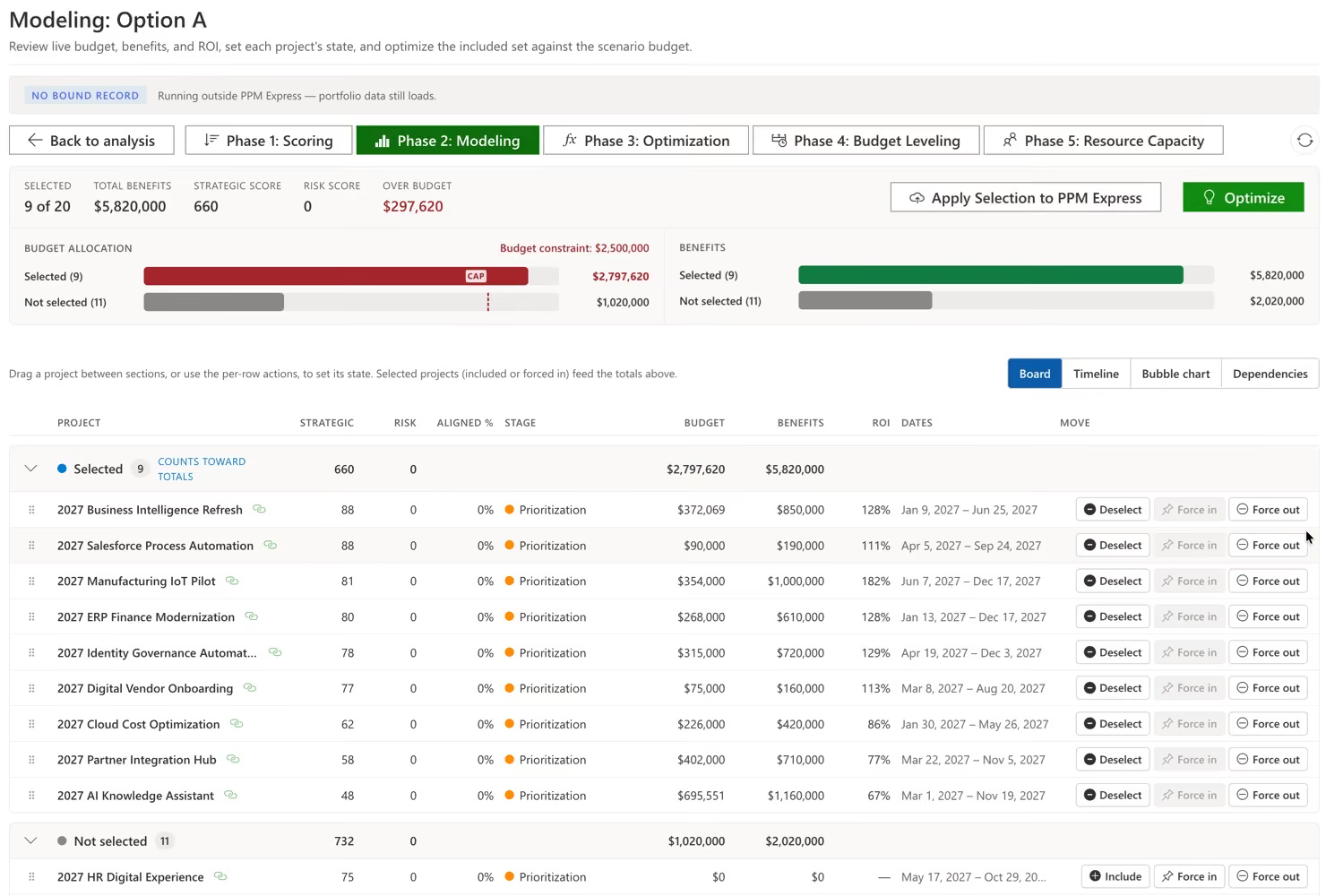
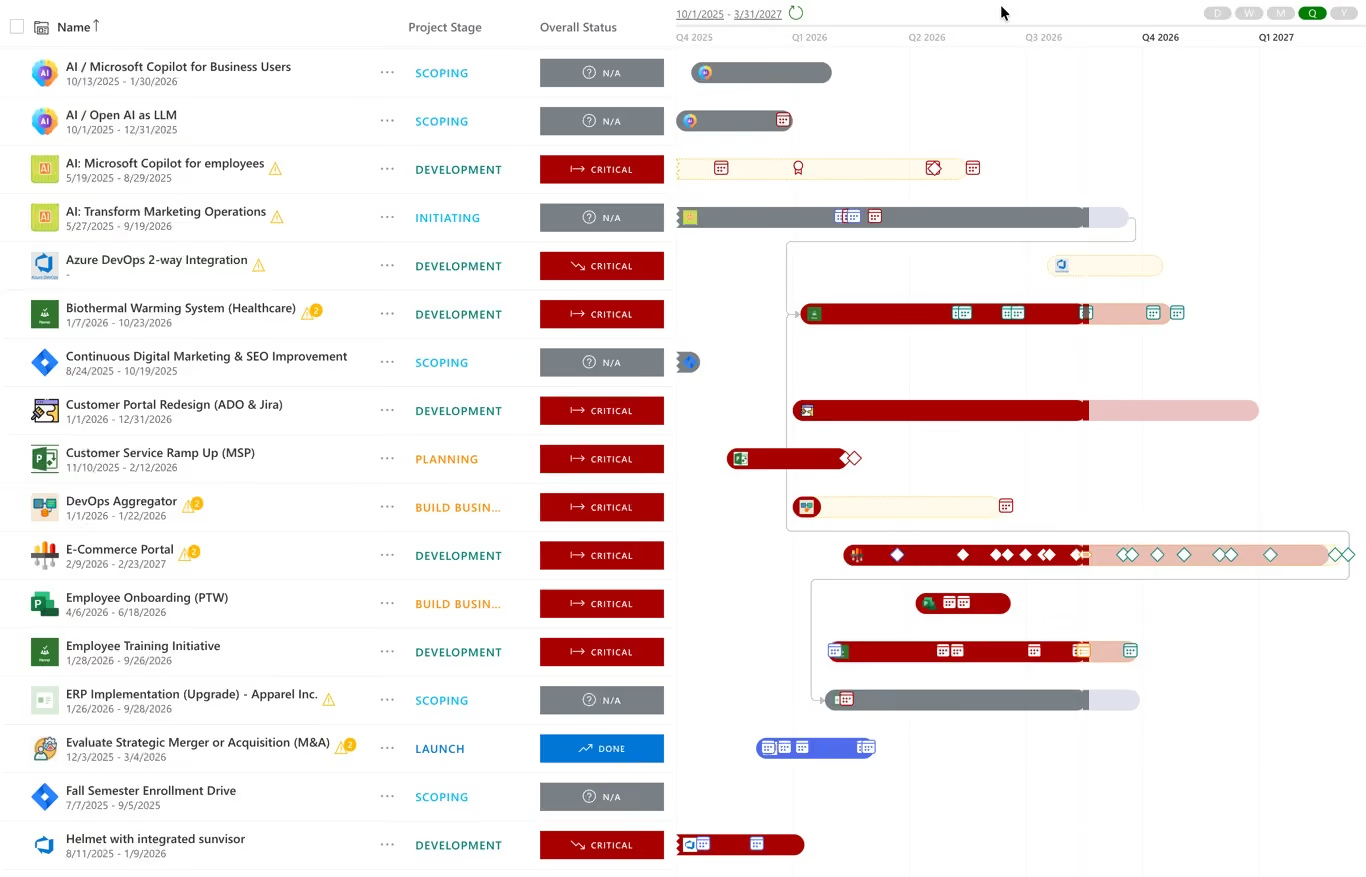
Roll up work managed in Microsoft Project, Planner, Smartsheet, Monday.com, Azure DevOps or Jira into one view across plants, product lines, programs and business units. Delivery teams keep the tools that fit their work; leadership gets a current portfolio instead of a monthly collection exercise.
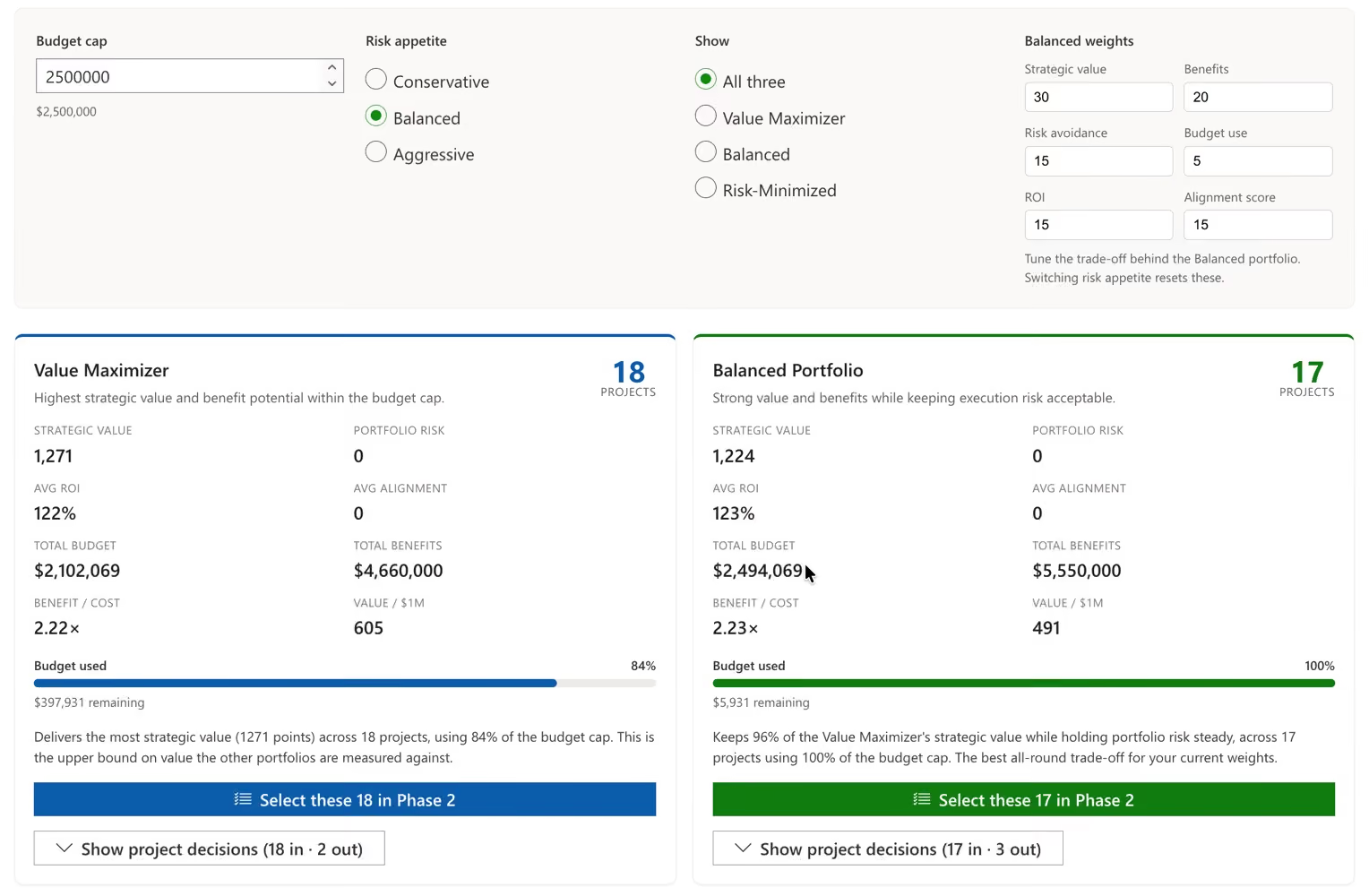
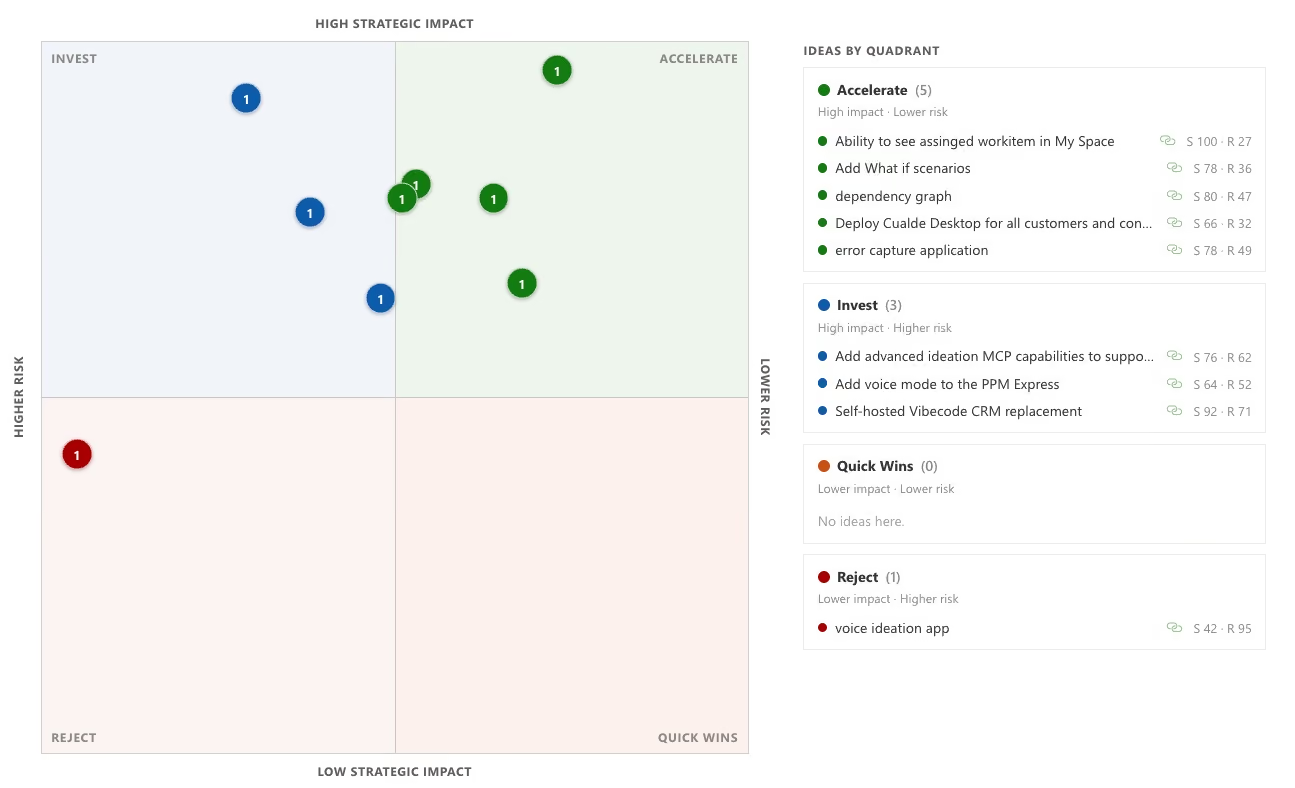
Score equipment, automation, compliance and improvement work against weighted strategic and risk factors with a published value range. Budget, forecast, expected benefits and impact sit alongside each one, so a safety requirement and a capacity expansion can be discussed with their differences visible rather than forced into one vague rank.
Allocate people in hours or % FTE and read availability from project through portfolio level. When three plants have each assumed they have the same process engineer, you see it while the schedule is still a draft rather than after a commissioning date has been committed.
Enterprise PPM platforms cover broadly the same ground. Where they differ most is what it costs to give your whole organization access to it.
| PPM Express | Planview | Planisware | Meisterplan | ServiceNow SPM | |
|---|---|---|---|---|---|
| Portfolio and programme hierarchy | Yes | Yes | Yes | Yes | Yes |
| Weighted scoring and prioritization | Yes | Yes | Yes | Yes | Yes |
| What-if funding scenarios | Yes | Yes | Yes | Yes | Yes |
| Resource capacity planning | Yes | Yes | Yes | Yes | Yes |
| Stage-gate intake and approvals | Yes | Yes | Yes | Yes | Yes |
| Budgets, forecasts and benefit realization | Yes | Yes | Yes | Yes | Yes |
| Dashboards and portfolio reporting | Yes | Yes | Yes | Yes | Yes |
| Multi-site and multi-plant portfolio rollup | Yes | Yes | Yes | Limited | Yes |
| New product development stage gates | Yes | Yes | Deepest | Limited | Limited |
| Microsoft Project, Planner and Project for the Web | Native two-way | Yes | Limited | Limited | Limited |
| Jira and Azure DevOps | Native two-way | Yes | Limited | Limited | Yes |
| Power BI reporting pack | 200+ reports | Limited | Limited | Limited | Limited |
| Unlimited users included | Yes | No, per seat | No, per seat | No, per seat | No, per seat |
| Typical annual cost | $8,000 to $25,000 flat | $100,000+ | $100,000+ | Mid five figures | $100,000+ with platform |
Planview is the broadest suite in the category and the strongest analyst position. If you need enterprise architecture, value stream management and PPM from one vendor, it covers more ground than we do, with the longest implementation and the highest cost to match.
Planisware is genuinely deeper on new product development pipeline modelling and stage-gate structures. If your portfolio is predominantly NPD and pipeline valuation is the primary requirement, evaluate it seriously. Where manufacturers move away from it is when the portfolio is mixed: NPD alongside capital projects, plant improvement and IT work, where that depth is largely unused and still paid for.
Meisterplan is fast to deploy and very good at lean capacity and scenario planning. If contention over shared engineers is your single problem, it will solve it quickly. It is deliberately lighter on financials, capital tracking and gated intake, so multi-site manufacturers tend to outgrow it.
ServiceNow SPM is a strong choice if you already run ServiceNow for ITSM, because the platform and data are already there. If not, you are buying the platform to get the portfolio module, and the cost and implementation footprint follow.
PPM Express covers the same core portfolio capabilities on one flat annual subscription with unlimited users. We are not the deepest NPD pipeline tool or the broadest enterprise suite. We are the portfolio layer for manufacturers that run on Microsoft and Jira and would rather spend the difference on the plant.
A capacity expansion, a line upgrade, a compliance requirement and ten improvement ideas can all be worthwhile and still be impossible to deliver together. Score the work against explicit criteria, model the trade-offs against one investment ceiling, and test the result against the people who have to execute it before funding becomes a promise.
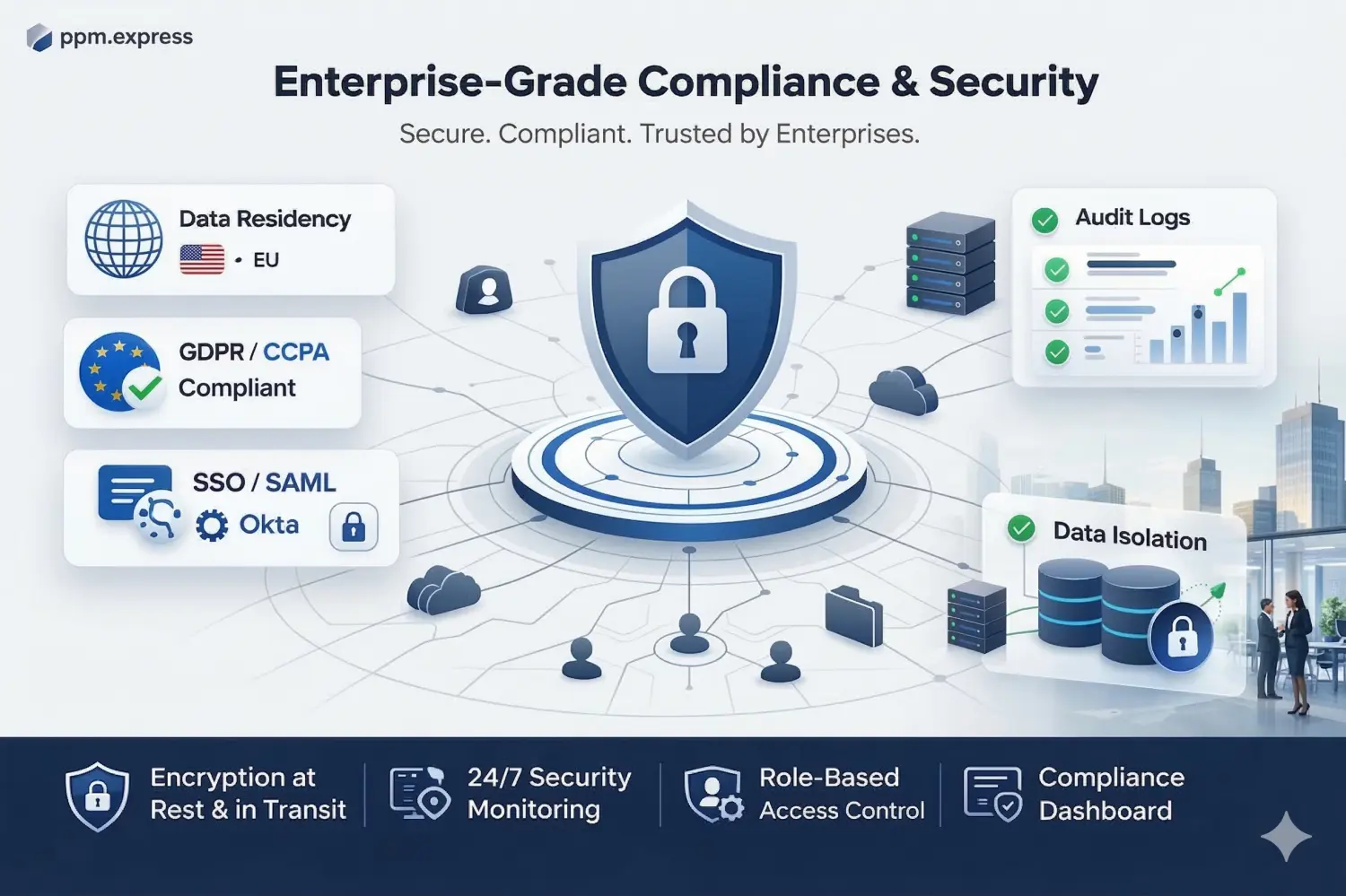

Security & Trust
Enterprise-grade security is built into our platform. We offer US and EU data residency, full GDPR compliance, and custom DPAs to meet strict regulatory requirements.
Need app availability in your region/country to meet data residency requirements? We can provide.
Microsoft 365 and Okta SSO ensure secure identity management, while centralized user management, advanced permissions, detailed audit logs, and strict data isolation protect sensitive enterprise data.
Bring your security reviewers to the same call.
Book Enterprise Demo

What our clients say
250+
Customers
use our software daily
100 hours
Saved every year
on monitoring state and statuses of projects, per PM
100K+
Projects
tracked on the PPM Express platform
Unlimited
Users
on every paid plan, so visibility is never rationed
Data residency
US & EU Data Residency
Encrypted in transit and at rest, with SSO, audit logs and tenant isolation. No customer data used to train AI models.
Reporting
200+ ready-to-use reports
Power BI reports built on live portfolio data, so stakeholders get self-service dashboards instead of a request queue.
Pricing
One flat annual subscription
$25,000/year for large enterprises, $8,000/year for SMB. No per-seat penalty.

Streamline Project Portfolio Management and Visibility at Scale
Integrations

Capture new project request, streamline evaluation and prioritization
Product

Structured Approach for prioritizing and aligning portfolios with strategic priorities and resource constraints
Product
Last updated 20 August 2026
Manufacturing portfolio management, answered.
Deciding which capital investments to fund, in what order, across every site, and then tracking them against the case that justified them. It differs from capital budgeting by not stopping at approval. The portfolio view stays live through execution, so an overrun at one plant is visible against everything else competing for the same money and the same engineering resource.
One scoring model everywhere, with published value ranges so a score means the same thing at every site. In PPM Express, weighted strategic and risk factors carry a defined scale, so a 3 from one plant is a 3 from another. Without that, capital quietly flows to the sites that write the best business cases rather than the ones holding the best investments.
Stage-gate breaks development into stages separated by decision points, where a project has to justify the next tranche of funding. PPM Express implements this directly. Each project runs a process of seven phases, each holding multiple stages, with gates between them. Stages can be renamed, described, reordered and cloned, and you can run different processes for capital work and new product development.
You choose which gates need it. The project manager assigns one or more approvers, who review the request in the Approval Center and approve or reject it with comments. Every approver has to approve before the project advances. One rejection and it stays put. If capital approvals already run through another system, gates can be routed to it via the API instead.
The obstacle is usually evidence rather than intent. By the time a review comes due, nobody can reconstruct what was promised. PPM Express baselines budget, forecast and benefits at approval and keeps them, so the review starts from a documented case instead of an archaeology exercise. That also takes most of the blame out of it, which is the other reason these reviews get skipped.
Through PPM Express Project Publisher, an add-in for the Project Desktop client. Your planner opens the .mpp, hits publish, and the schedule lands in PPM Express. Versions 2016, 2019 and 2021 are supported, and Project Online and Project for the Web connect directly. Each published plan brings up to 2,000 tasks and ten levels of hierarchy, which covers most capital schedules but is worth checking against your largest.
Budget, forecast, benefits and impact live in PPM Express itself, and it connects to the delivery tools sites already use for schedule and progress: Microsoft Project, Planner, Smartsheet, Monday.com, Jira and Azure DevOps. You end up with one capital plan reflecting site reality, without telling each site to abandon how it tracks work.
Score the risk explicitly instead of treating compliance as automatically first in line. A weighted model with a defined risk factor lets a safety or regulatory project earn its rank on the exposure it removes, and shows leadership what that rank costs in growth investment given up. That trade-off is worth making deliberately. Right now it mostly gets made by default.
Make stopping a funded outcome of a gate rather than an exception someone has to force. Scenario comparison shows the pipeline with a program and without it, including the engineering capacity that comes back. Pipelines rarely bloat because bad projects get approved. They bloat because no forum owns the kill decision and stalled work keeps its budget by default.
Every plan gets tested against what people have left after commitments they already carry, and overallocation is flagged before you commit. In multi-site manufacturing this usually exposes the same small group of specialist engineers sitting in three site plans at once. That group, not the budget envelope everyone argues about, is what really determines which year a project lands in.
Yes. Resource utilization displays in hours, percent, FTE or chart view, drawn from planned, capacity, actual and availability figures. Capacity comes from each person's work week and calendar exceptions, so shift patterns and shutdowns are reflected. Filtering by role, department or skill lets you look at, say, controls engineers across every site rather than site by site.
Yes. Microsoft Project, Microsoft Planner, Smartsheet and Monday.com are supported connections alongside Jira and Azure DevOps, precisely because capital and engineering work rarely lives in a developer tool. Nothing in the scoring, capacity, gate or benefits model assumes sprints, story points or software delivery.
You get data residency in the US or the EU, full GDPR compliance, and custom DPAs where required. Identity runs through Microsoft 365 or Okta SSO. Your data is strictly isolated from other customers, and detailed audit logs record changes to the portfolio of record. That last part matters where capital decisions carry an internal audit trail obligation.
.svg)


