
Once you're running 50+ projects across 500+ people, a shared spreadsheet and weekly status meetings stop working.
PPM Express turns projects scattered across delivery tools into one governed portfolio — prioritized, resourced against real capacity, tracked to completion and reported on, without asking teams to change how they work.
One of the largest law firms in the US manages 7 IT portfolios and over 200 projects this way — 2,000+ attorneys, 14 offices, one governed project portfolio.
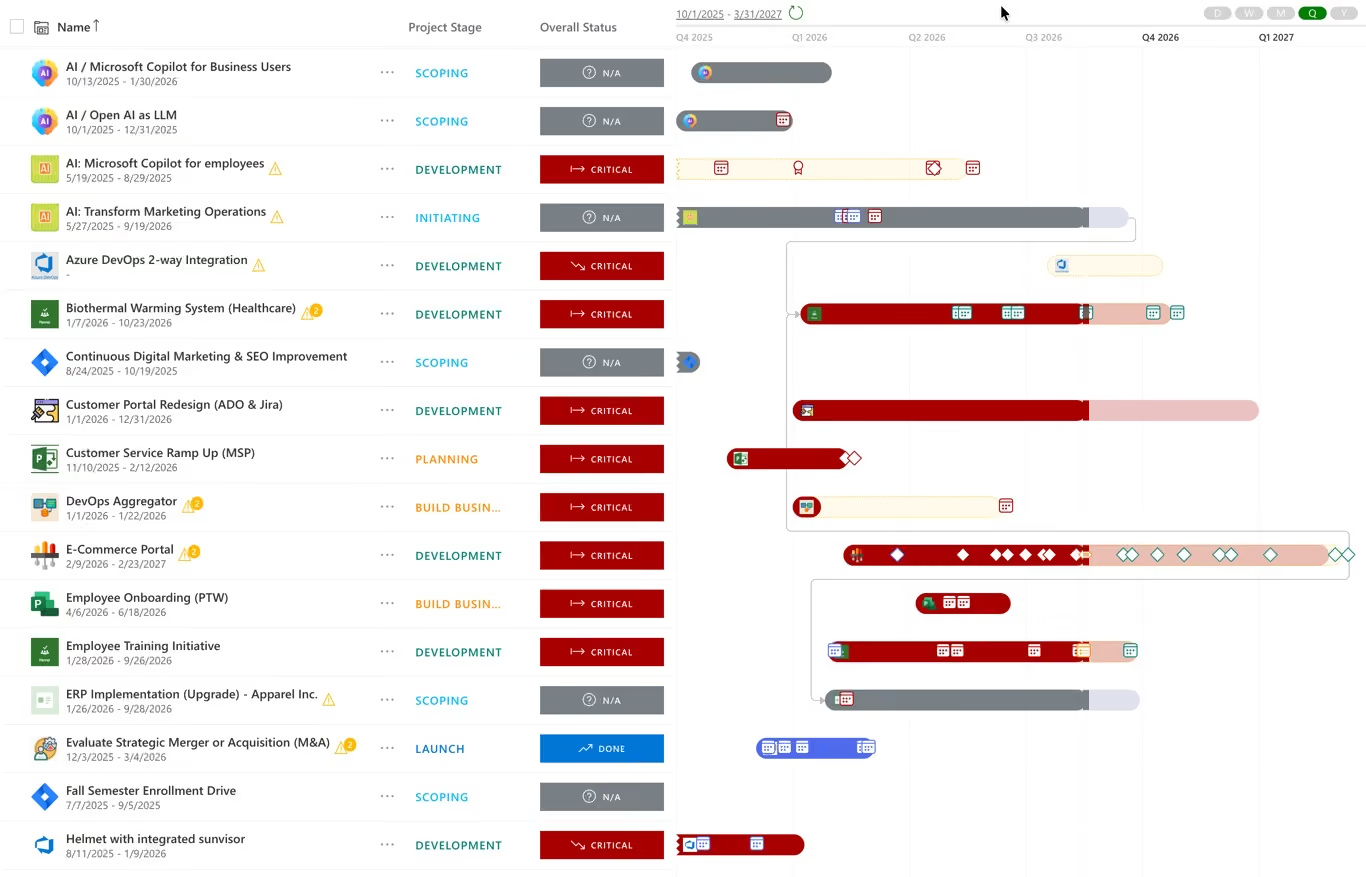


Project portfolio management (PPM) is the discipline of selecting, prioritizing, resourcing and tracking a collection of projects as one portfolio instead of managing each project in isolation. It answers three questions a single-project view never can: which projects should we be running, do we have the people to deliver them, and how is the whole portfolio actually performing?
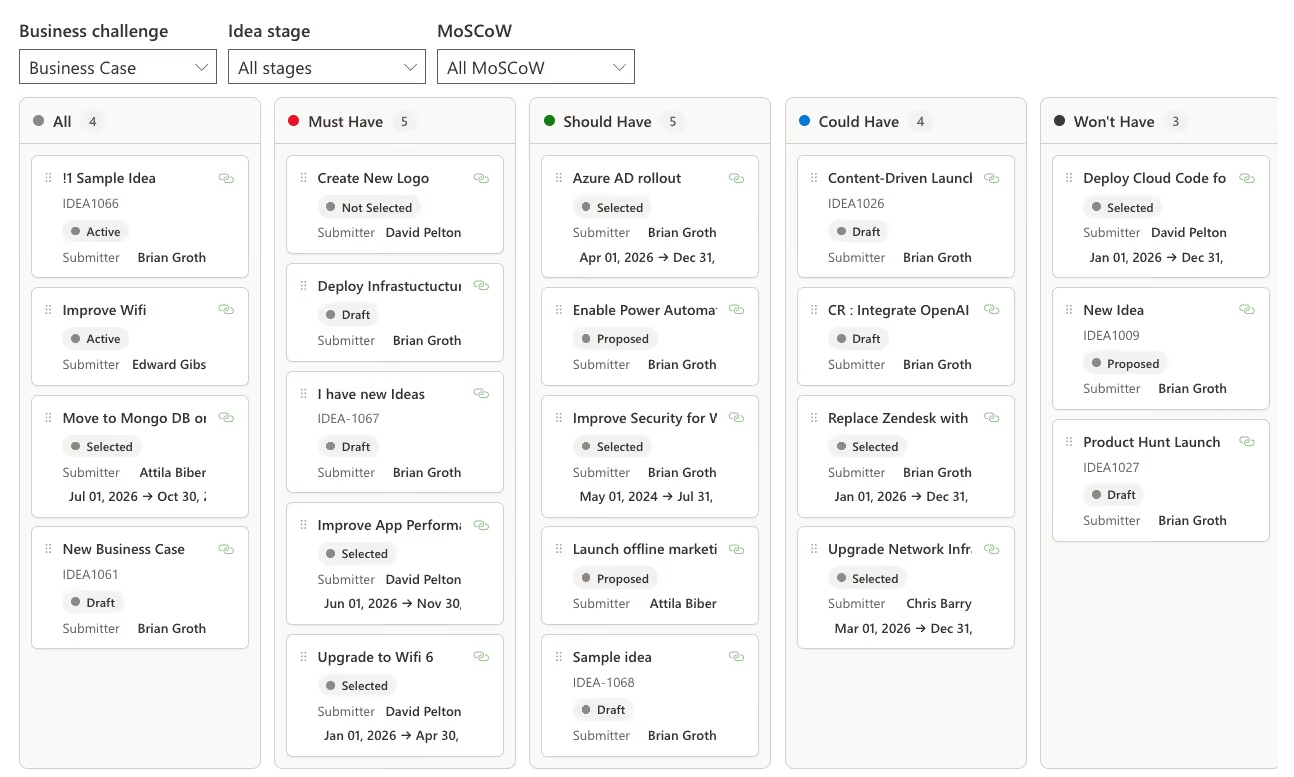
Requests and ideas are scored against criteria you define and ranked against one another, so the portfolio is built from the strongest projects rather than whichever ones asked first.
Projects are planned against real people and real capacity, so conflicts over the same resource surface during planning instead of mid-delivery.
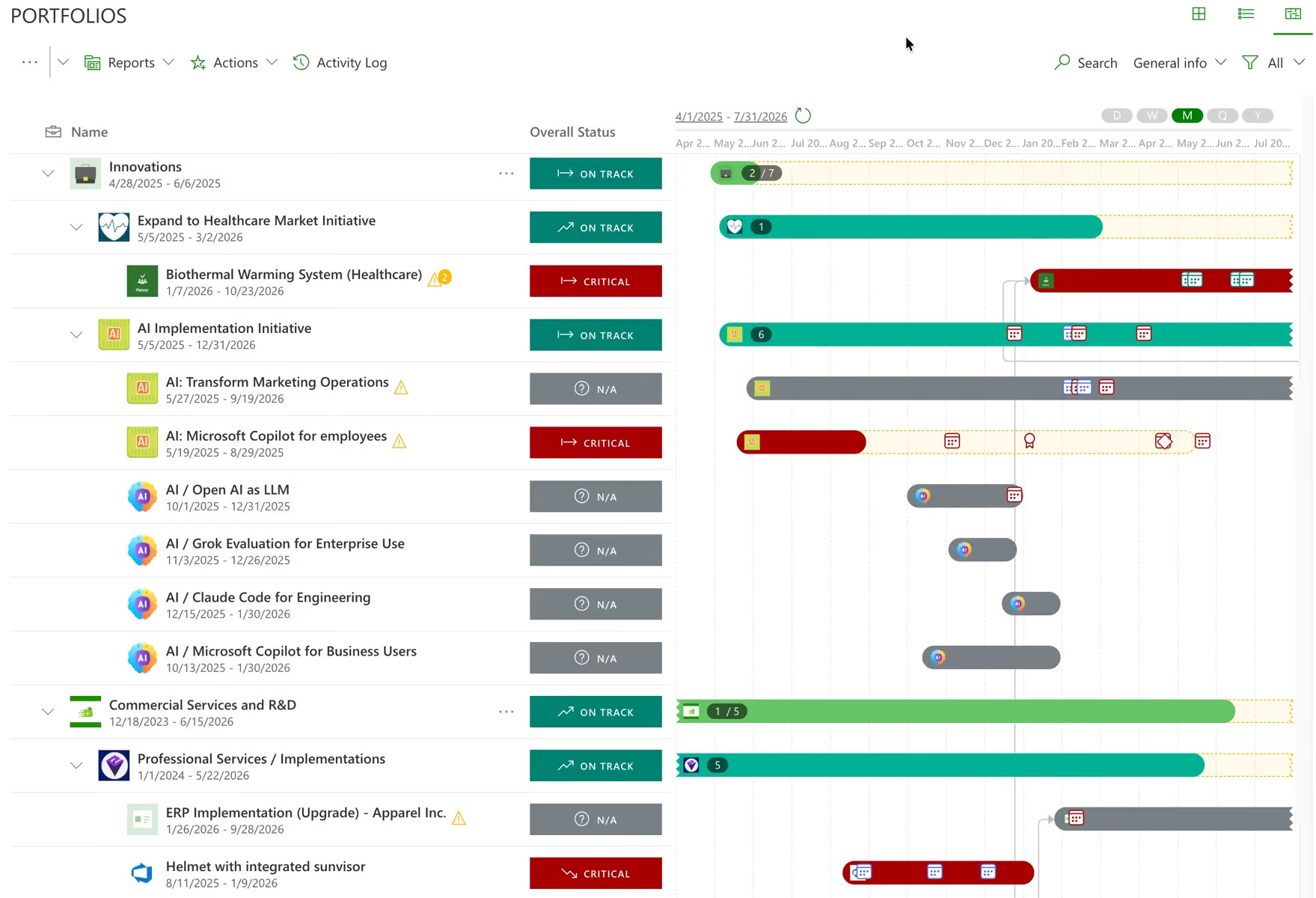
Status, risk, budget and progress roll up from every delivery tool into one portfolio view, so performance is reported once rather than reassembled per audience.
Each project reports green in its own tool, but nobody can see the whole set at once — so a resourcing conflict, a slipping dependency or duplicated effort across teams stays invisible until it isn't.
The list gets approved at the start of the year and rarely revisited, so a project that stopped mattering in March keeps consuming people and budget through December.
At 50+ projects, the same specialist gets committed to two initiatives in tools that can't see each other. Nobody notices until a delivery date slips — by then the fix costs weeks of rework instead of a five-minute reschedule.
PPM Express sits above delivery, not inside it. Projects, priorities, resources, schedules, budgets and reporting live here. The work itself stays exactly where your teams already do it.
Every project's priority, owner, schedule, budget, resourcing and status, side by side across the whole portfolio.
Your delivery tools. Teams keep their boards, plans and sheets. Nothing is migrated, and there is no second place to update the work.
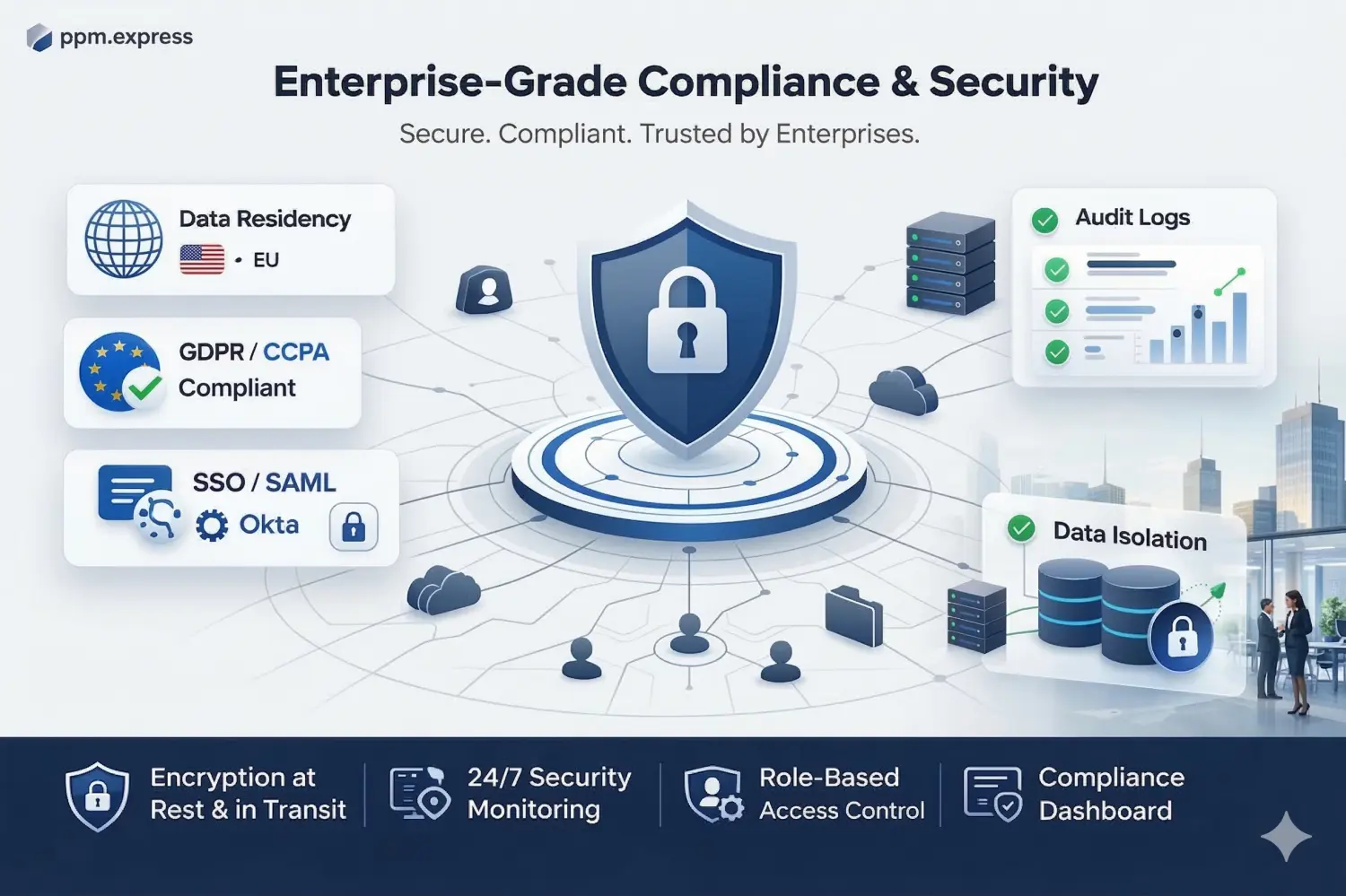
Microsoft 365 or Okta SSO, with centralized user management and advanced permissions.
Capture project requests and ideas in a structured intake instead of email threads and side conversations, so nothing enters delivery without first being seen and compared against everything else in flight.
Score and rank projects against criteria you define — strategic fit, value, risk, cost, effort — then check the resulting list against real people capacity before anything is scheduled.
Projects run in whatever tool each team already uses, while status, budget, risk and progress roll up automatically into one portfolio view for everyone above the team level.
Programs, projects and tasks, with every project sitting under the program and priority it was approved against. One hierarchy, whatever tool the work is delivered in.
Group related projects into programs and portfolios so they can be planned, resourced and reported on together instead of one at a time.
Priority, status, dates, budget, forecast, resourcing, risk and progress, comparable across the whole portfolio.
Read-only portfolio access for executives, PMO and sponsors, so the portfolio is something they look at rather than something you send them.
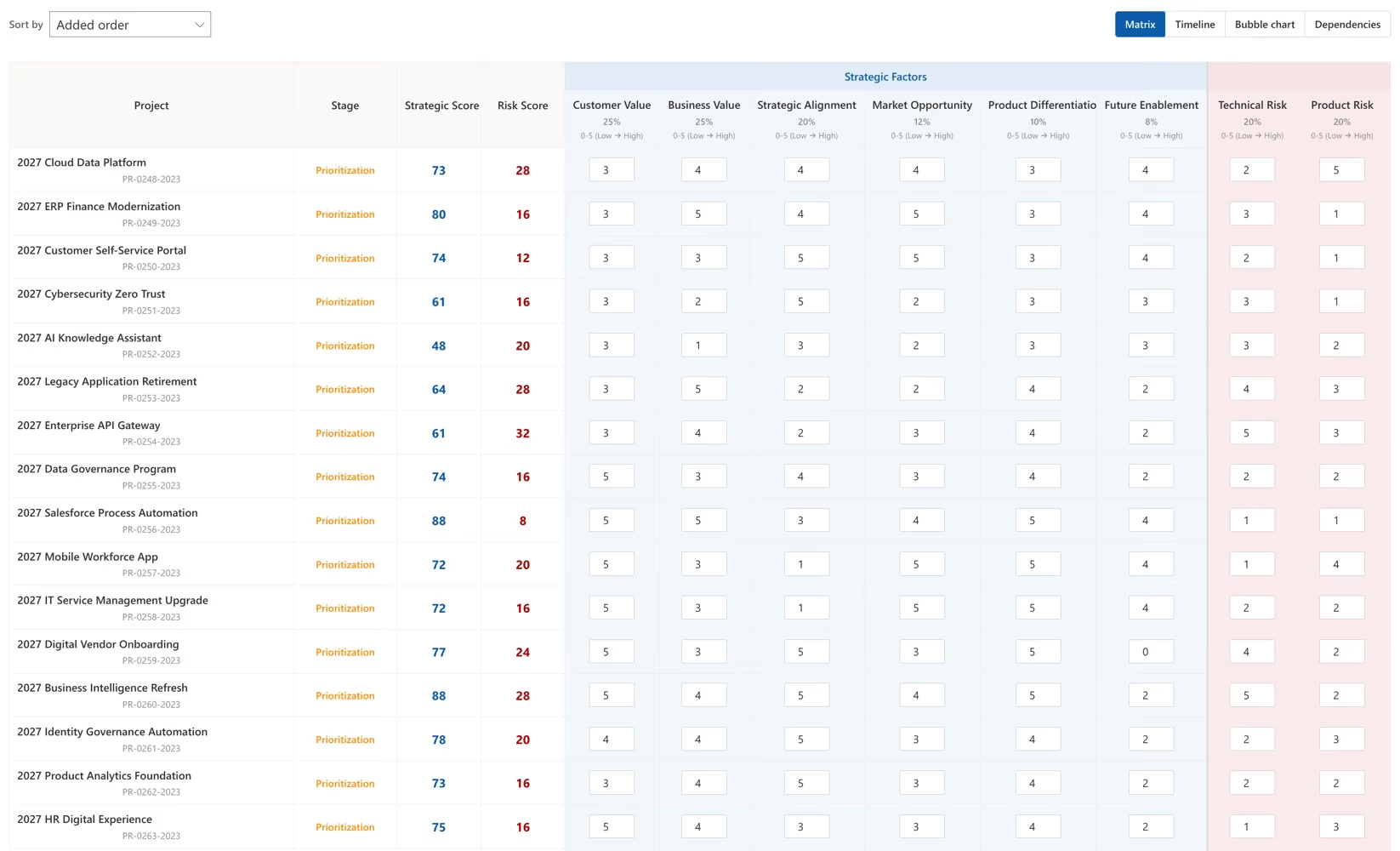
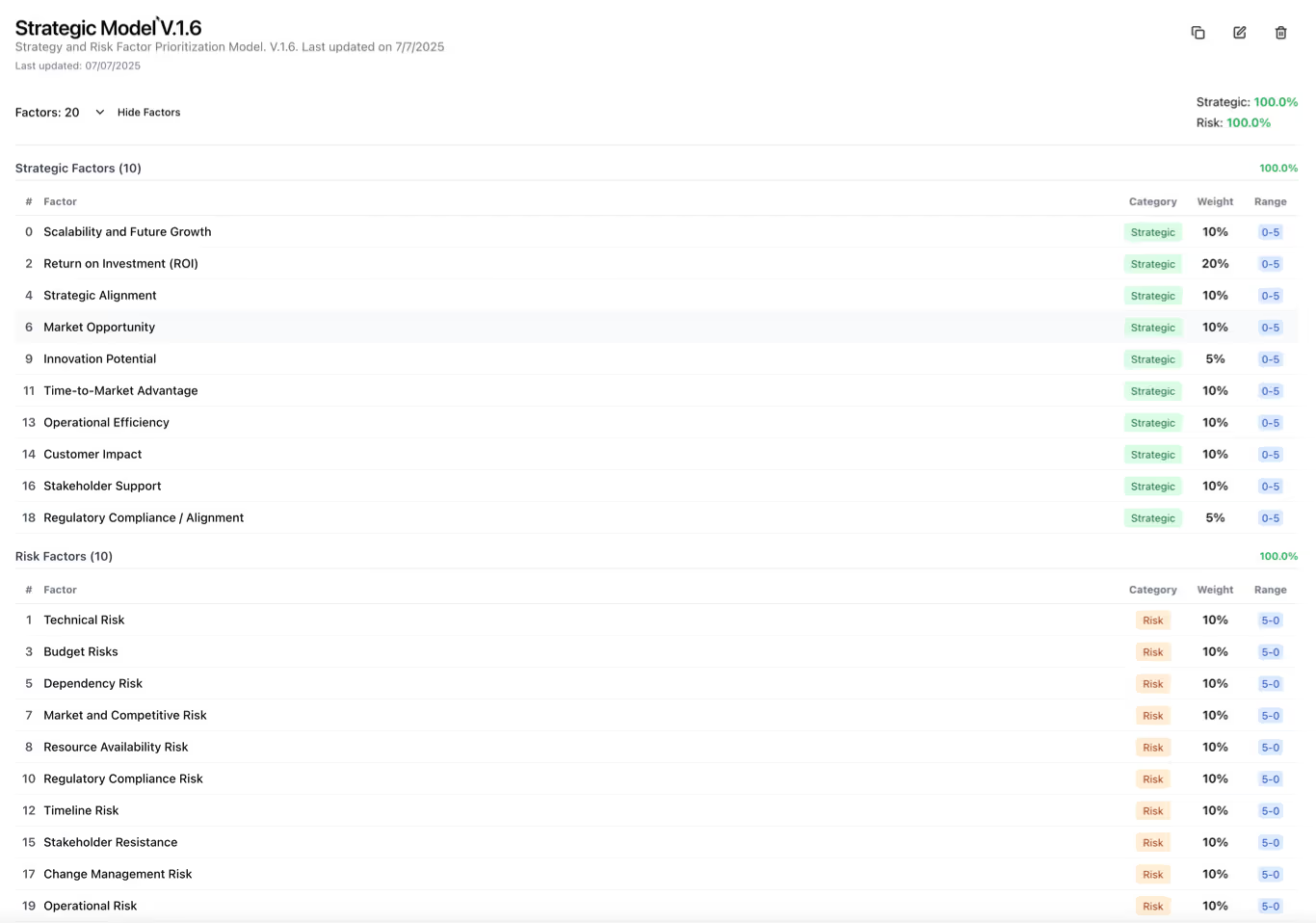
Prioritization only survives scrutiny when the model is explicit. PPM Express ranks projects on weighted criteria you configure — strategic alignment, financial value, risk, effort, resourcing cost — so every ranking can be explained line by line.
Choose the criteria, set the weights, and change them later without rebuilding the model.
A mandatory compliance project and a discretionary growth initiative should not be scored the same way, and do not have to be.
Every score traces back to the inputs behind it, so the decision survives the question “why is this project above that one?”
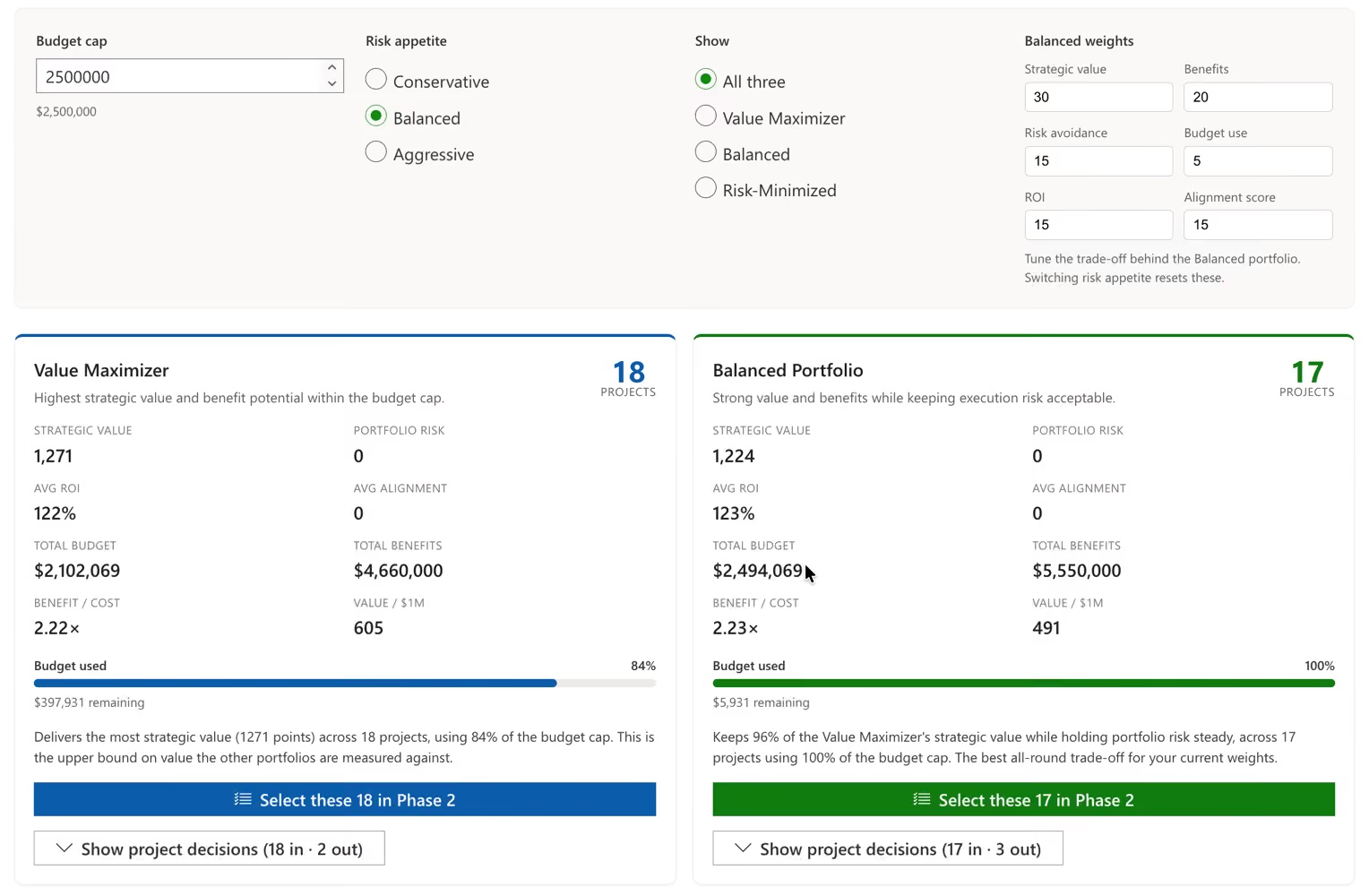
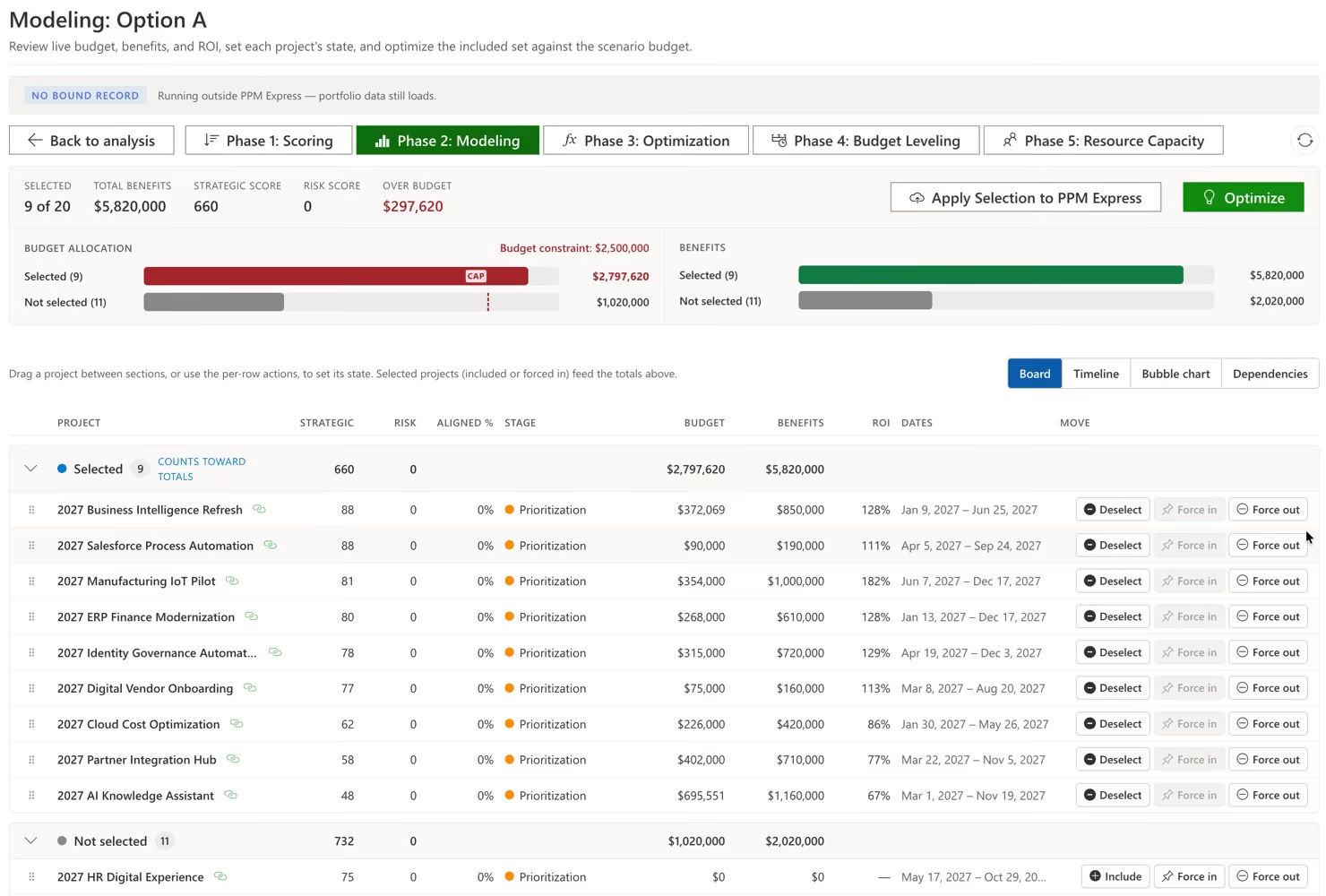
A ranked list is a proposal, not a plan. Model alternative roadmaps — add a project, defer another, move a date, change a team's allocation — and see the effect on capacity, cost and delivery before anything is scheduled.
Compare roadmap options against the same priorities, the same budget and the same people.
Where a scenario breaks — money, people or a date — is shown before the commitment, not after it.
The chosen roadmap becomes the plan of record every team schedules against.
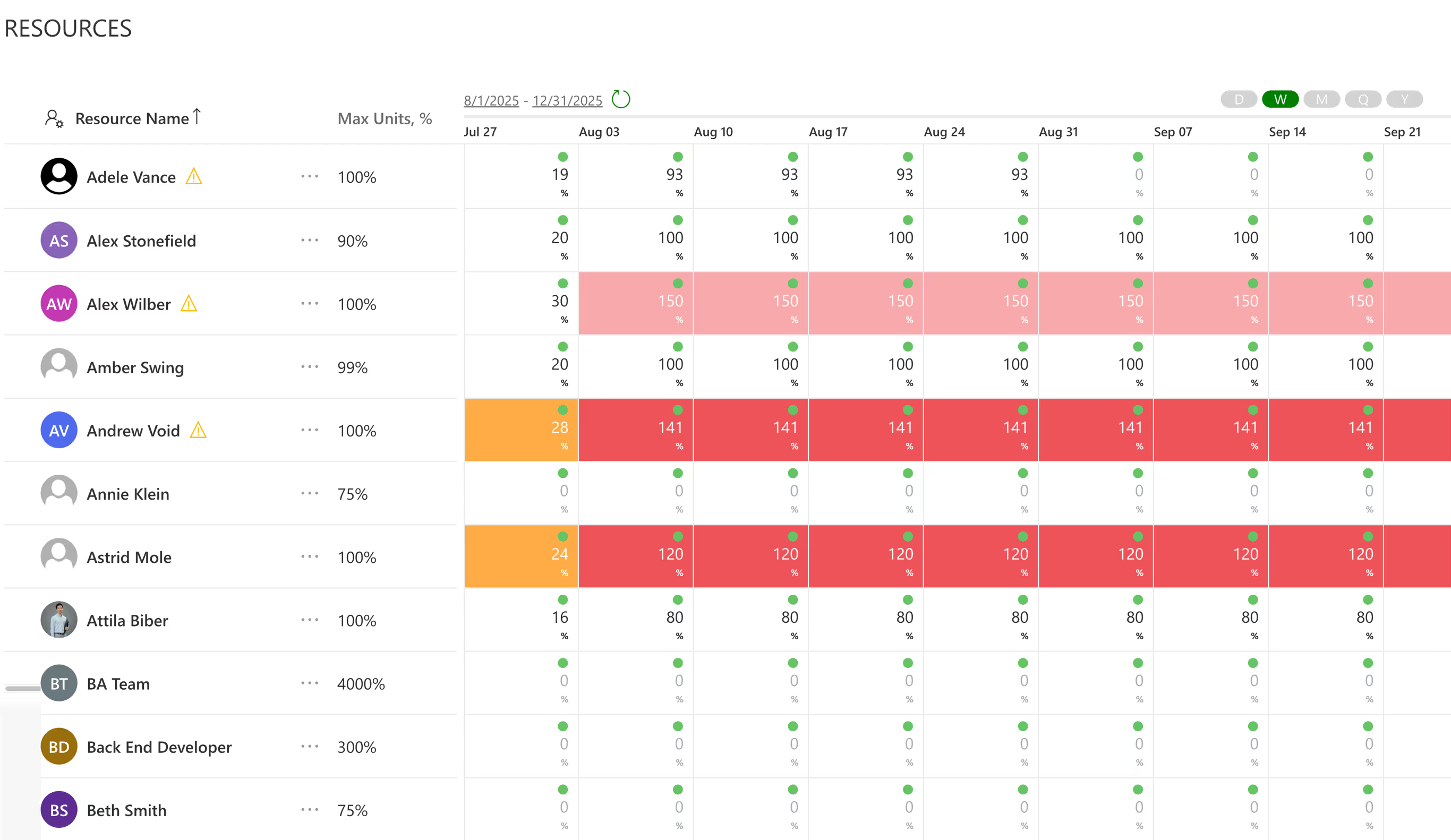
Most project portfolios are over-committed on the day they are approved, because the plan was tested against budget and not against people. PPM Express calculates availability from each person’s work week and calendar, across every project they're assigned to.
Plan people against projects across programs in a single pass.
Calculated from real work weeks, calendars and calendar exceptions, not from an assumed eight-hour day.
“Can we take this on as well?” becomes “here is what would have to move for it to fit”.
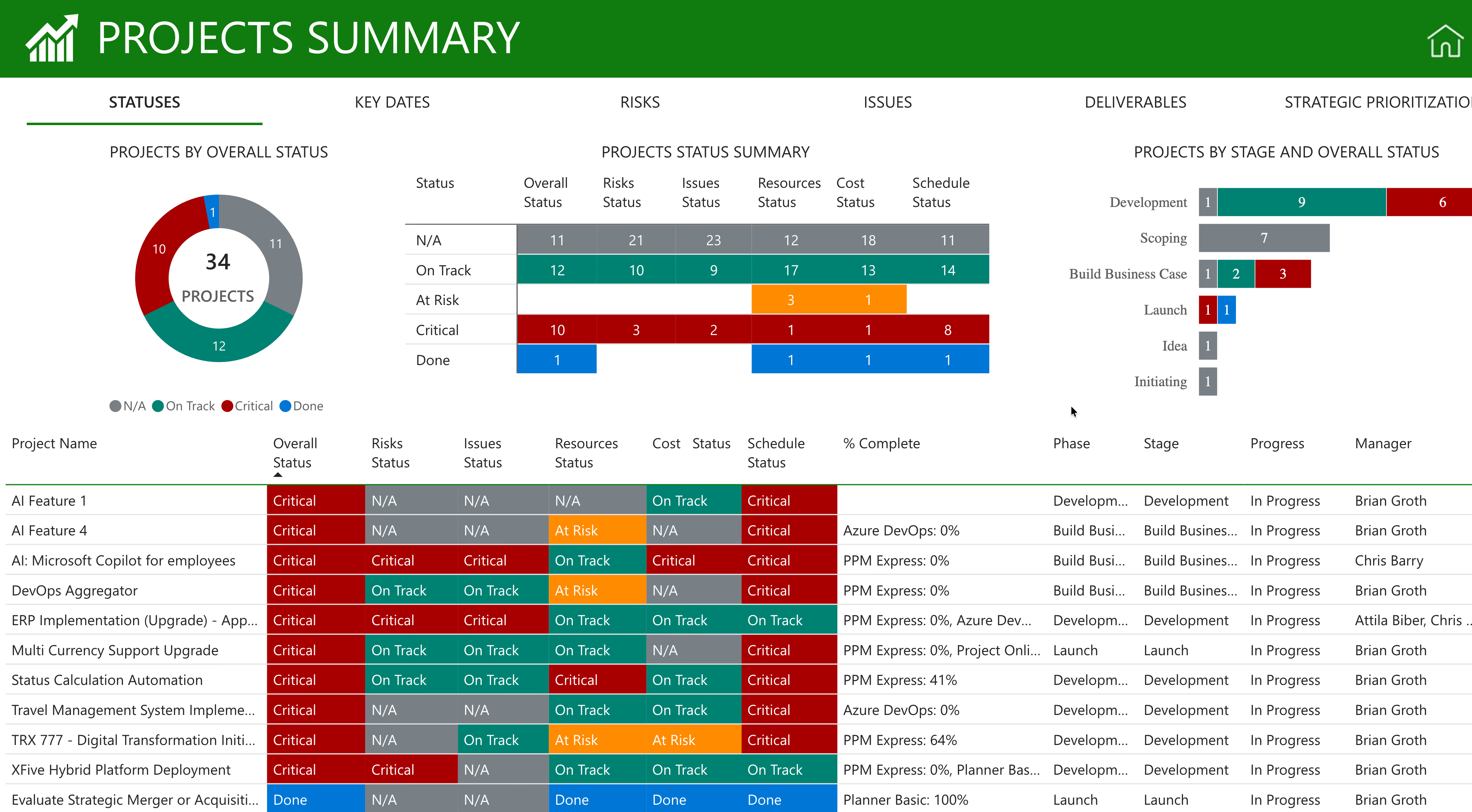
Project and portfolio performance reported once, across every tool the organization delivers in. The PMO, leadership and sponsors read the same numbers, and nobody rebuilds a deck to produce them.
Project and portfolio health, priorities, budgets, risks, resourcing and progress — ready to use rather than ready to build.
Azure DevOps, Jira, Microsoft Project, Project Online, Planner, Smartsheet and monday.com, in one portfolio.
For the PMO, leadership and external stakeholders — the same numbers, without a rebuild per audience.
Annual planning cannot manage a portfolio of projects that changes every month. PPM Express supports a rolling cadence — intake, prioritization, status reviews and re-ranking on a schedule — so the portfolio reflects what is actually running.
New requests and ideas arrive through a structured intake, are scored on the same model as everything else, and join the queue rather than jumping it.
Fund in stages. Each gate is an explicit decision to continue, change or stop, with the current business case, spend, capacity and benefit evidence attached to it.
Quarterly or monthly re-ranking against current capacity and current results, rather than against last year’s assumptions.
Every project stays visible from intake through delivery, so status is always current and nobody has to ask.

One of the largest law firms in the United States — over 2,000 attorneys across 14 offices worldwide — governs 7 IT portfolios and more than 200 projects in PPM Express.
Their leadership team does not commission a portfolio review. They work from live dependencies between initiatives, actual progress, timelines and milestones, with reporting generated automatically across all seven portfolios.
Not only what each program is doing, but what it is waiting on — visible before it becomes a delay.
Read from the delivery tools the teams are already updating, across every connected project.
Automated across portfolios and programs, so leadership reviews the portfolio instead of commissioning a view of it.
Status, risk and progress sit in whichever tool each team uses, so leadership assembles a portfolio view by asking rather than by looking at one.
Projects are scheduled against estimates, not against real people. The collision with actual availability shows up during delivery rather than during planning.
The project list is approved at the start of the year and reviewed again at the end of it, so a project that stopped mattering keeps running anyway.
Status, risk, budget and progress are read live from every delivery tool, so the portfolio view is always current without anyone assembling it.
Resourcing conflicts are visible before a project is scheduled, not after it slips.
Projects are re-ranked quarterly against current capacity and results, so the portfolio stays current instead of just getting reviewed.

Weighted Prioritization Model for selecting right investment
Integrations

Capacity from real work weeks, so over-allocation surfaces before you commit.
Product

Structured Approach for prioritizing and aligning portfolios with strategic priorities and resource constraints
Product
Last updated 20 August 2026
Project portfolio management, answered.
Project portfolio management (PPM) is the discipline of selecting, prioritizing, resourcing and tracking a group of projects as one portfolio rather than managing each project on its own. It covers intake, scoring and ranking, resource capacity, scheduling, stage gates and reporting — read across every delivery tool the projects actually run in.
Project management asks whether one project is on time and on budget. Project portfolio management asks which projects should be running at all, whether the organization has the people to deliver them, and how the whole set is performing — across every project at once.
No. PPM Express reads from Azure DevOps, Jira, Microsoft Project, Project Online, Microsoft Planner, Smartsheet and monday.com. Teams keep their tools and nothing is migrated. Only the people managing the portfolio work in PPM Express.
You configure weighted criteria — strategic alignment, financial value, risk, effort, resourcing cost — and set the weights yourself. Projects are scored against them and ranked, so priority is explicit and defensible rather than argued case by case.
Yes. Build alternative roadmaps, add or defer projects, change budgets or dates, and compare the effect on cost, capacity and delivery side by side. The chosen roadmap becomes the plan of record every team schedules against.
Availability is calculated from each person’s work week, calendar and calendar exceptions. People are allocated to projects in hours or percentage FTE across programs, and over-allocation is flagged before a schedule is approved, not after it slips.
For organizations at roughly 500+ employees and 50+ active projects, that's the Enterprise plan — unlimited users, role-based access and the governance features on this page, without the multi-business-unit scale built for Ultra. Running hundreds of projects across multiple business units or regions instead? Our enterprise-scale page and the Ultra plan are built for that.
Yes. Funding and scope can be released in stages with a gate review at each one. Every gate is an explicit decision to continue, change or stop, taken with the current status, spend to date, capacity position and risk in view.
The business case stays attached to the project after go-live, so expected value can be compared with what was actually realised. That comparison is what turns the next prioritization round into an evidence-based decision instead of a repeat of the last one.
Most organizations running this well move to a quarterly re-ranking with monthly status and gate reviews, and continuous intake in between. Annual-only planning cannot manage a portfolio whose people, costs and priorities change every month.
Yes. One of the largest law firms in the United States — over 2,000 attorneys across 14 offices worldwide — manages 7 IT portfolios and more than 200 projects in PPM Express, with every project delivered in its own tool and reported on in one place.
Score and rank initiatives against criteria you define. Project prioritization and ranking
Test a portfolio option against capacity and cost before committing to it. Portfolio what-if scenario planning
Capacity calculated from real work weeks, before the portfolio is approved. Resource capacity planning and utilization
Connect strategic objectives to the initiatives funded to deliver them. OKRs and strategic objectives
Every delivery tool the portfolio is read from. All PPM Express integrations




.svg)


