
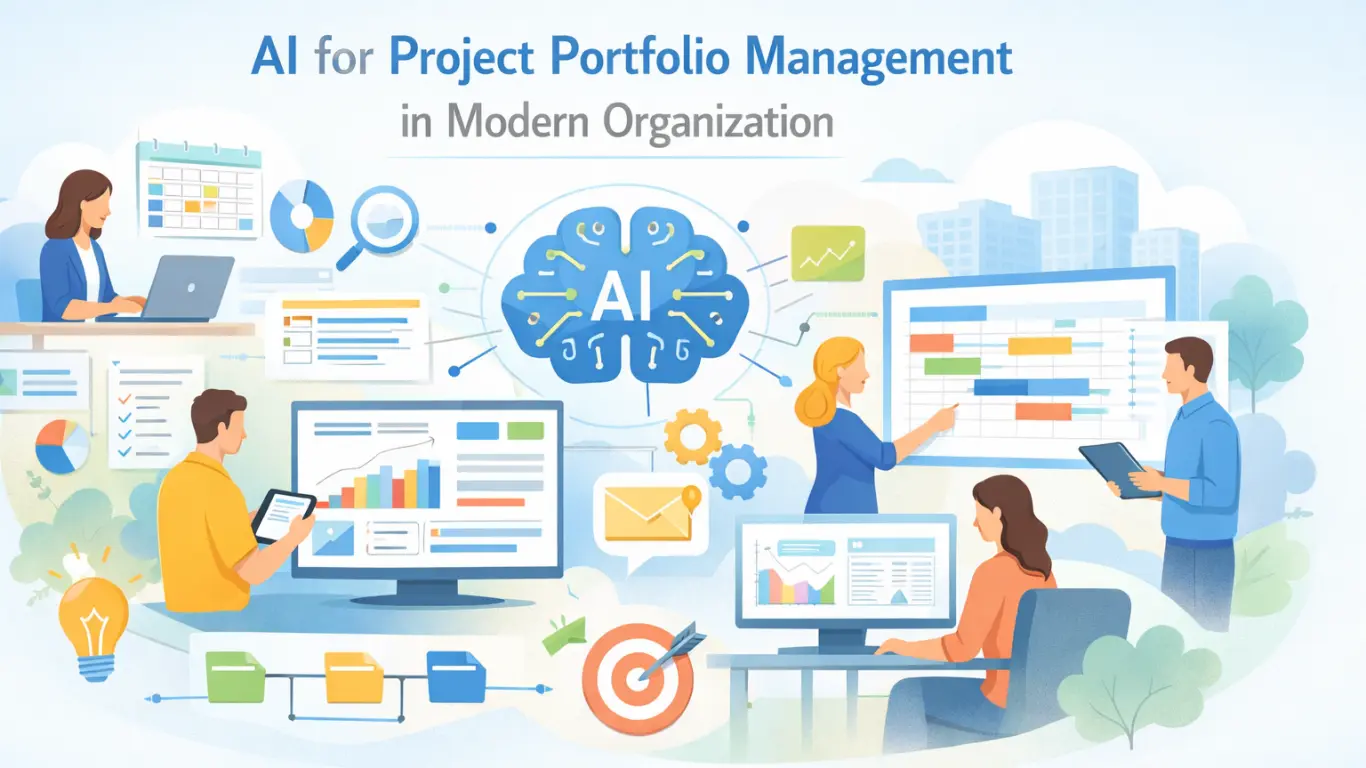
Get our latest free whitepaper to learn more about using AI for Project Portfolio Management in Modern Organizations.


250

100 hours

100K+

EU & US
Ask project managers which part of the job they like least and the answer is remarkably consistent: chasing people for status updates. Not the planning, not the stakeholders, not the difficult decisions. The chasing.
Then collating what comes back, reconciling it with what the data says, and submitting it into a template for a meeting that may or may not read it.
The least rewarding task in the role, and the one that recurs every single week regardless of how the project is actually going.
Compiled over several days, so the report describes a state the project has already left by the time anyone reads it.
The role quietly becomes administration. It is the most-cited reason experienced project managers give for wanting out of the profession.

You have been promised AI that fixes reporting before. So rather than one claim covering everything, here is which specific mechanism addresses which specific part of your week.
Only the first is a language model. The rest is plumbing, and the plumbing is what makes the first one worth having.
The report is generated from the project record, so the weekly ask to your team becomes confirming a pre-filled update rather than requesting a paragraph by Thursday.
Reporting reads from Jira, Azure DevOps, Planner and Microsoft Project as the work happens, so the draft describes the project as it is rather than as it was when you started collecting.
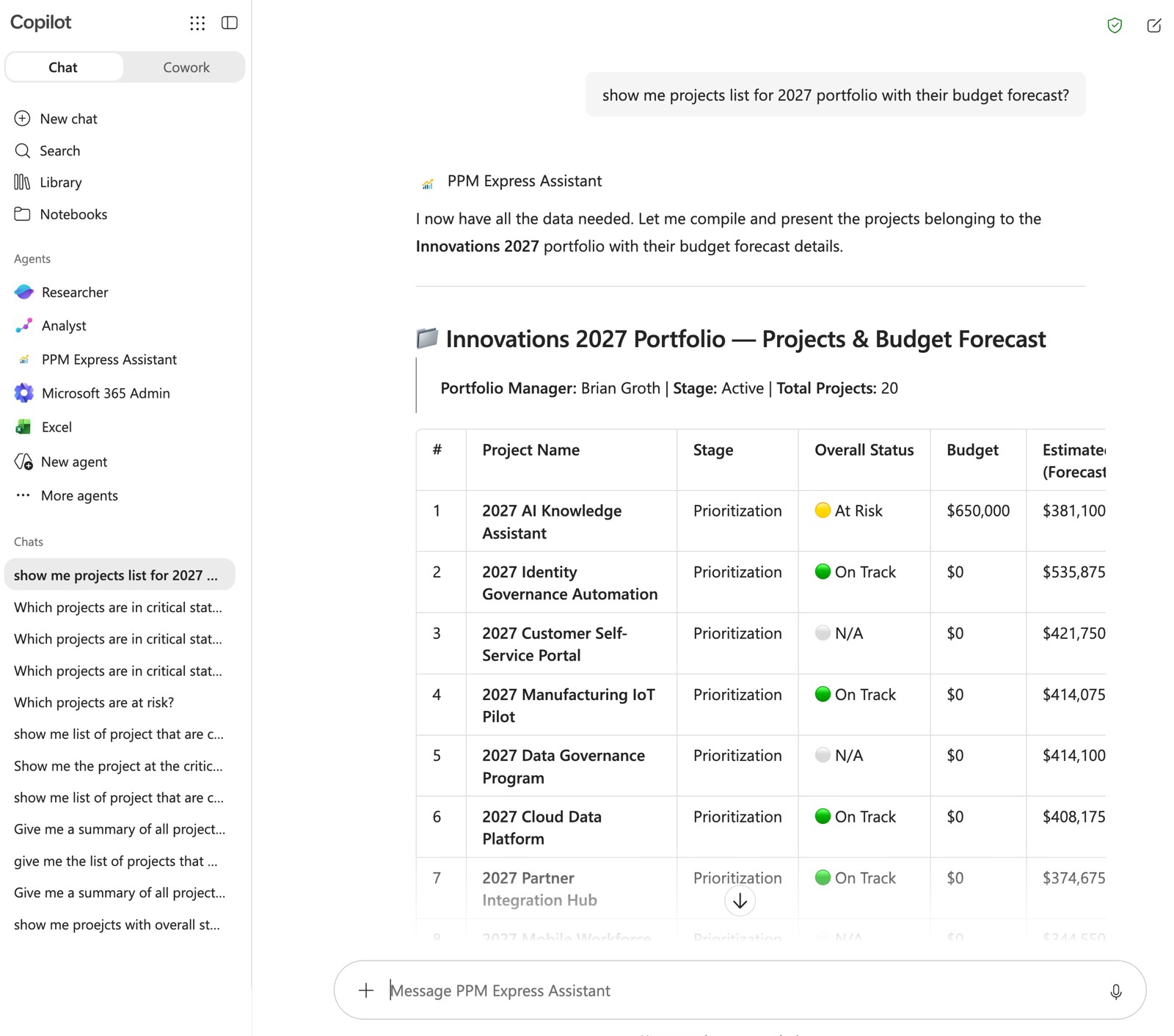
Tasks and risks are generated for you to approve, and portfolio questions can be asked directly in Copilot, Claude or ChatGPT. The typing moves elsewhere. The judgement stays with you.
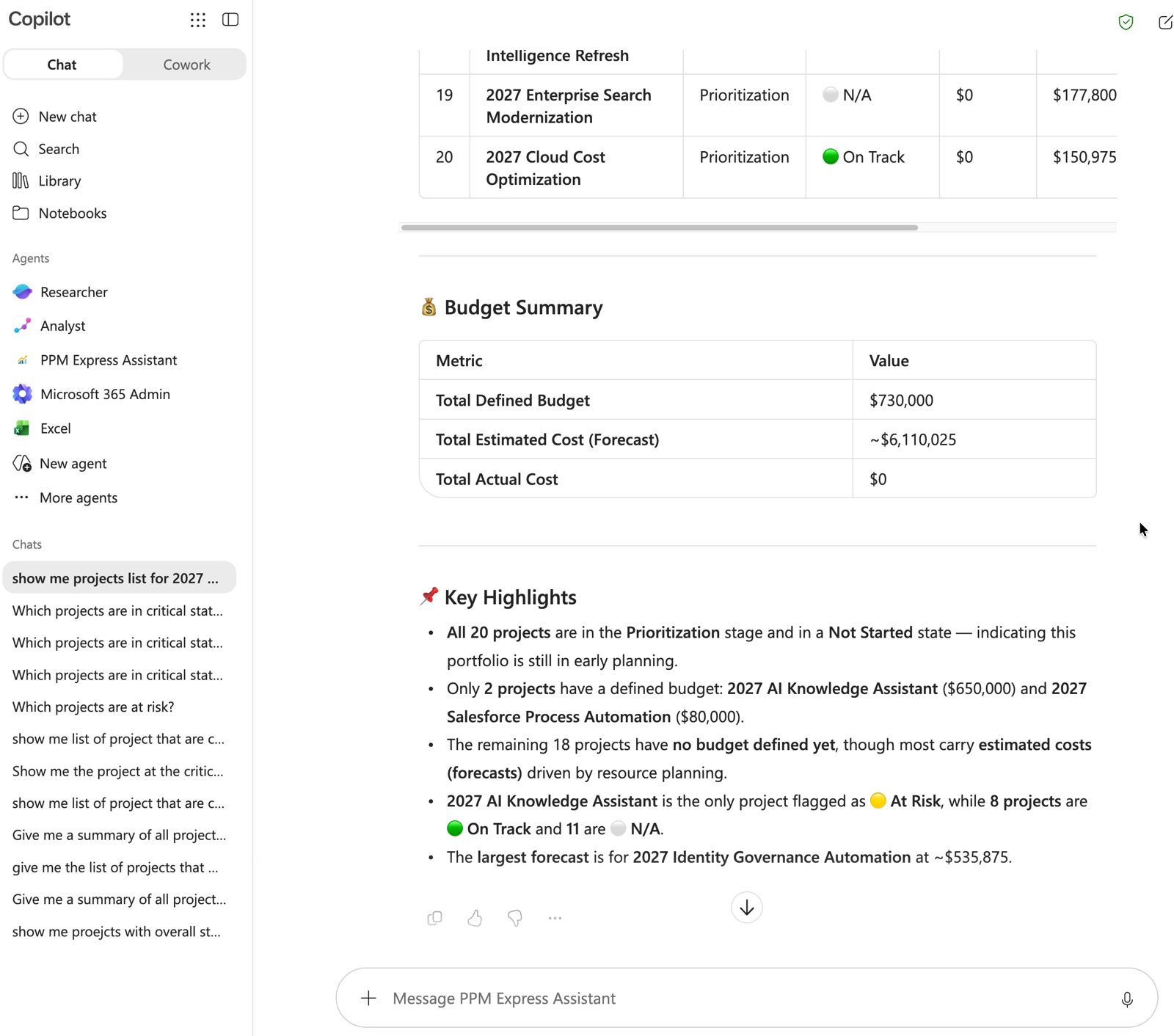
PPM Express already holds your schedule, risks, milestones and financials, consolidated from wherever the work actually happens. The report can be written from that rather than from you interviewing your own team about it.
You read the draft, correct what the data could not know, and send it. The ask to your team becomes a confirmation instead of a request for prose.
A configurable single or multi-page report, distributed on schedule as a PDF, styled to whatever your organisation already expects to receive.
The things the record cannot see: why the date moved, what you agreed with the supplier, whether the risk is actually as bad as it looks.
On demand, on a schedule, or daily for active projects. It is ready before you remember it is due.
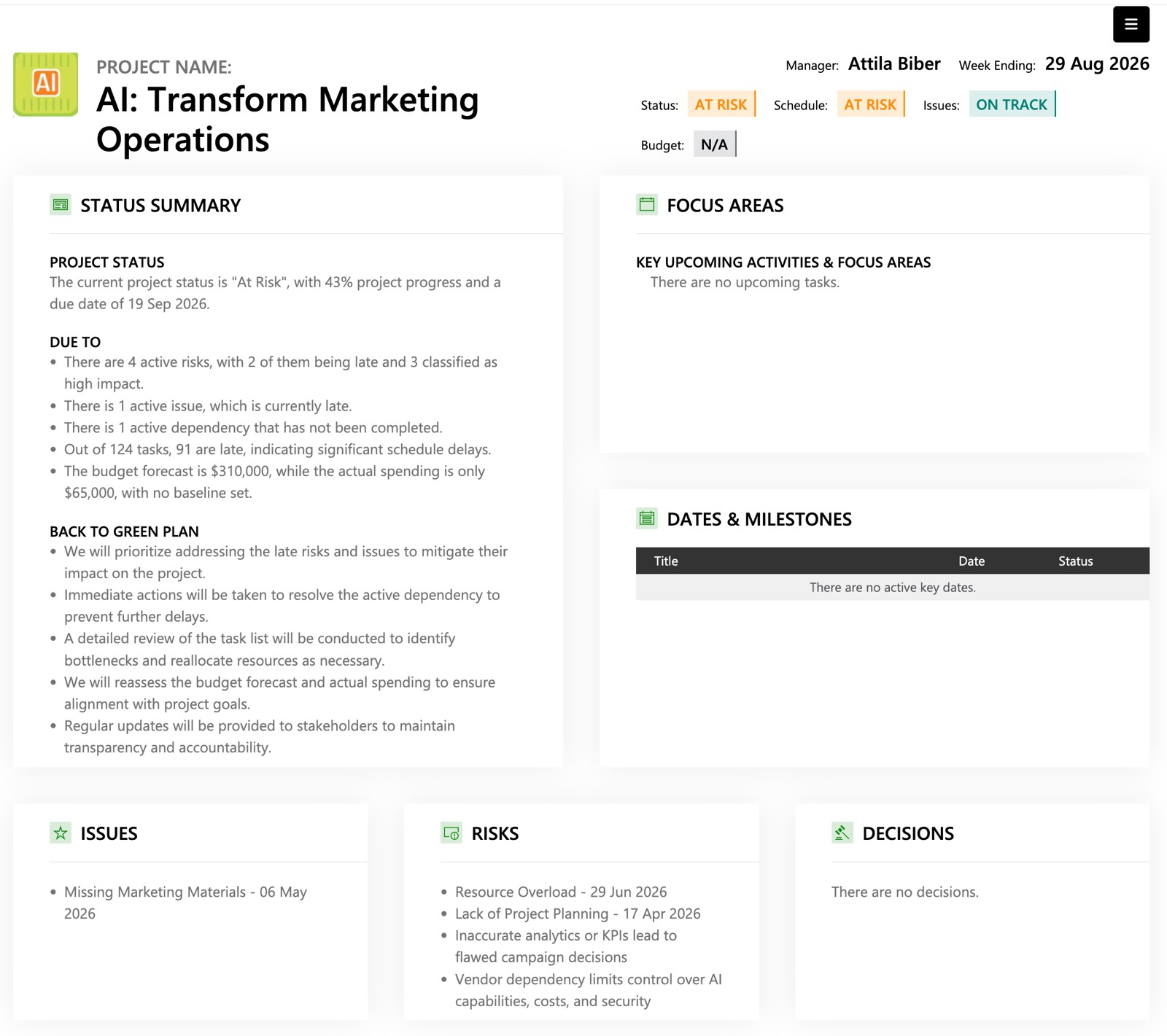
The fastest way to lose a project manager’s trust is to let something write into their plan without asking. So nothing does.
Generate a schedule from a description and PPM Express proposes the tasks, sequenced finish-to-start and respecting your calendar exceptions, weekends and holidays. Then you review the list and deselect anything you do not want before a single task is created.
Proposed, reviewed, deselected, then created. The plan changes when you say it changes.
Drafted from project data for you to accept, edit or discard. A starting point for the risk log, not an entry in it.
Every generated artefact stops for a human before it becomes a commitment. That is a design decision, not a limitation we are working around.
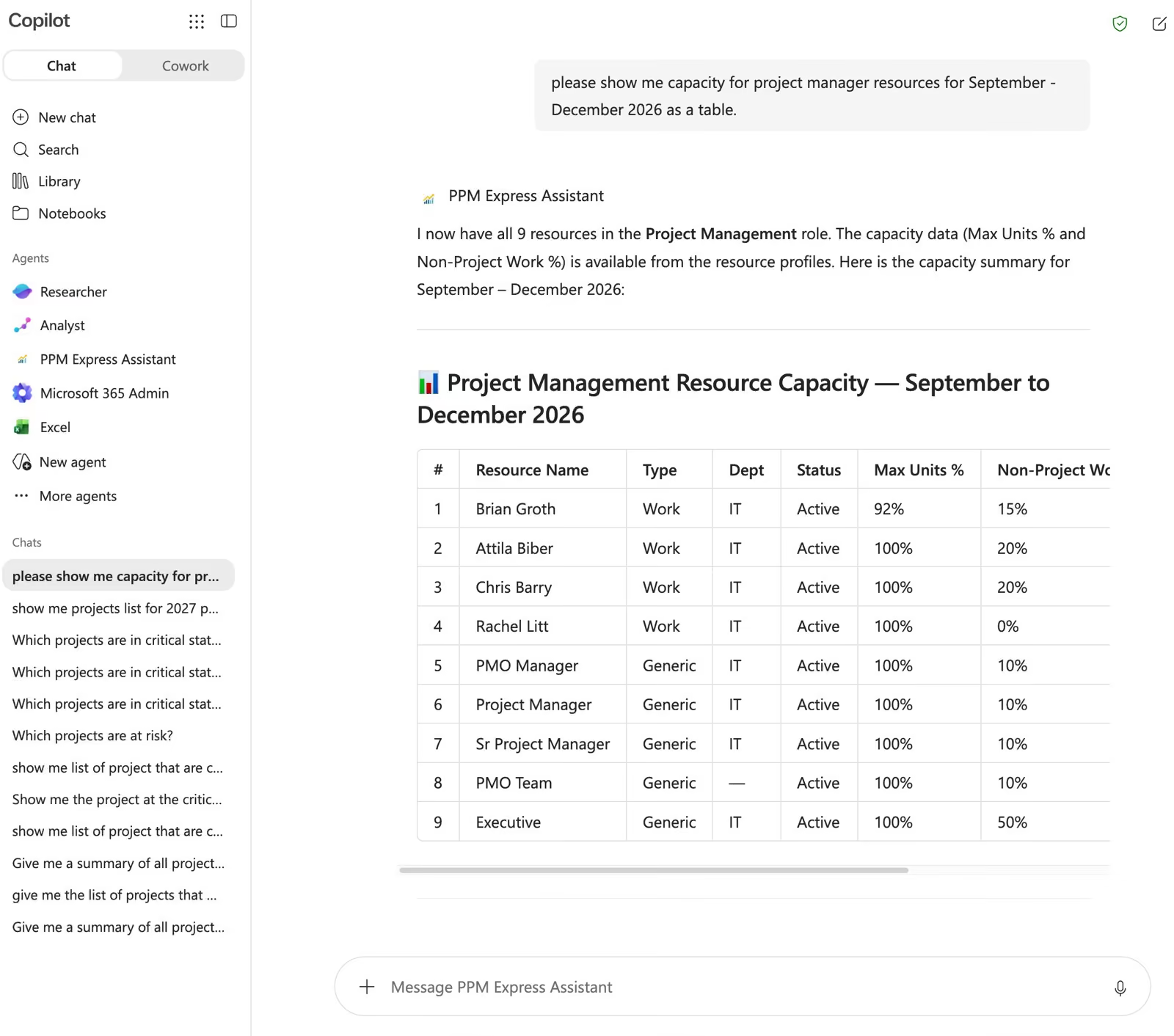
Project managers are the most sceptical audience for AI in this category, and they have earned it. Ask a room of them and you will hear about assistants that produced a confident agenda from an email thread three weeks out of date.
So it is worth being specific about where this helps and where it does not.
The classic failure is a model retrieving stale context and presenting it as current. Drafts here are generated from the project record — the same record your portfolio reports from — not from whatever was recently in an inbox.
Condensing a schedule and a risk log into a readable update is inside what these models do well. Deciding whether a project is genuinely recoverable is not, and we are not going to pretend otherwise.
Generated text that nobody can act on costs the reader time rather than saving yours. Which is why the draft is built from data and handed to you to correct, not sent onward on your behalf.
Nothing about how you run your projects has to change. The systems your teams already work in stay where they are.
What changes is how much of your week goes into producing the description of the work rather than doing it.
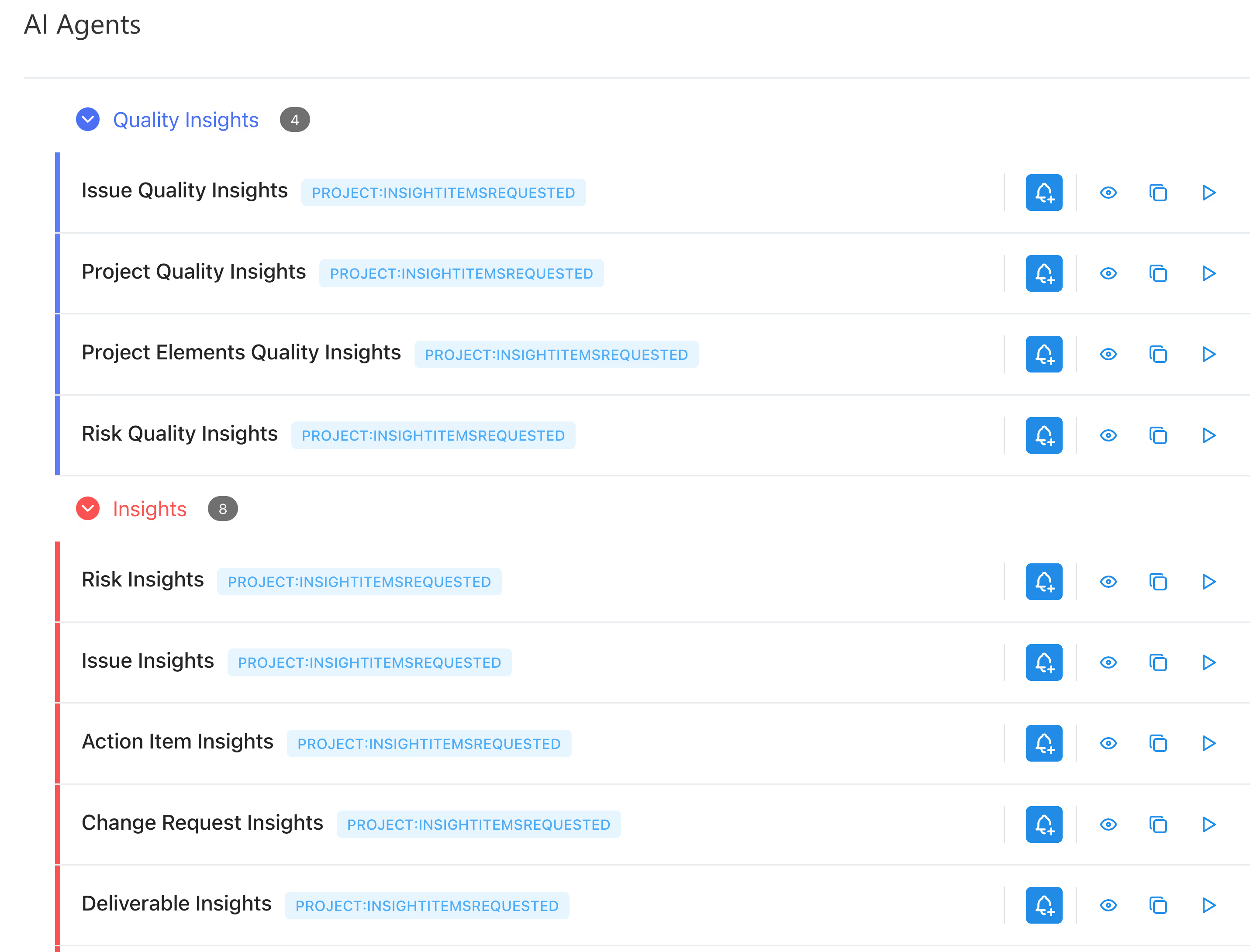
Your delivery tools are connected. Slipped tasks, overdue milestones and effort against completed work start surfacing without you assembling anything.
The status report arrives drafted. The weekly ask to your team becomes “confirm this” rather than “send me a paragraph by Thursday”.
The PMO discrepancy conversation happens against the same record you both read, so it is a two-minute check rather than a defence.


Which model runs it, what data leaves your tenant, which plan it is in, and where the limits are.
No. Generated tasks are proposed for review, and you deselect anything you do not want before a single one is created. Risks and digests are drafted for you to accept, edit or discard. Nothing becomes a commitment without a person approving it.
The usual failure is a model assembling an answer from stale context it happened to retrieve. Drafts here are generated from the project record — the schedule, risks, milestones and financials your portfolio already reports from — rather than from documents and threads it went looking for. That does not make it infallible, but it does make it checkable.
No, it takes away the assembly. The draft supplies the facts; the framing, the escalation and the decision about what to flag this week are still yours, and those were the parts doing the actual work. You are editing a first draft rather than building one from scratch at seven in the evening.
That risk is real and worth planning for, which is why the draft is built from data you can trace rather than prose a model invented. Read it the way you would read a capable junior’s first pass: check the numbers against what you know, correct what the record could not see, then send it. The signals underneath — slipped milestones, budget overruns — are computed, not written, so they are the least likely part to drift.
The opposite, if the assembly work was what made it look like administration in the first place. Summarising a schedule is inside what these models do well. Deciding whether a project is genuinely recoverable, negotiating a scope cut, reading a room — none of that is summarisation, and none of it is going anywhere.

What the AI actually does, and the data path behind every answer.
AI


Why the PMO asks for what it asks for, and what changes.
AI by role

How the people you need get committed somewhere else.
AI by role
Last updated 20 August 2026
.svg)


