

Most enterprises can describe their portfolio strategy in a sentence. Far fewer can change it in a month.
The strategy is usually fine. What breaks is the turning radius. Something moves — a competitor, a regulator, an acquisition closing, a market that behaved differently than the forecast said it would — and the organization needs to shift money and people from one set of initiatives to another. In a traditional portfolio process, that reallocation can take weeks or span an entire governance cycle. Time to work out what's actually in flight. More time modelling alternatives in a spreadsheet that several people are editing at once. Then a round of negotiation with sponsors who each arrive with their own numbers, and finally a governance cycle to make it official.
By the time the shift lands, the thing that prompted it has often moved again.
Churn is the weather, not a storm
Portfolio planning inherited an assumption from a slower era: set the portfolio annually, adjust at the midpoint, review at year end.
That assumption no longer matches how demand behaves. Requests arrive continuously and from more directions than they used to. Priorities get rewritten mid-cycle by events nobody in the building controls. Initiatives that were critical in January turn optional by June, and the reverse happens about as often.
Analyst guidance has converged on the same observation: annual prioritisation cadences are frequently not responsive enough to emergent risk and shifting conditions, and portfolio functions need a mechanism for reprioritising investment on demand rather than only at planning season.
Calling that a governance failure misses the point. It's the operating environment. The problem is that the machinery underneath the portfolio was built for annual commitment, so every mid-cycle change gets handled as an exception: manually, under time pressure, with incomplete information.
Churn on its own doesn't sink a portfolio strategy. Churn plus a slow reallocation mechanism does.
Why it takes so long, and it isn't indecision
Three things account for most of the delay.
Nobody can establish the current state quickly. Before you can move investment, someone has to reconcile what's committed, what's spent, what's genuinely in progress across five or six delivery tools, and who is actually assigned to what. Where portfolio data is fragmented across delivery systems and spreadsheets, that becomes a substantial manual reconciliation exercise — days or weeks depending on portfolio scale and reporting maturity — and it's stale before it reaches the steering committee.
The alternatives can't be modelled at scale. Comparing “fund A, defer B” against “descope A, keep B, delay C” means holding cost, capacity, dependencies and benefit in view at the same time. A spreadsheet handles two or three scenarios. As the number of contributors, scenarios and interdependent assumptions grows, spreadsheet-based models become increasingly difficult to control and reconcile — and the option space across two hundred initiatives is well past that point.
Consequences get argued rather than calculated. Every sponsor has a different estimate of what deferral costs, because every sponsor is working from their own numbers. So the meeting becomes a debate about assumptions instead of a decision about direction.
Notice what isn't on that list: the decision itself. Leadership teams are usually quite good at deciding, once someone lays the options out credibly.
Scenario planning as a reallocation mechanism
What-if planning tends to get described as a planning-season tool. Its more useful life is operational. It's the mechanism that lets an organization change its mind without losing a quarter.
The principle is simple enough. Build competing versions of the portfolio against the same real constraints, put them side by side, commit to one. Four things separate a scenario from a wish.
Scenarios are built on live data, not exported snapshots. Cost, progress and assignment flow from wherever the work actually happens. When the source data is integrated and current, much of the manual reconciliation step can be reduced or eliminated — and that step is often half the elapsed time, spent before a single choice has been made.
Every scenario is tested against capacity by role and skill. This is the step most often skipped, and it's the one that decides whether a plan survives contact. Accelerating an initiative almost always needs specific people, and those people are almost always committed elsewhere. A scenario that doesn't resolve to real capacity tends to fail later rather than never — usually in public, and usually after the commitment has been made.
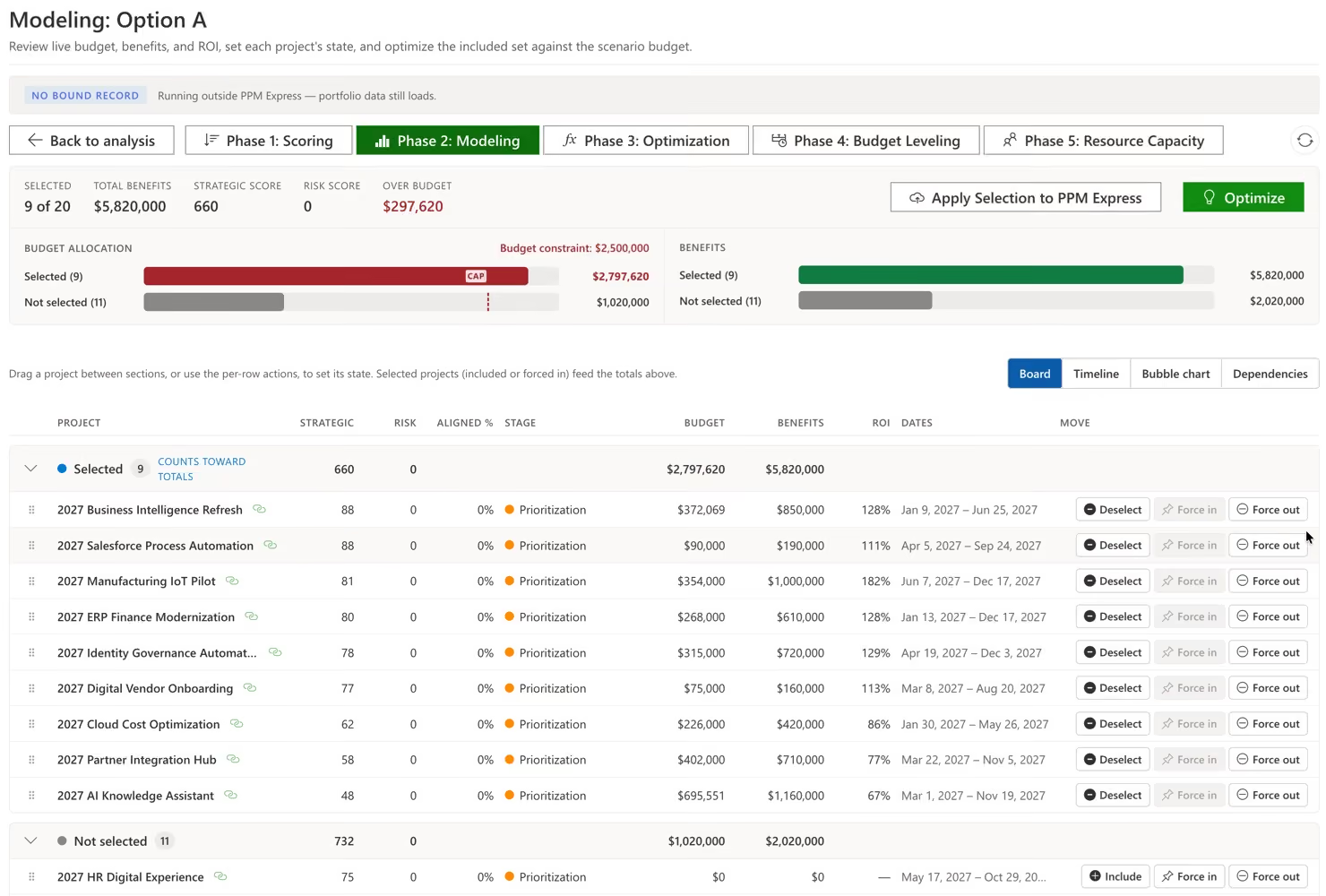
An optimizer does the arithmetic. Given a budget and agreed scoring criteria, the system can find the highest-value combination of initiatives that fits inside the constraints. That doesn't replace judgment. It removes combinatorial work that becomes increasingly difficult to compare manually as the number of initiatives and constraints grows, so leadership can spend its time on the two or three options actually worth arguing over.
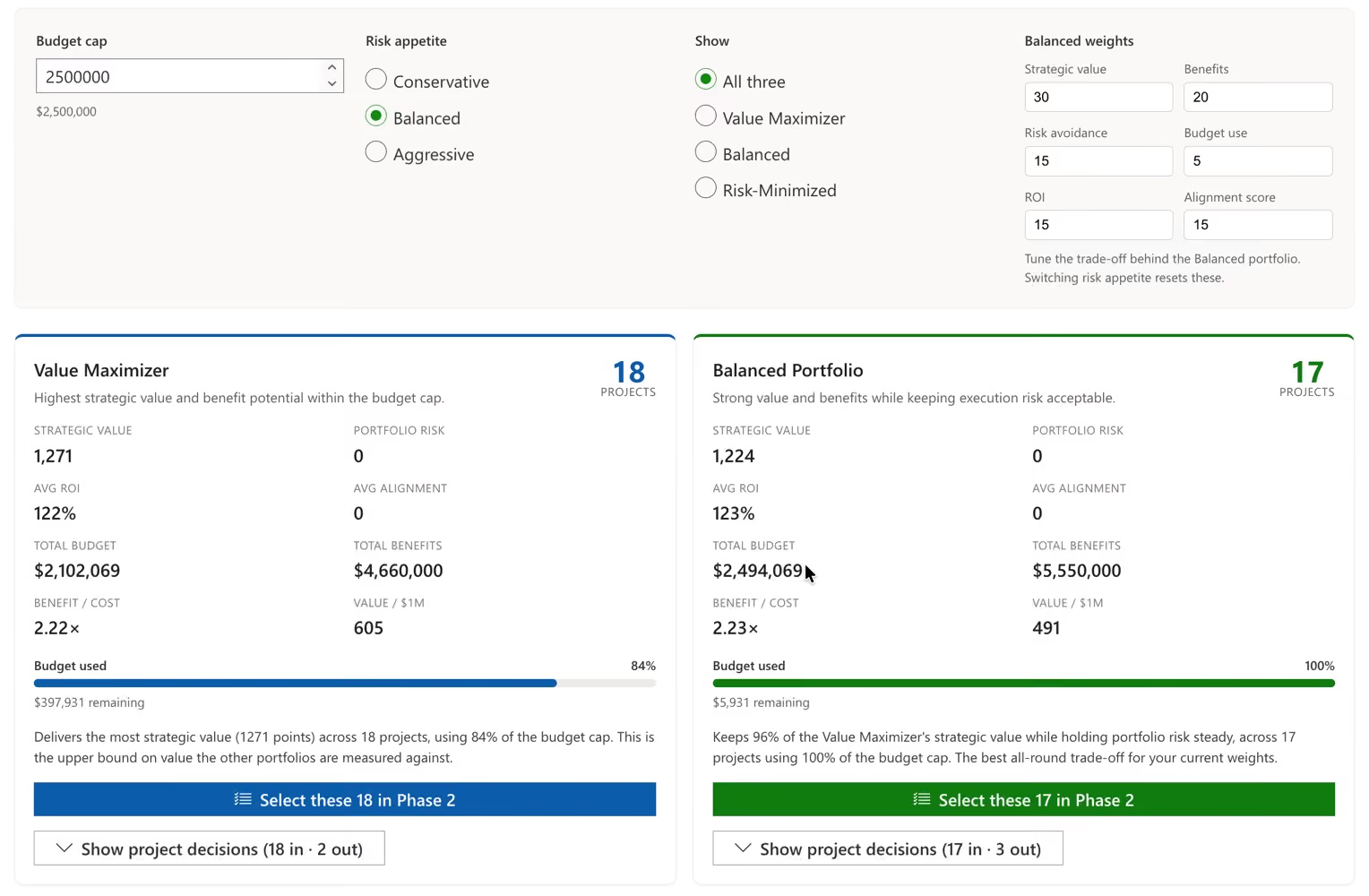
The optimizer in PPM Express what-if scenario planning, maximizing portfolio value inside a stated budget. The arithmetic is the machine's job; the choice between the shortlisted scenarios stays yours.
Consequences are quantified per option. What it costs, what it delays, which benefits move right, which role becomes the binding constraint. Now the debate is about direction, which is the debate you wanted in the first place.
What a faster decision cycle buys you
Illustrative scenario. The timings below are an example designed to show how faster access to current portfolio data can compress a reprioritization cycle. They are not presented as an industry benchmark.
Take a realistic case. A regulatory change lands in week one and requires a substantial remediation programme inside nine months.
Unsupported: a task force forms, spends several weeks establishing what's in flight, produces a spreadsheet of options, sponsors dispute the numbers, a revised version circulates, and the steering committee approves something around week ten. Work starts in week twelve, on a plan built from week-four data.
Supported: the current state is already live, so there's little to reconcile. Three scenarios get built in days. Protect the delivery dates and buy contract capacity. Absorb the work internally and defer two initiatives. Or descope a third initiative and move its team across. Each option is costed and tested against real capacity. Two of the three fail on the same skill constraint, which is visible in week two rather than in March. Leadership picks the third, with the tradeoff explicit.
The difference between those two timelines isn't administrative overhead. It's remediation runway — and time in which the rest of the portfolio wasn't frozen waiting for a decision.
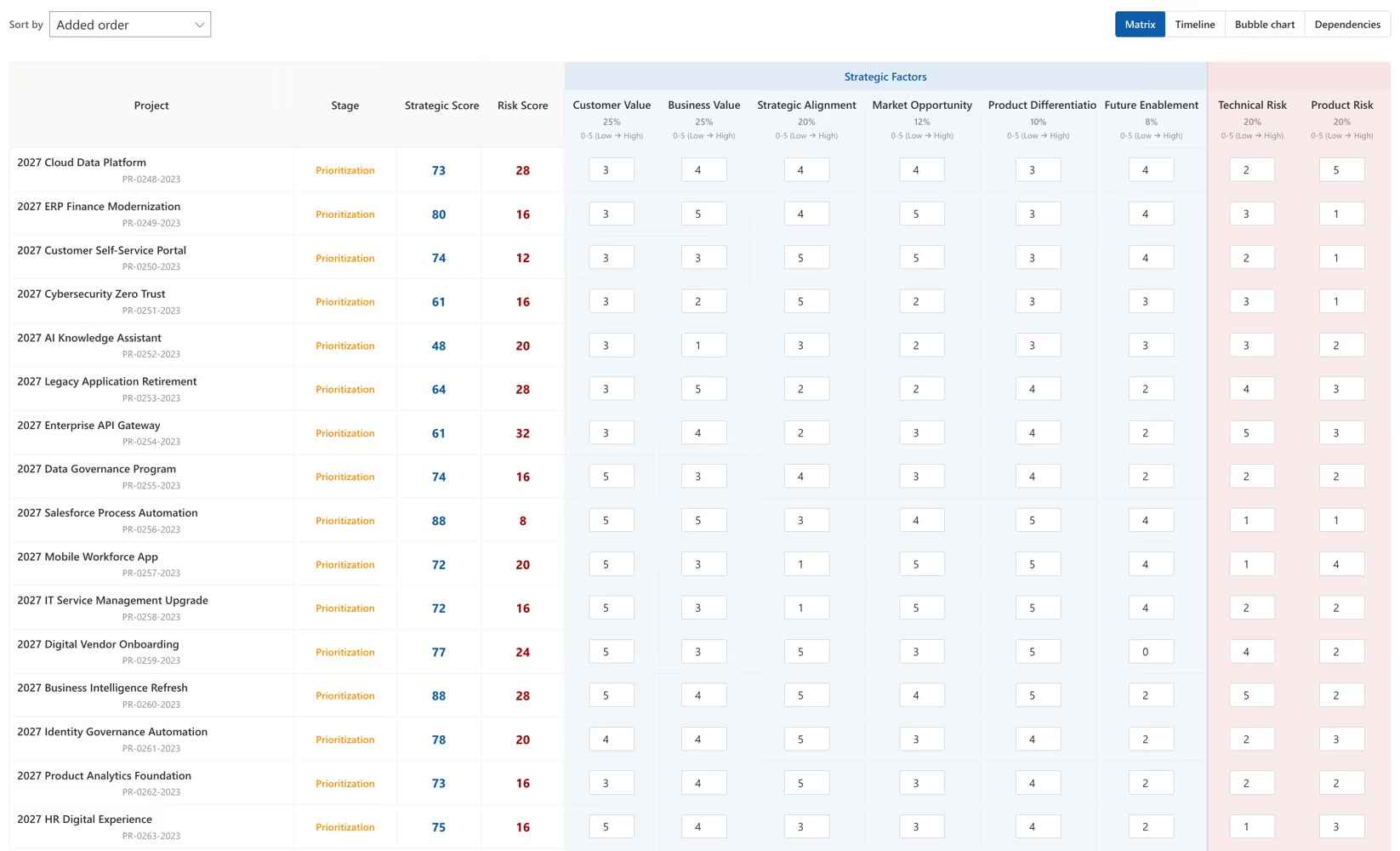
Each scenario resolves to a ranked, capacity-tested order rather than a wish list. Where a scenario breaks on a specific role or skill, it breaks here — see resource capacity planning.
Reallocation is a habit, not an event
Organizations that handle churn well have made this routine. Scenarios get reviewed on a cadence, monthly or quarterly, instead of being assembled in a panic. Scoring criteria are settled in advance, so a mid-cycle change doesn't reopen the question of what the organization values. And stopping or resequencing an initiative is normal practice rather than an admission that someone got it wrong.
That last point does more work than any of the tooling. Where stopping something is culturally expensive, underperforming work keeps drawing capacity that a better opportunity needs. When reallocation is visible, evidence-based and regular, stopping becomes a portfolio decision instead of a personal one.
PPM Express supports this cycle directly. Live portfolio data drawn from Azure DevOps, Jira, Microsoft Project, Microsoft Planner, Smartsheet and monday.com keeps the current state current, so there is much less to reconcile before you start — though source data quality and synchronisation still matter. What-if scenario planning models competing funding options with an optimizer that maximizes value inside your budget constraints, and every scenario is validated against resource capacity by role and skill before anything gets published. Governance runs on a cadence rather than once a year.
Priorities will change. The question worth asking in your next portfolio review isn't whether the strategy is right. It's how many weeks it would take to act if it weren't.
.svg)


