
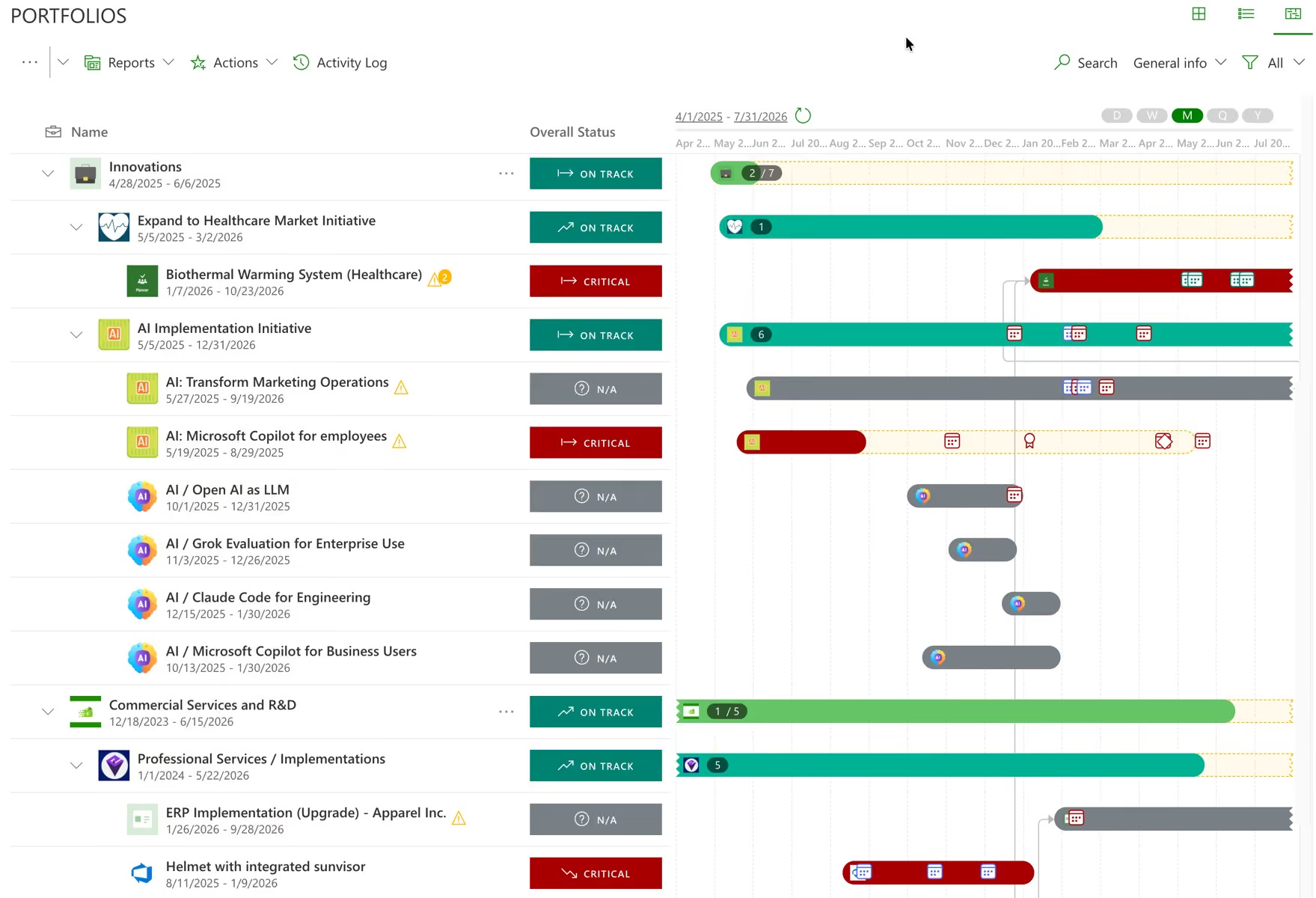

Most enterprises have more portfolio reporting than they have portfolio visibility.
The reports exist. Status gets collected, dashboards get maintained, a monthly pack goes out to a distribution list. And yet the questions leadership actually needs answered — is this investment returning what we approved it for, where is risk concentrating, do we have the people for what we've already committed to — still require somebody to go away and find out.
Nobody is short of data. The trouble is that value, risk and capacity live in different systems, get measured on different cadences, and are reconciled by people rather than by design.
What does portfolio visibility actually mean?
Portfolio visibility means having a current, comparable view of value, risk, cost, capacity and delivery status across the full set of initiatives an organization is funding. It requires more than dashboards: the underlying data has to be integrated, structured consistently, and governed against the same decision criteria — so that all of it can be seen at once, at the moment a decision is on the table.
That last condition is the one most organizations have not met.
AI has genuinely moved past summarization
For a few years, AI in portfolio management mostly meant compression. Take a large volume of project data, produce a shorter version of it: a status narrative written from task updates, a weekly digest, a summary of the risk log.
Useful, and not trivially so. A project manager writing status by hand is one of the least valuable uses of an experienced person's week, and getting that time back is real. But summarization doesn't change what leadership knows. It changes how long it takes to read.
The capability has matured into something more consequential. Agents can watch portfolio data on a recurring basis and flag the signals that warrant attention: a milestone drifting past tolerance, a newly surfaced risk, an allocation that has quietly tipped into overcommitment. Conversational access means a leader can interrogate the portfolio directly instead of requesting a report and waiting four days for it. Those agents can also run routine analysis and propose adjustments inside defined rules, with a human keeping the approval.
That's a meaningful shift — from describing what happened to identifying what needs a decision. It deserves the attention it's getting.
It also doesn't solve the visibility problem by itself.
Analysis inherits the limits of its substrate
An AI capability can only reason over the data it reaches and the model it's given. Three constraints follow, and they're structural rather than temporary.
Coverage. An agent looking at one delivery tool sees one delivery tool. In many large enterprises, project and delivery data is distributed across multiple systems — Azure DevOps, Jira, Microsoft Project, Microsoft Planner, Smartsheet and monday.com among them — and analysis confined to any one of them is a partial view delivered with full confidence. Arguably worse than an acknowledged gap.
Structure. Recommendations need a model of what the organization is optimizing for. Without objectives, investment categories, scoring criteria and benefits definitions inside the system, an AI can tell you a project is late. It cannot tell you whether late matters here, because “matters” is defined by strategy that lives somewhere else entirely.
Standing. An insight only changes anything if it lands in a forum where decisions get made, with evidence attached, in front of people who can act. Generated inside a system leadership doesn't govern from, it gets read and forgotten.
Which is why model sophistication turns out to be a weak predictor of who gets value here. The organizations doing well have portfolio systems that already connect strategy to delivery data, so their analysis has something substantial to reason over and somewhere consequential to land.
The hub is the point
Here is the argument stated plainly. The strategic value of SPM has very little to do with producing smarter analysis. Its value is positional: it is the one place where strategy, execution and performance measurement are connected, and therefore the one place decisions can legitimately be made.
Look at what “real visibility” actually requires across the three dimensions.
Value requires a business case that survives past approval. Scored on criteria the organization agreed, funded against it, benefits defined at the outset, actuals measured after implementation. A common pattern is for organizations to do the first half well and the second half barely at all, which is why “did this deliver what we approved it for” is so often unanswerable.
Risk requires aggregation, not collection. Every project reports risk. Fewer organizations can see where it concentrates: which programmes depend on the same scarce skill, which initiatives share a vendor or a platform dependency, which combination of individually tolerable risks adds up to an exposure nobody would have signed off on deliberately. Concentration is only visible at the portfolio layer.
Capacity requires actuals. Planned allocation by role and skill is the starting point. Time logged against projects, flowing into utilization and cost without a separate system, is what makes it true. Capacity planning built on estimates nobody reconciles is a forecast of an organization that doesn't exist.
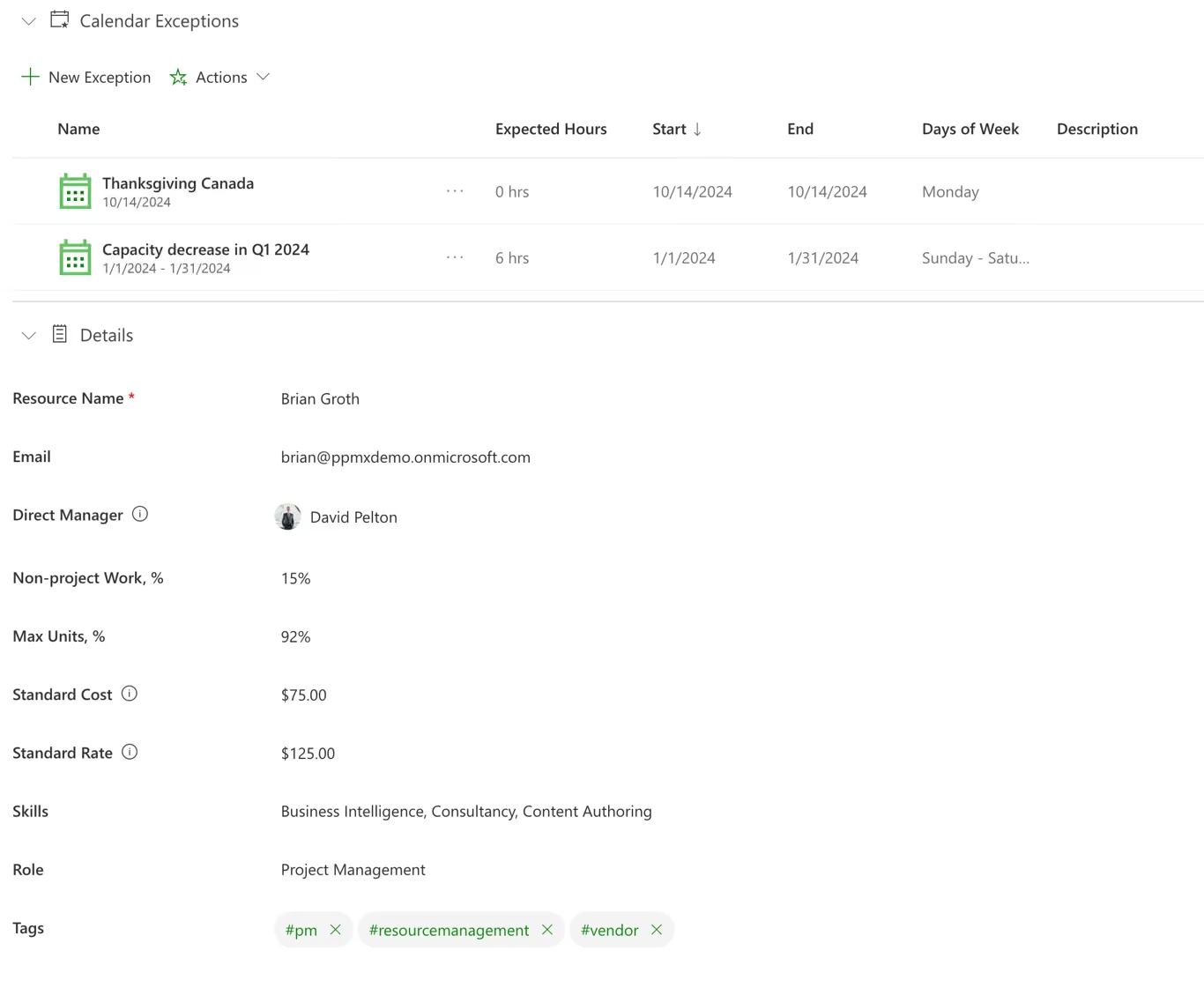
Planned allocation and logged actuals in the same place. Resource capacity planning and timesheets are the same dataset in PPM Express, which is why utilization and cost reporting do not need reconciling.
Each of those is a connection between systems that don't normally talk to each other. Building the connections is unglamorous work, and it's the work that determines whether the AI layer on top produces insight or very fluent noise.
The sequencing decision
Build the hub first. Aggregate delivery data from the tools teams already use, without asking them to migrate anywhere. Put the governance structure into the system: objectives, investment categories, scoring criteria, stage gates, benefits definitions. Make capacity true by connecting actuals. Run governance on a cadence, so the hub is where decisions get made rather than where they get documented afterwards.
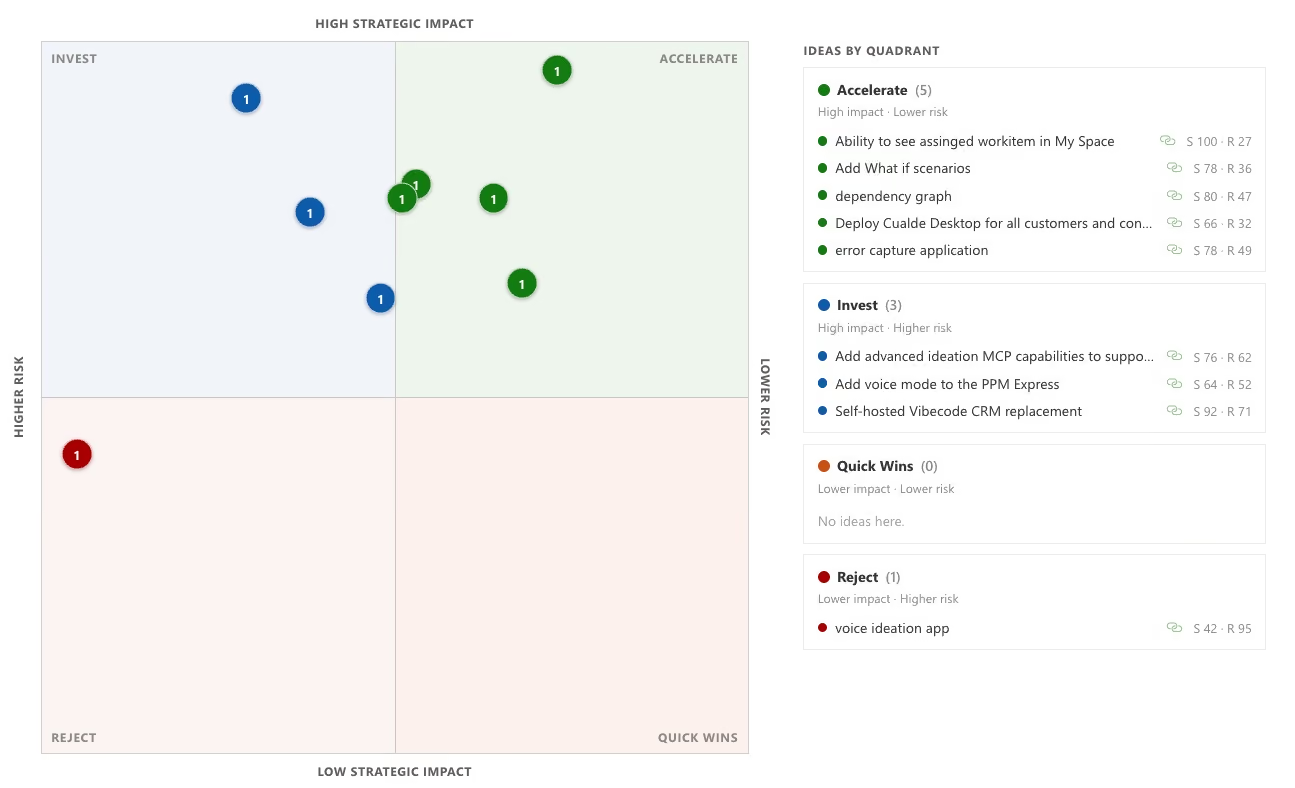
Governance criteria held as structured data rather than as slideware. Once value and risk are scored against a model the organization agreed, an analysis has something to reason against — see strategic portfolio management.
Then put intelligence on top of it. At that point AI has full portfolio coverage, a model of what the organization values, and a decision forum to feed. Status reporting can be generated from structured portfolio data rather than rebuilt by hand. Monitoring surfaces what needs attention instead of relying on someone noticing. Leaders can ask the portfolio a direct question and get an answer grounded in live data.
Once that foundation exists, AI can add materially more value. In reverse, it produces beautifully written summaries of an incomplete picture, and you're no closer to answering the question you started with.
PPM Express is built as that hub. It aggregates projects from Azure DevOps, Jira, Microsoft Project, Microsoft Planner, Project Online, Smartsheet and monday.com into one live portfolio. It holds the governance layer above them — objectives, investment categories, weighted scoring, stage gates, capacity by role and skill, timesheet actuals feeding utilization and cost — and reports across all of it.
The AI layer sits on that foundation, and it is worth being precise about which part does what: AI-generated status reporting assembled from live project data; portfolio insights that surface exceptions and changes, generated when someone asks for them or when a connected project synchronises; conversational access through supported AI clients such as Claude, ChatGPT and Microsoft 365 Copilot; and PPM AI Agents that continuously monitor schedules, budgets, risks and resource allocation, proposing corrections that stay subject to human approval.
Grounded in live data — because analysis of anything less than the full picture is a well-written guess.
.svg)


