Five tiers, seat bands, automation caps — and the portfolio features you actually need parked in the most expensive one. PPM Express is the opposite: one flat price, unlimited users — and a switch you can undo, on published terms your procurement team can verify.
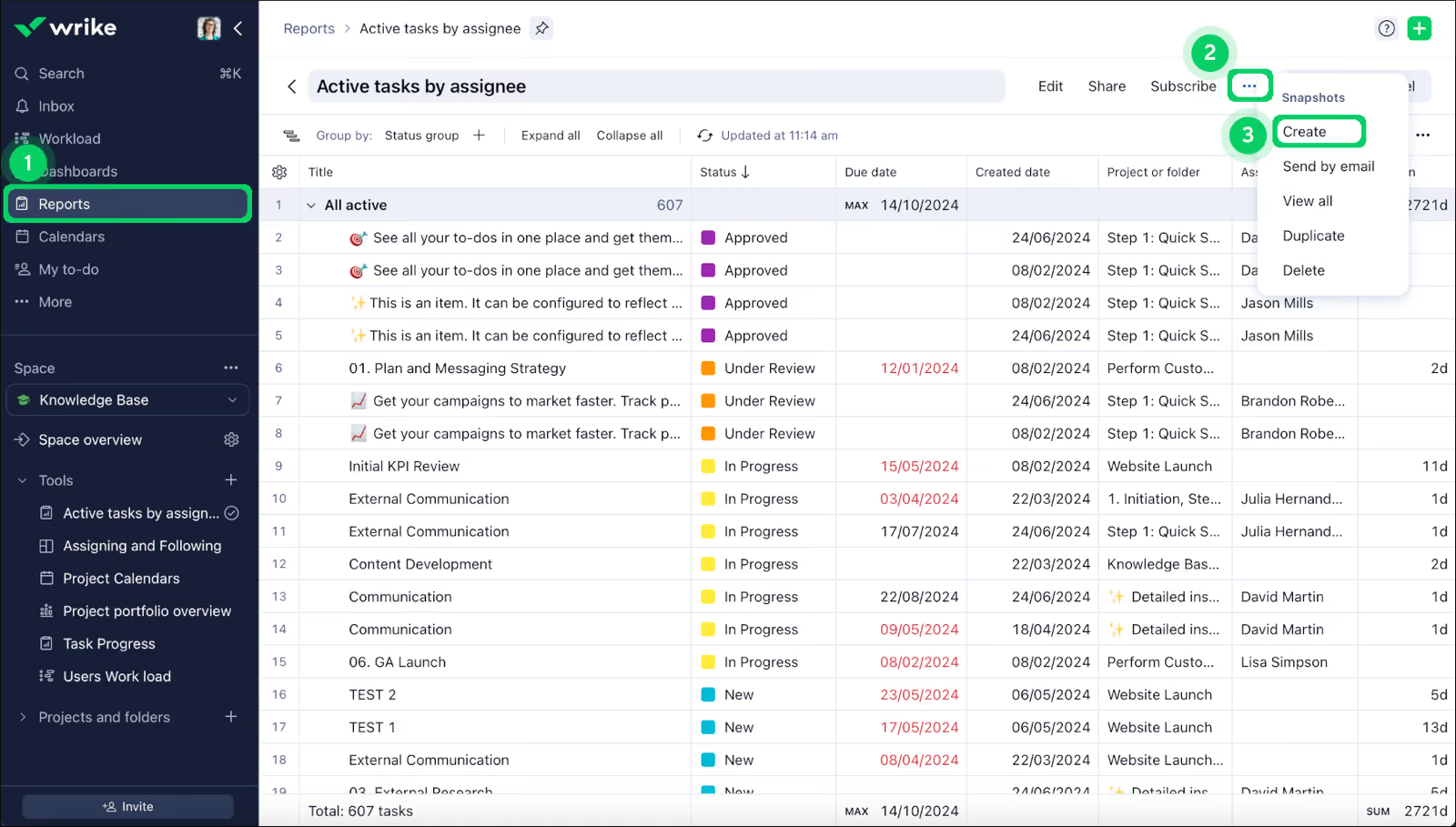
Wrike’s Business tier lists at $24.80 per user per month — but portfolio-level capability like budgeting, forecasting, capacity planning, and BI connectivity sits in Pinnacle, a custom-quoted tier independent benchmarks put at roughly $40–50 per user per month. Seats are sold in bands, so teams routinely pay for licenses nobody uses. And when the automation cap on your tier runs out, the fix isn’t buying more automations — it’s upgrading every seat.
The pattern is familiar: the tool your teams adopted for task tracking gets asked to be a portfolio platform, and the answer is always another tier. The better your adoption, the more expensive the question becomes.
*Wrike Business at the published $24.80 per user per month, billed annually — before seat-band rounding, add-ons, or the Pinnacle-tier uplift (benchmarked at roughly $40–50 per user per month) where portfolio features live. Prices change — check wrike.com for current rates.
The break-even is around 80 users — on the mid tier, before the tier where portfolio management actually lives. With PPM Express, adoption is free: invite everyone.
Wrike is a capable work-management tool. The problem is what happens when you ask it to be a portfolio platform: the tiers stack, the seat bands round up, and the executive questions still take manual roll-up to answer.

What you’re leaving: per-seat tiers where the portfolio features cost extra for every user.

What you’re switching to: live resource utilization across the whole portfolio — with unlimited users at no extra cost.
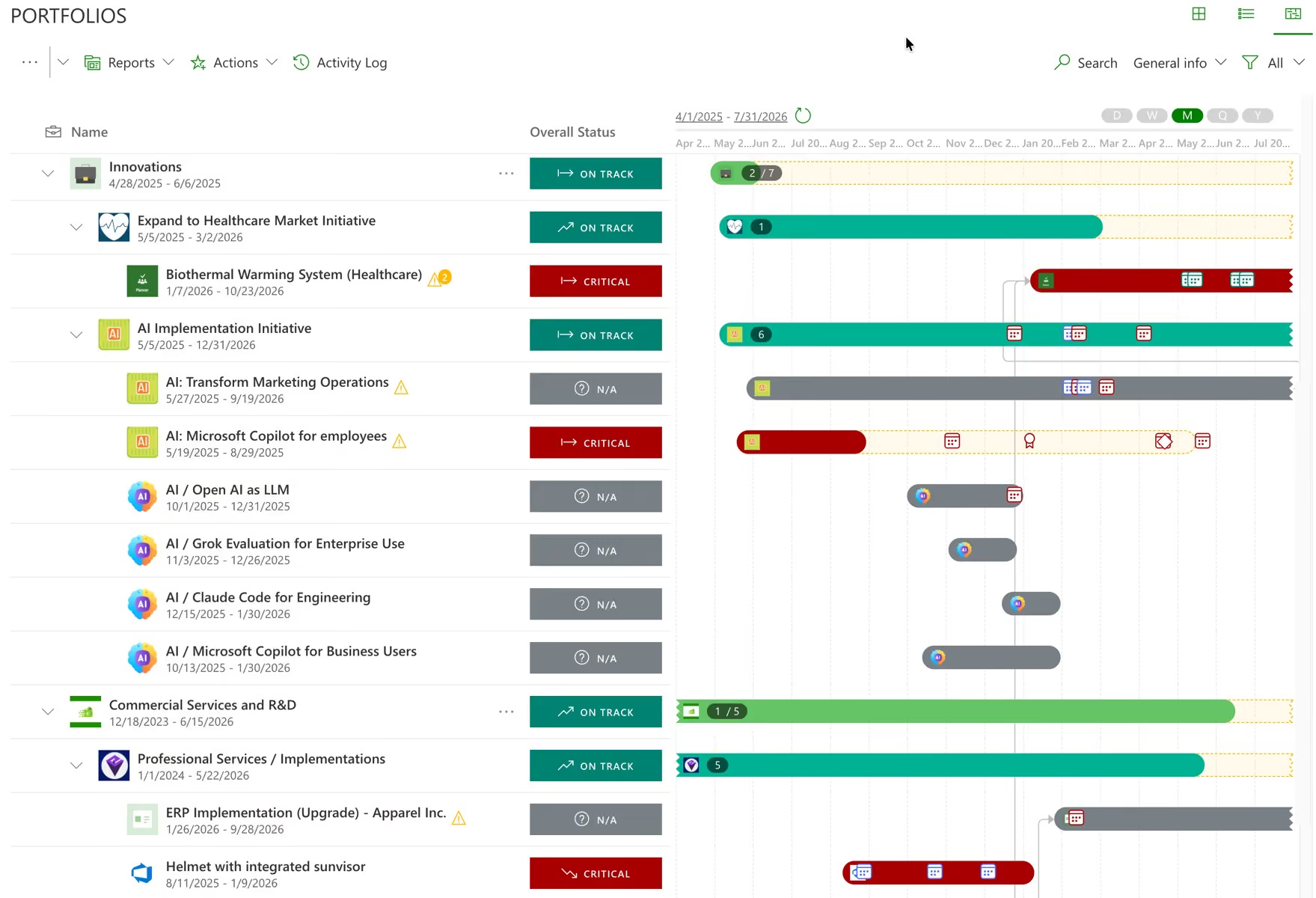
PPM Express is built for the portfolio layer: executive dashboards and automated status reports, resource capacity planning, what-if scenario funding, AI access from Claude, ChatGPT, or Microsoft Copilot — and your delivery tools like Jira, Azure DevOps, and Planner stay connected while teams keep working where they work.
The Switch isn’t a leap — it’s a handover. During your Deferred Billing period you run PPM Express and Wrike side by side at no extra cost, move teams over at your own pace, and retire Wrike when your contract ends — at any point within 12 months of signing.
And to be clear about what the parallel period is: a handover, not a permanent operating model. PPM Express doesn’t maintain a native Wrike connector, so running two systems forever would mean maintaining portfolio data in both by hand — when the transition ends, PPM Express becomes the system of record and Wrike is retired.
These terms are identical for every qualified customer. Your procurement team can verify that no one got a better deal — because no one did.
Within 15 business days of kickoff, your executive portfolio view is live: integrations connected, dashboard populated, first status report generated. We agree the checklist with you at kickoff, so “done” isn’t our opinion — it’s a list. Miss it, and you owe us nothing.
Any time in the first 12 months: pro-rata refund of the unused months, and our engineers export all of your data in open formats, free. Not “here’s a CSV button, good luck” — assisted, complete, usable.
We can make the second promise because migration engineering is what this team did for a decade before building PPM Express. Moving portfolio data between systems is our core competency, in both directions. Vendors who make leaving impossible are telling you something about their product. So are we.
Connect read-only access — we populate a working PPM Express tenant with your actual projects. Evaluate the real thing, not a demo built to impress you.
No negotiation cycle, no procurement marathon — the terms above are the deal. Billing waits for your Wrike renewal date; access doesn’t.
Fixed-fee implementation against an agreed checklist. Run PPM Express in parallel as long as your deferral lasts — by the time Wrike calls about renewal, the switch already happened.
The Switch — including Deferred Billing — is for organizations retiring Wrike: you’re replacing an active contract and committing to end Wrike use within 12 months of signing. We’ll ask for a redacted renewal notice or invoice showing the vendor and end date; amounts can be blacked out. Starting from scratch with no incumbent? You don’t need the Switch — you need our standard published plans.
Deferred Billing, guarantees, migration and published pricing.
During the transition, yes — the Deferred Billing period exists so you can run both while you move. The Switch terms do assume you retire Wrike within 12 months of signing: PPM Express doesn’t maintain a native Wrike connector, so the parallel period is a handover, not a permanent operating model.
Projects, tasks, dates, assignments, and portfolio structure. We map your Wrike spaces and folders to a portfolio structure during implementation, and the go-live checklist includes verifying the migrated data with you.
You sign a 24-month agreement now at today’s locked price, and billing starts on your Wrike contract end date — up to 12 months out. Between signing and that date you have full product access at no charge, so you can run both systems in parallel and move at your own pace. In return, you commit to retiring Wrike within those 12 months — that commitment is what unlocks the Switch terms.
You pay nothing — the implementation fee and your first invoice are waived, and we return your data. The checklist is agreed in writing at kickoff, and the clock starts when we receive system access, so both sides know exactly what “day 15” means.
You tell us. We refund the unused months pro-rata and our engineers export your complete data set in open formats, at no cost, with assistance until it’s usable in whatever comes next. It’s in the agreement, not a blog post.
Flat means flat: unlimited users, all core platform capability, integrations included. There is no per-seat meter, no seat bands, no automation caps that force a tier upgrade, and no premium tier where the portfolio features actually live. Larger enterprises with advanced scope needs are $24–36K — also published, also flat.
The opposite — mid-contract is exactly when Deferred Billing matters. Evaluate now with your real data, sign at locked pricing, and let billing wait for your renewal date. Waiting until renewal quarter is how organizations end up signing another year under deadline pressure.
Upgrading extends a work-management tool upward — same per-seat meter, higher rate, every user pays for the features a few people need. PPM Express is a portfolio layer by design: capacity planning, scenario funding, executive reporting, and AI access are the product, not the top tier. And the pricing model doesn’t punish adoption.
That’s not a configuration we sell. PPM Express has native connectors for Jira, Azure DevOps, Planner, Project, Smartsheet, and monday.com — Wrike isn’t one of them, so a permanent two-system setup would mean maintaining portfolio data in both by hand. The parallel period exists to de-risk the handover. And if you conclude Wrike should stay, that’s what the year-one exit guarantee is for: pro-rata refund, free assisted export, no questions asked.
See your own portfolio in PPM Express this week. If the numbers and the product don’t make the case on their own, keep what you have — the trial tenant deletes itself and nobody calls you twice.
Comparison references Wrike’s published list pricing and independent contract benchmarks as of August 2026. Wrike is a trademark of Wrike, Inc.; PPM Express is not affiliated with Wrike.