
PPM Express for Healthcare
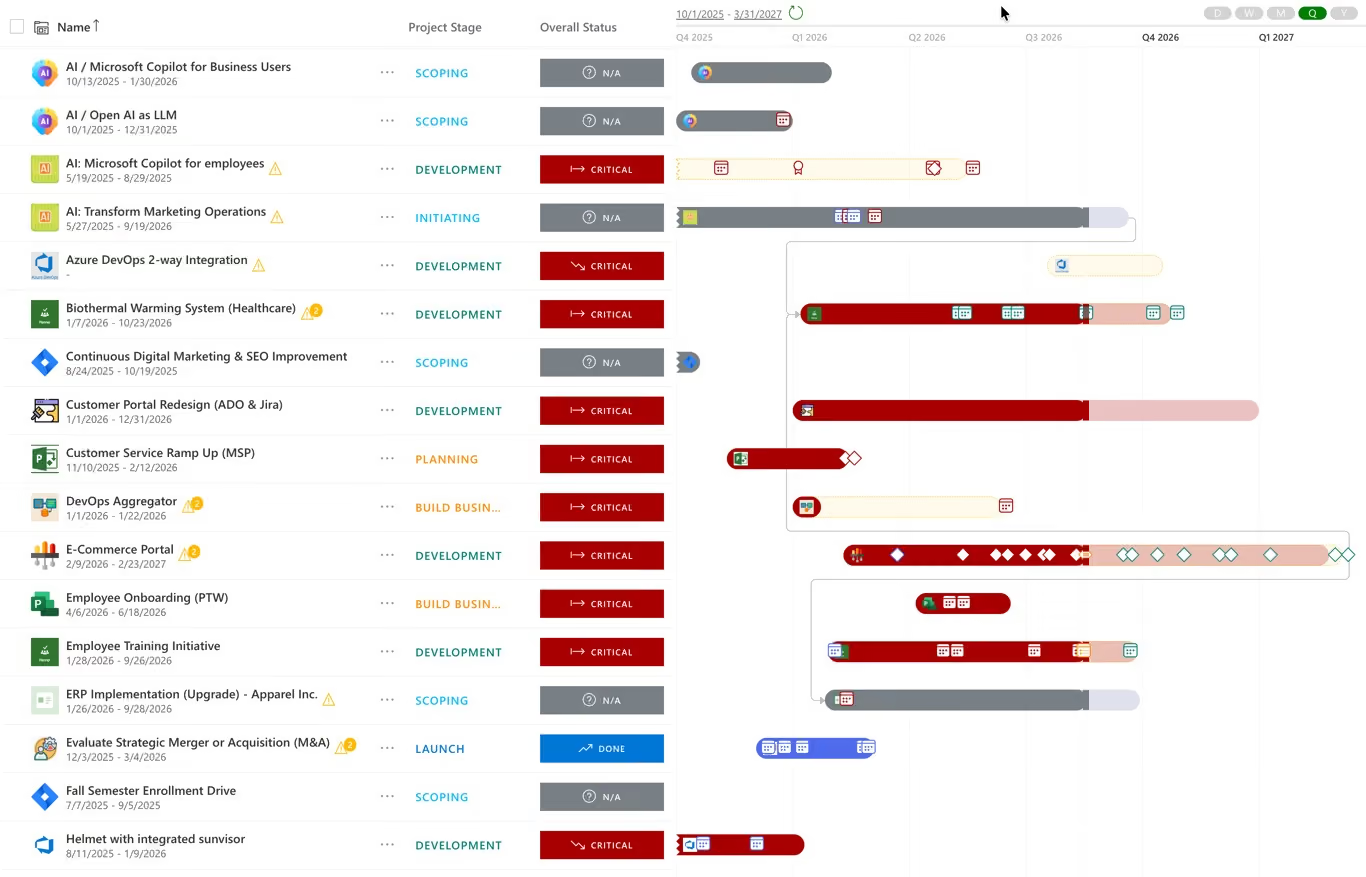
Roll up work from Azure DevOps, Jira, Microsoft Project, Planner, Smartsheet and monday.com across clinical systems, revenue cycle, infrastructure, security and digital, so EHR optimization sits beside everything competing with it rather than in a governance meeting of its own.
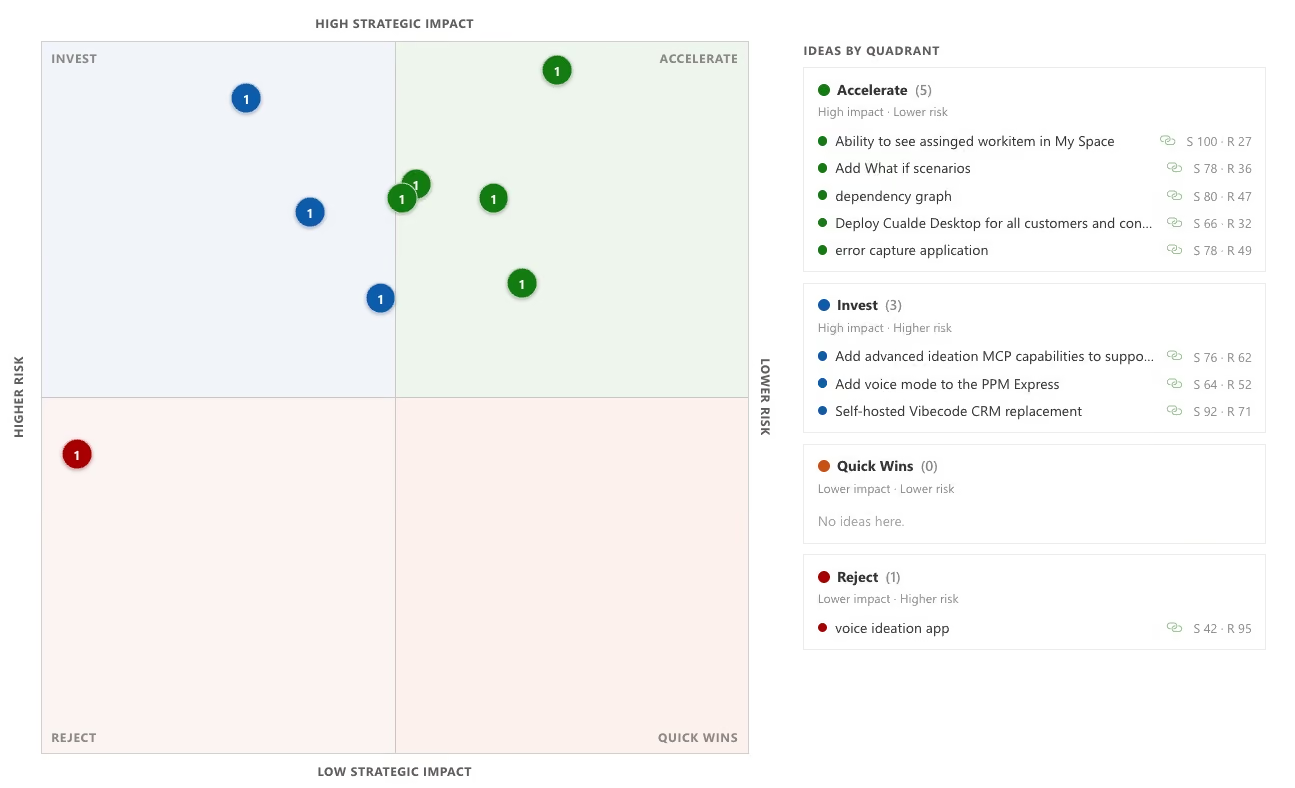
Score proposals against weighted clinical, financial, risk and compliance criteria with published value ranges, keeping budget, forecast, benefits and impact in view. A mandatory interoperability change, a throughput initiative and a service-line request stop being argued on urgency alone.
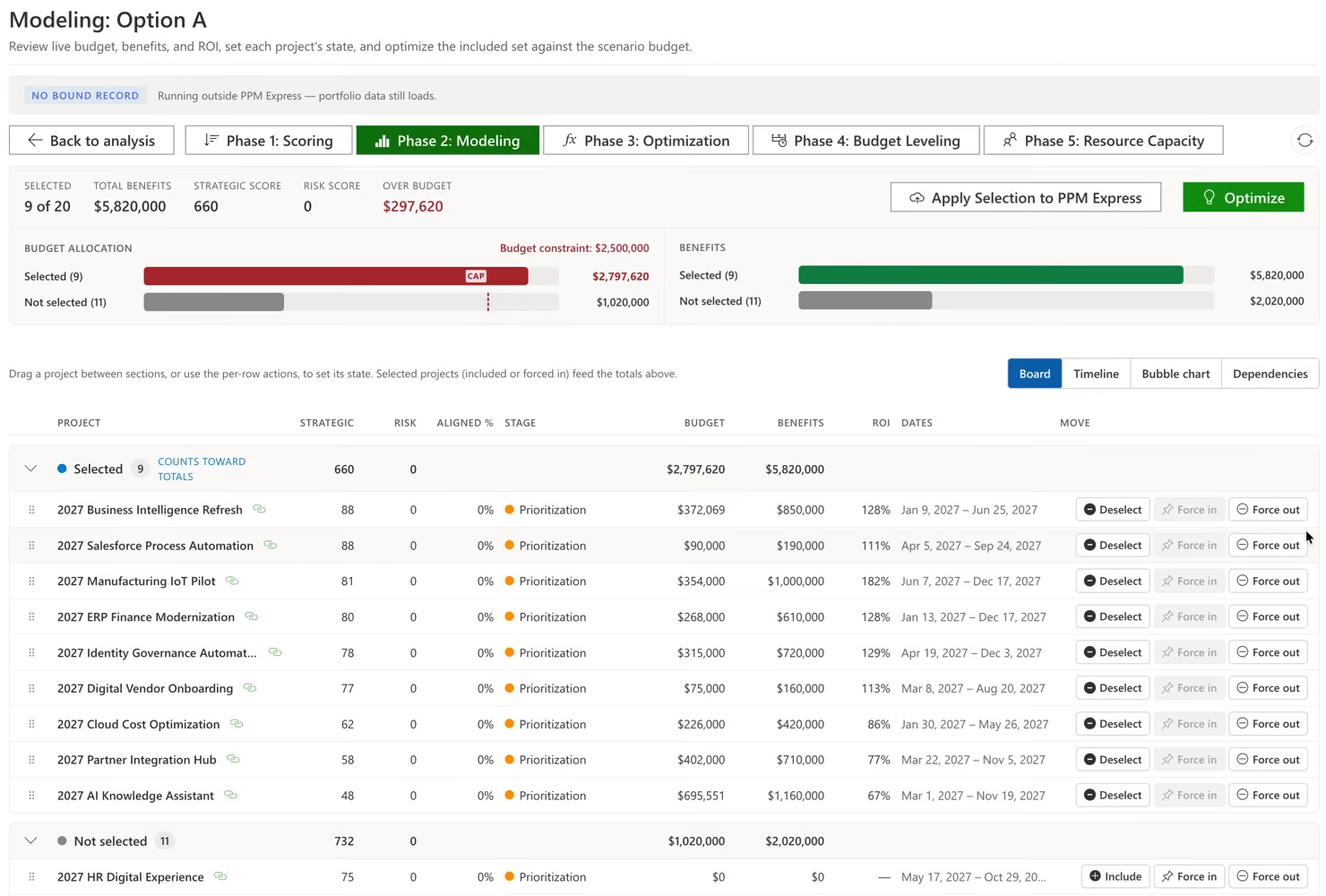
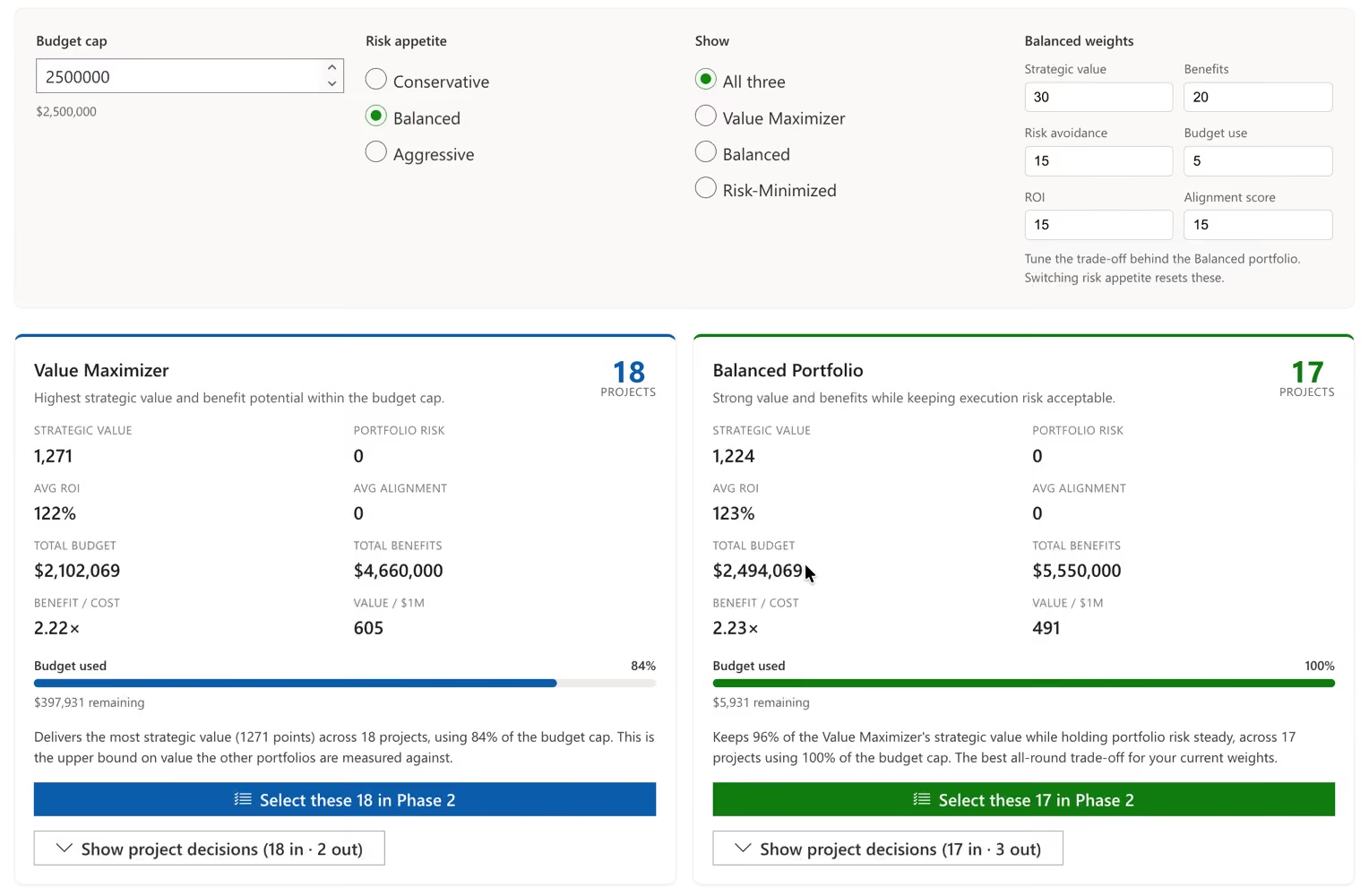
Model funding scenarios against one ceiling and check the selected work against availability in hours or % FTE. Where several initiatives depend on the same EHR build, integration or informatics capacity, the conflict is visible while it is still a choice.
Enterprise PPM platforms cover broadly the same ground. Where they differ most is what it costs to give your whole organization access to it.
| PPM Express | Planview | Planisware | Meisterplan | ServiceNow SPM | |
|---|---|---|---|---|---|
| Portfolio and programme hierarchy | Yes | Yes | Yes | Yes | Yes |
| Weighted scoring and prioritization | Yes | Yes | Yes | Yes | Yes |
| What-if funding scenarios | Yes | Yes | Yes | Yes | Yes |
| Resource capacity planning | Yes | Yes | Yes | Yes | Yes |
| Stage-gate intake and approvals | Yes | Yes | Yes | Yes | Yes |
| Budgets, forecasts and benefit realization | Yes | Yes | Yes | Yes | Yes |
| Dashboards and portfolio reporting | Yes | Yes | Yes | Yes | Yes |
| Clinical, IT and capital work in one portfolio | Yes | Yes | Limited | Limited | Limited |
| Multi-site and multi-hospital rollup | Yes | Yes | Yes | Limited | Yes |
| Microsoft Project, Planner and Project for the Web | Native two-way | Yes | Limited | Limited | Limited |
| Jira and Azure DevOps | Native two-way | Yes | Limited | Limited | Yes |
| Power BI reporting pack | 200+ reports | Limited | Limited | Limited | Limited |
| Unlimited users included | Yes | No, per seat | No, per seat | No, per seat | No, per seat |
| Typical annual cost | $8,000 to $25,000 flat | $100,000+ | $100,000+ | Mid five figures | $100,000+ with platform |
Planview is the broadest suite in the category and the strongest analyst position. If you need enterprise architecture, value stream management and PPM from one vendor, it covers more ground than we do. It also carries the longest implementation and the highest cost, and per-seat licensing means the service line leaders who most need portfolio visibility are usually the ones left out.
Planisware is genuinely excellent at R&D and new product development pipeline modelling. For a health system portfolio of clinical, EHR, IT, facilities and compliance work, that depth is largely unused and still paid for.
Meisterplan is fast to deploy and very good at lean capacity and scenario planning. If contention over clinical informaticists and analysts is your single problem, it will solve it quickly. It is deliberately lighter on financials, capital tracking and gated intake, so multi-site systems tend to outgrow it.
ServiceNow SPM is a strong choice if your health system already runs ServiceNow for ITSM, because the platform and data are already there. If not, you are buying the platform to get the portfolio module, and the cost and implementation footprint follow.
PPM Express covers the same core portfolio capabilities on one flat annual subscription with unlimited users. We are not the deepest R&D pipeline tool or the broadest enterprise suite. We are the portfolio layer for health systems that run on Microsoft and Jira and would rather spend the difference on care delivery.
A mandatory interoperability change, a sepsis-alerting project, an ambulatory expansion and a security remediation can all be urgent and still compete for the same people. Score each one against explicit criteria, then test the selected portfolio against real capacity before the build calendar is set.
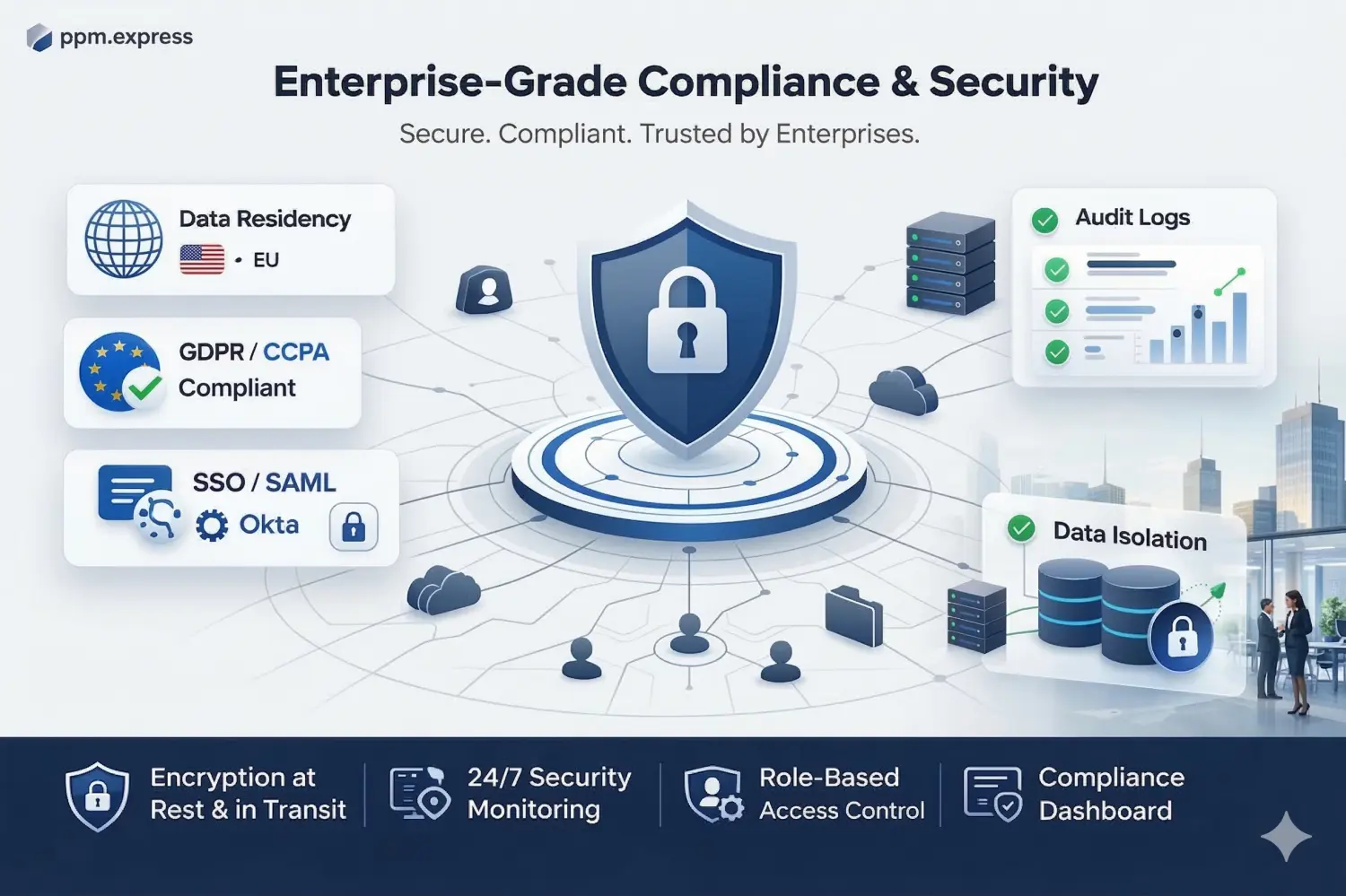

Security & Trust
Enterprise-grade security is built into our platform. We offer US and EU data residency, full GDPR compliance, and custom DPAs to meet strict regulatory requirements.
Need app availability in your region/country to meet data residency requirements? We can provide.
Microsoft 365 and Okta SSO ensure secure identity management, while centralized user management, advanced permissions, detailed audit logs, and strict data isolation protect sensitive enterprise data.
Bring your security reviewers to the same call.
Book Enterprise Demo

What our clients say
250+
Customers
use our software daily
100 hours
Saved every year
on monitoring state and statuses of projects, per PM
100K+
Projects
tracked on the PPM Express platform
Unlimited
Users
on every paid plan, so visibility is never rationed
Data residency
US & EU Data Residency
Encrypted in transit and at rest, with SSO, audit logs and tenant isolation. No customer data used to train AI models.
Reporting
200+ ready-to-use reports
Power BI reports built on live portfolio data, so stakeholders get self-service dashboards instead of a request queue.
Pricing
One flat annual subscription
$25,000/year for large enterprises, $8,000/year for SMB. No per-seat penalty.

Every project, person and dollar in one live view.
Integrations

The analysts and informaticists every initiative depends on.
Product

Test the portfolio against capacity before the build calendar is set.
Product
Last updated 20 August 2026
Healthcare IT portfolio management, answered.
Managing every technology initiative across the organization as one funded portfolio rather than as separate department request lists. That covers EHR optimization, clinical systems, integration, revenue cycle, infrastructure, security and digital patient experience — scored on one model, funded from one ceiling, and delivered by the same constrained analyst teams.
One scoring model with published value ranges, applied to every site. Each hospital will argue its context is unique and each is partly right, which is exactly why the weights belong to the governance committee rather than to whoever is presenting. Sites keep their own request lists; the comparison happens on one scale.
Run-the-business keeps clinical systems available, interfaces flowing and claims going out. Change-the-business is investment in doing those things differently: EHR optimization, new service-line capability, automation, digital access. Both consume the same analysts, which is why separating them in the budget but not in the capacity plan is how health systems over-commit.
The program runs a configurable process of phases and stages with gates between them, and you pick which gates need approval. Assigned approvers review in the Approval Center, and the decision is recorded against the program rather than in a meeting minute nobody can find eighteen months later.
Put it in the same portfolio as everything else, scored on the same model, drawing from the same capacity pool. Health systems often govern the EHR program separately because of its size, which is precisely why its claim on shared analysts stays invisible until the build calendar collides with everything else.
Fairness comes from the scale, not the ranking. When clinical, financial, risk and compliance factors carry published value ranges, a 3 from cardiology means what a 3 from the lab means, and the committee argues about weights once rather than about scores every cycle.
Re-test the portfolio at each funding cycle instead of treating the original approval as settled. Baselines set at the initial decision stay available, so the board can see what has moved since — and what it cost to let it move.
Allocation shows against calculated capacity in hours, percent or FTE, with over-allocation flagged before anyone commits. In practice this surfaces the shared EHR build, interface and informatics specialists who quietly appear in several plans at once.
Yes. Resources can be filtered by role, department or skill, and utilization displays in hours, percent, FTE or chart view. Capacity is calculated from each person’s work week and calendar exceptions rather than from an assumed eight-hour day.
Yes. Project Online connects directly. For plans built in the Microsoft Project Desktop client, PPM Express Project Publisher is an add-in that publishes them into the portfolio, so the PMO keeps the scheduling tool it knows while the portfolio still sees the work.
Track them in the program’s forecast rather than as an operating line somewhere else. Budget, forecast, benefits and impact sit against the initiative and are baselined at the decision, so the cost of running both systems is part of the program’s number instead of a surprise in the operating budget.
The retained decision history shows which scenario was selected, on which model, with which numbers at that moment. Models already scoring live work have to be cloned before they can be changed, so the basis of a past decision cannot be quietly rewritten after the fact.
No, and waiting gets the order backwards. PPM Express connects to the tools teams already use, so the portfolio view assembles from current delivery activity whatever platform work is under way. The visibility matters most while the large program is still competing with everything else, not after it has finished doing so.
.svg)


