
A large mining conglomerate from Australia had relied on Microsoft Project Online for approximately five years. The environment supported around 85 active projects and nine project managers, with established processes for project metadata, schedules, milestones, resource planning, risks, issues, and portfolio reporting.
As Project Online approached retirement, the company needed more than a simple replacement.
Some project managers depended heavily on Microsoft Project Professional and complex MPP schedules, while others did not need that level of scheduling sophistication. The company wanted to modernize the environment without forcing every project manager into the same delivery methodology or requiring a disruptive, one-size-fits-all migration.
Project and portfolio information also needed to remain centrally visible and reportable.
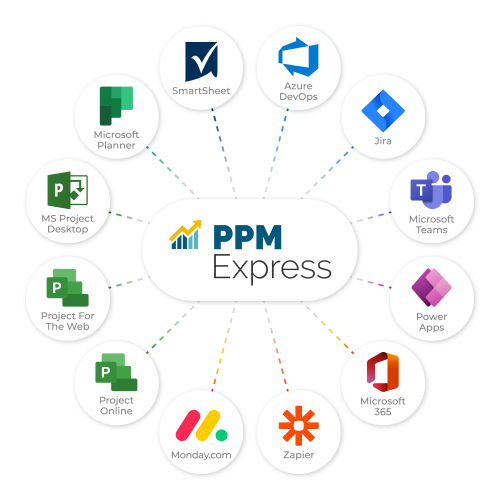
The company adopted a hybrid migration model with PPM Express acting as the common portfolio and governance layer.
Projects that could be managed directly in PPM Express were migrated into the platform, including relevant project information, schedules, risks, issues, milestones, and metadata.
For complex schedules where Microsoft Project remained the right tool, project managers continued working in Project Professional and published their schedules into PPM Express. Experienced PMs kept their existing working practices, and management got the same portfolio-level visibility across both types of projects.
PPM Express became the central location for project governance, reporting, status, RAID information, resource planning, and portfolio oversight, regardless of where the detailed schedule was maintained.
The company moved away from Project Online without forcing an unnecessary redesign of every project's delivery process.
Project managers retained the tools appropriate to the complexity of their projects, while portfolio managers gained a modern and consistent environment for governance and reporting.
Instead of replacing one monolithic PPM system with another, the organization created a flexible PPM architecture where different execution tools could coexist under one portfolio management layer.
The migration carried less risk, and the company kept its established project management practices after moving off Project Online.


Reviewed by PPM Express in August 2026.
.svg)


