
Decide which roadmap moves — before the same architects are promised to all of them
PPM Express gives carriers one portfolio across policy admin and claims modernization, product launches, regulatory change, data and distribution programs, so leaders can fund the right mix with cost, benefits and shared capacity visible.



Every roadmap in the carrier needs the same architects
Policy admin replacement, claims transformation, new products and state filings, regulatory change, data platforms and distribution all arrive with their own business case and their own sponsor. Most of them are written against the same enterprise architects, actuarial analysts, integration engineers and data teams. BCG found that 74 percent of core insurance transformations fail — and many of those programs were never staffed for the year they were funded.
Keep-the-lights-on absorbs the year
Legacy policy and claims systems take capacity first because they have to. What is left funds the strategy, and nobody has costed what that means until the year is half gone.
Every line of business runs its own queue
Personal, commercial and specialty lines each rank their own work. The requests only meet when the numbers are added up, and by then the dates are public.
Three policy systems, one team
Two-thirds of life and annuity carriers run more than one policy admin system (Deloitte). Every consolidation, product change and integration draws on the same few people who understand them.
Three steps, from competing roadmaps to a portfolio you can defend
Assemble the portfolio from the tools teams already use
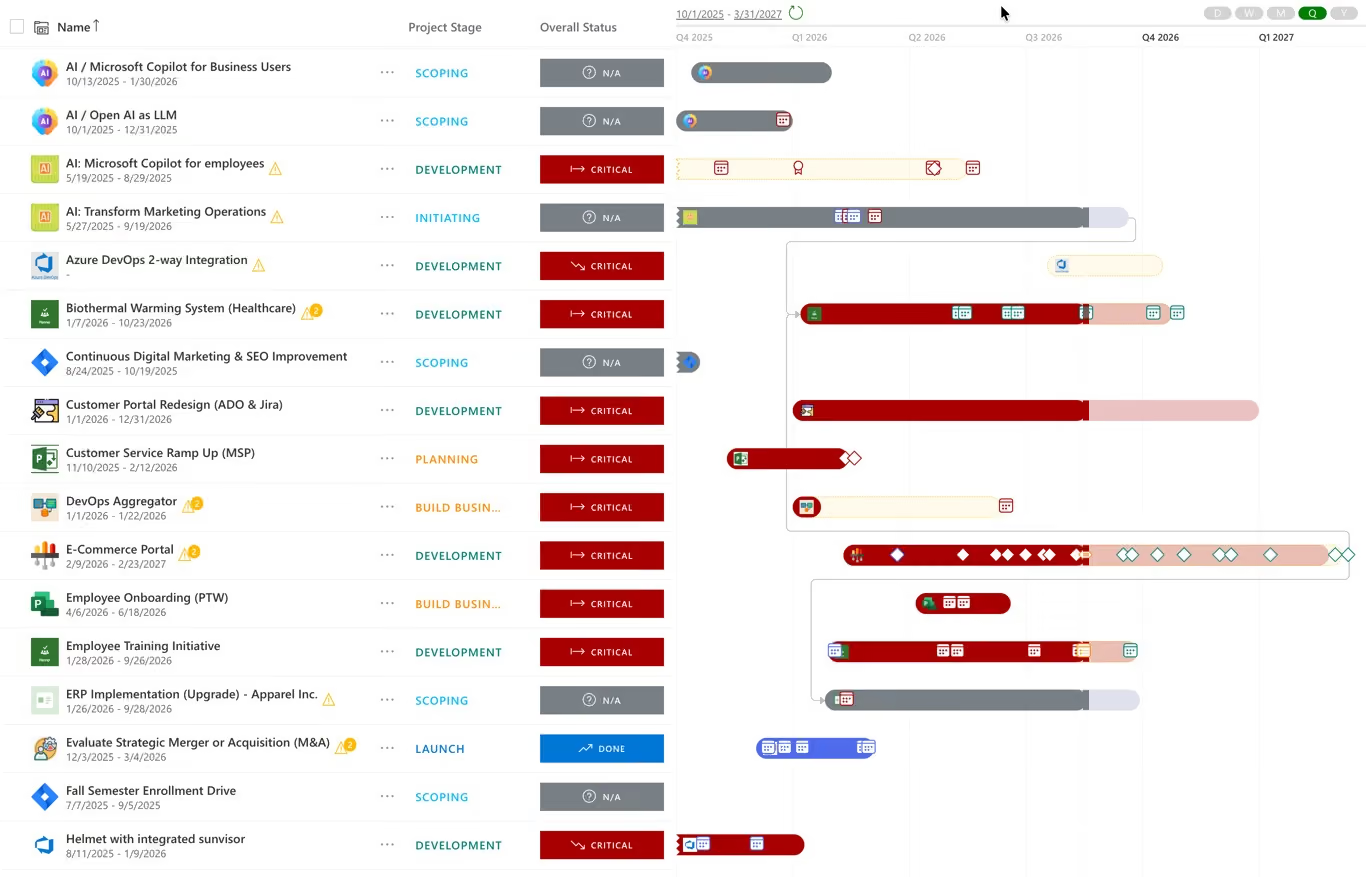
Bring work from Azure DevOps, Jira, Microsoft Project, Planner, Project for the Web, Smartsheet and Monday.com into one portfolio view. Teams keep their delivery workflows while leadership sees core, claims, product, regulatory and data programs together.
Score every program on one model
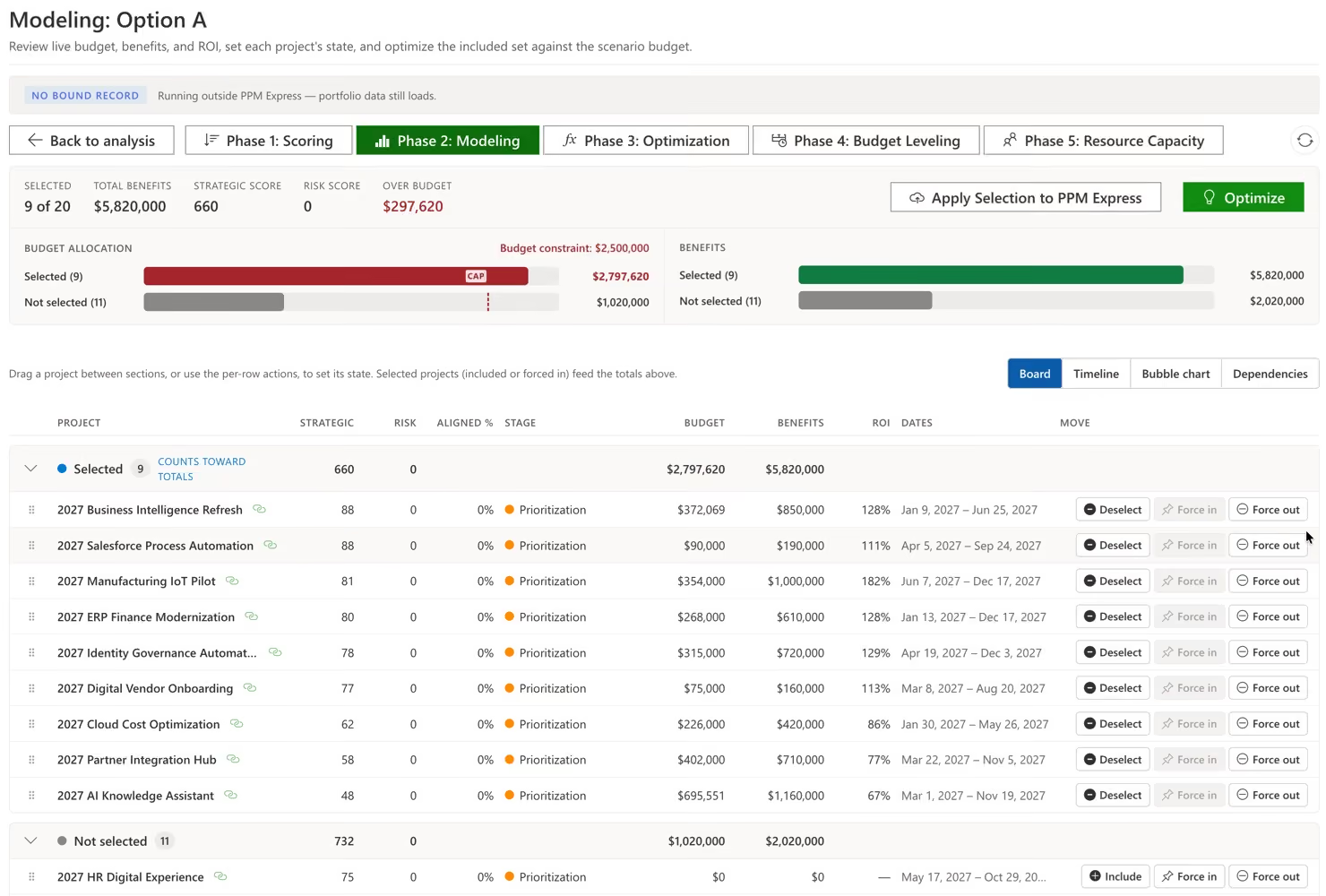
Capture requests and score them against published strategic and risk criteria, with budget, forecast, benefits and impact next to each program. Regulatory and filing work stays identifiable as mandatory, and the cost of protecting it stays visible.
Cost each roadmap in people, not just dollars
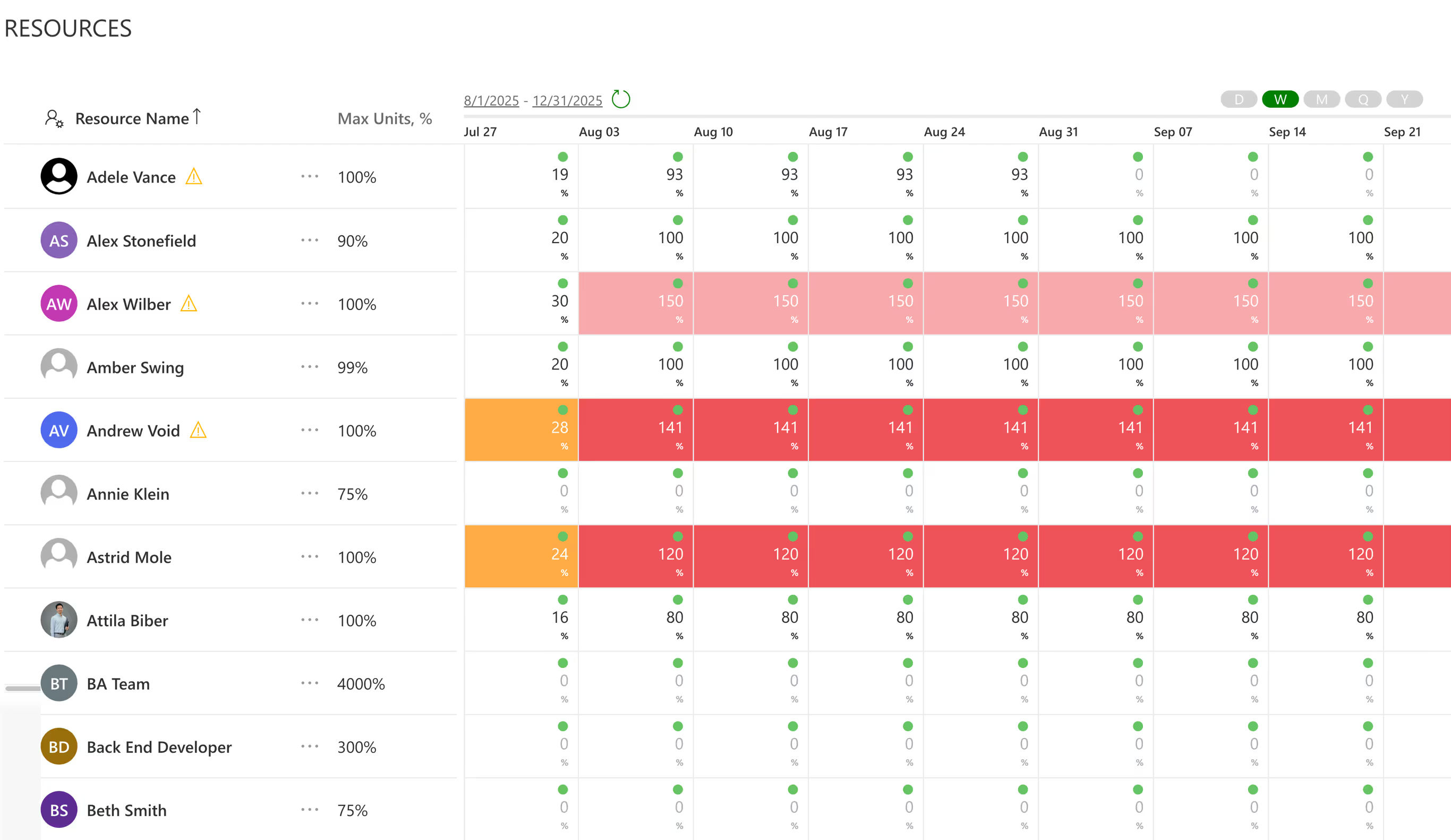
Build competing funding scenarios against one ceiling, then check the survivors against real availability in hours or % FTE. Over-allocation appears before the portfolio is approved, not after three programs discover they all depend on the same architects.
Answer which roadmap moves, what it displaces, and what the decision costs
One portfolio across every line and every program
Core modernization, claims, product, regulatory and data initiatives are reviewed together rather than through separate queues that never meet.
Capacity conflicts before commitments
Shared architecture, actuarial, data and integration capacity is tested across the whole portfolio before dates and budgets are approved — including what a new state-filing program would displace.
A decision trail you can return to
The selected scenario, the baseline numbers and the alternatives considered stay available when the board or an examiner asks, months later, why a program was funded, deferred or stopped.

The live portfolio, not a copy built for the pack
Budgets, benefits, dates and resource plans sit in PPM Express as they are now — nothing to export before the board pack, nothing to reconcile after it.
Movement in the numbers is surfaced, never silent
If numbers change after you built the analysis, you are shown exactly what changed and asked whether to take it.
The model behind a funding decision is protected
A model already scoring live programs has to be cloned before it can be changed.
Your data stays in your tenant
Isolated to your tenant, enforced with your verified sign-in, with US data residency available.
Every underwriter, actuary and architect can be in it
Unlimited users, so the people named in the plan can see it and update it — visibility is never rationed to the EPMO.
Sits on the Microsoft estate you already run
Project Online, Project for the Web, Planner and Microsoft 365 identity connect directly, so the portfolio layer runs on infrastructure your carrier has already reviewed and audited.
Fund core modernization, regulatory change and growth from one constrained portfolio
The question is rarely whether a policy admin replacement, a claims program, a product launch or a regulatory change matters. It is which combination fits the budget and the delivery capacity without creating unmanaged risk somewhere else. Build comparable scenarios, keep the mandatory commitments visible inside them, and choose with the full trade-off on screen.
Three methods, not one
A weighted scoring model, MoSCoW with columns that total budget and benefits, or a quick ICE score. Use the one the funding round deserves — or run two and see where they disagree.
Value defined explicitly
Weighted strategic and risk factors, each with a published value range, so a 3 means the same thing to every line-of-business owner who enters one.
Budgets and benefits in view
For every program, collect and track budget, forecast, benefits and impact, so the conversation happens in money rather than in opinion.
The genuine trade-off frontier
Pareto optimization shows the options where you can't improve strategic value, benefits, risk or cost without giving something up, so the executive committee chooses a point on the frontier instead of arguing toward a number.
A capacity reality check
Every plan is tested against people's free capacity: what is left after the commitments they already carry. Over-allocation is flagged before the carrier commits to it.
Decisions that stick
Select one scenario and every funded program is stamped with the outcome in PPM Express, with the numbers baselined at the moment of decision and the full decision history kept.
Security & Trust
Enterprise-grade Security. Without the enterprise runaround.
Enterprise-grade security is built into our platform. We offer US and EU data residency, full GDPR compliance, and custom DPAs to meet strict regulatory requirements.
Need app availability in your region/country to meet data residency requirements? We can provide.
Microsoft 365 and Okta SSO ensure secure identity management, while centralized user management, advanced permissions, detailed audit logs, and strict data isolation protect sensitive enterprise data.
Bring your security reviewers to the same call.
Book Enterprise Demo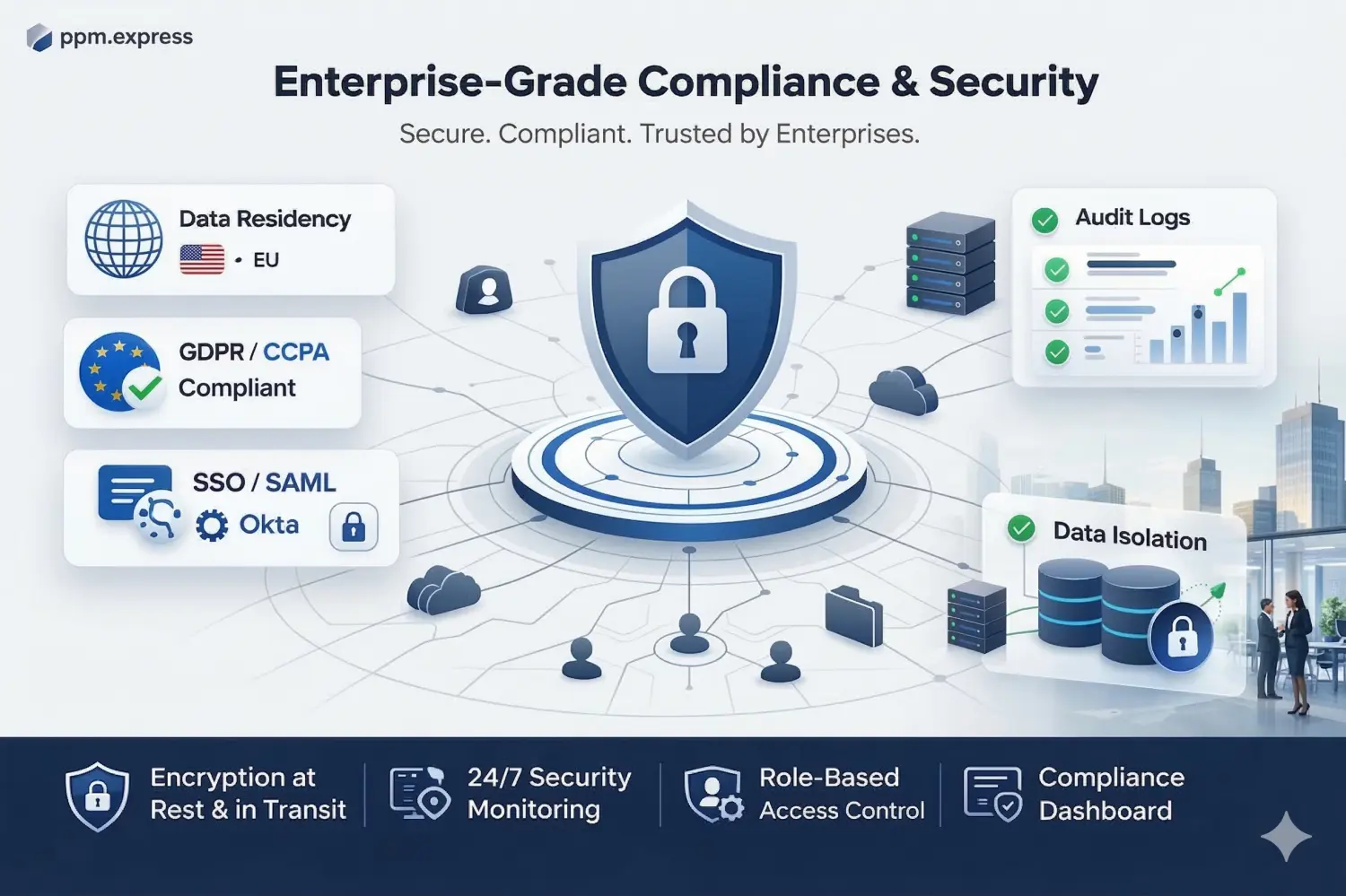
Integrated Project Portfolio Management
Streamline Project Portfolio Management and Visibility at Scale
Innovation Management
Capture new project request, streamline evaluation and prioritization
What-If Scenario Planning
Structured Approach for prioritizing and aligning portfolios with strategic priorities and resource constraints
Frequently asked questions
Insurance portfolio management, answered.
Does PPM Express replace Guidewire, Duck Creek or our policy admin system?
No. Core systems run policies, billing and claims. PPM Express sits above the change portfolio and answers the questions around them: which modernization, product and regulatory programs get funded, in what order, and whether the architects and specialists can carry them.
How do we balance regulatory and filing work against strategic change?
Score both on the same model instead of exempting one of them. Mandatory work should rank high because its risk factor is genuinely severe, not because it skips assessment. Once regulatory change carries a score, the cost it imposes in displaced strategic investment becomes visible, and leadership can see how much of this year’s capacity the compliance agenda is consuming.
We run several policy admin systems. How do we sequence consolidation against everything else?
Put the consolidation program in the same portfolio as the product, claims and regulatory work that depends on the same people, then build scenarios that move it earlier or later. Each scenario is checked against architect and integration capacity, so the committee sees what an earlier cutover actually displaces.
Can we see what a new state-filing or product program would displace?
Yes. Add it to a scenario and check the scenario against free capacity by role. Over-allocation is flagged against the specific architects, actuarial analysts or engineers it would draw on, before anyone commits to a date.
Can we enforce gate approvals and evidence them for audit?
Yes. Projects run a configurable process of phases and stages with gates between them, and you choose which gates require approval. Named approvers review in the Approval Center and approve or reject with comments, and every approver has to sign off before a project advances. The decision history is retained, and a scoring model already being used on live work has to be cloned before anyone can change it.
Can gate approvals be routed through our existing workflow system?
They can. Alongside standard approvals handled inside PPM Express, there is an API-based option built for organizations already running an external approval or workflow platform. PPM Express sends the approval request out to your system, and your system calls back to approve or reject the stage transition.
The board or an examiner asks how a funding decision was reached. What can we produce?
The model that was applied, the factor weights in force at the time, the scenarios compared, the one selected, and the numbers as they stood at that moment. Figures are baselined at the point of decision and the decision history is kept. Because a model scoring live change has to be cloned before it can be altered, the basis of a past decision can't be edited after the fact.
Regulatory scope keeps moving mid-program. How do we re-plan without starting over?
When numbers change upstream after you've built an analysis, PPM Express shows you exactly what moved and asks whether to take it, rather than absorbing the change quietly. A re-plan then starts from a known delta instead of another data-gathering round.
How do we tell whether the portfolio fits our delivery capacity?
Each person's capacity comes from their work week and calendar exceptions, and allocation shows against it in hours, percent or FTE, with overallocation flagged. Insurance portfolios usually break on a specific group of people rather than on budget: the architects, data engineers and SMEs written into a dozen programs at once. That shows up as soon as the plans sit in one view.
Our schedules are maintained in Microsoft Project. Can we keep using it?
Yes. Project Online and Project for the Web connect directly, and for the Microsoft Project Desktop client there's PPM Express Project Publisher, an add-in your planners use to publish schedules up from inside Project. Desktop 2016, 2019 and 2021 are supported.
What data residency and security controls apply for a regulated carrier?
You get data residency in the US or the EU, custom DPAs, strict data isolation between customers, encryption in transit and at rest, and detailed audit logs covering the portfolio of record. Microsoft 365 (Entra ID) and Okta SSO handle identity with your conditional access policies. The platform runs in Azure data centers accredited to SOC 1, SOC 2 and ISO 27001; PPM Express does not yet hold its own SOC 2 or ISO 27001 certificate.
Decide which roadmap moves — before the same architects are promised to all of them
General questions: sales@ppm.express · +1 855 358-3688